
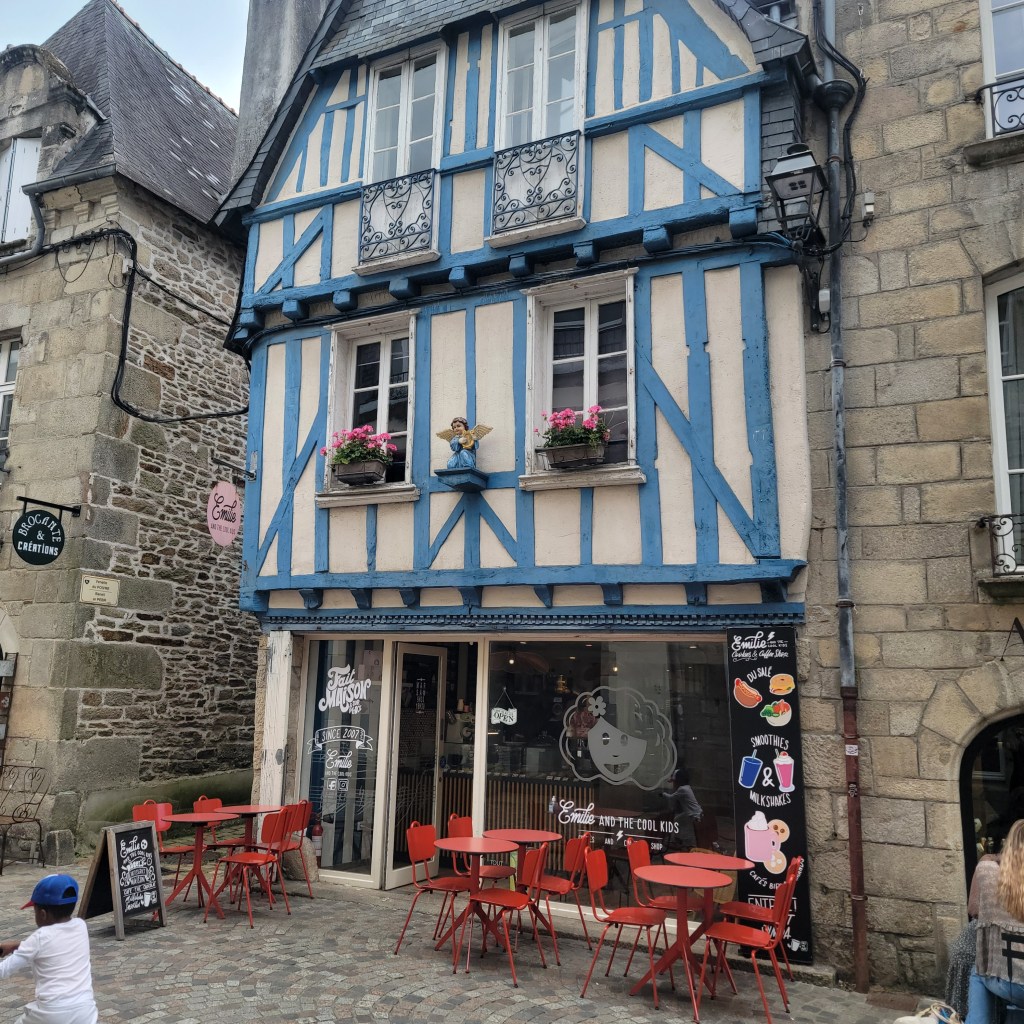
I have just a few more days here in Quimper, so I thought it would be nice to share a wee bit more about this pretty city.
Quimper is famous for three things in particular – faïence pottery, Saint-Corentin Cathedral and Breton culture, including Le Festival de Cornouaille.
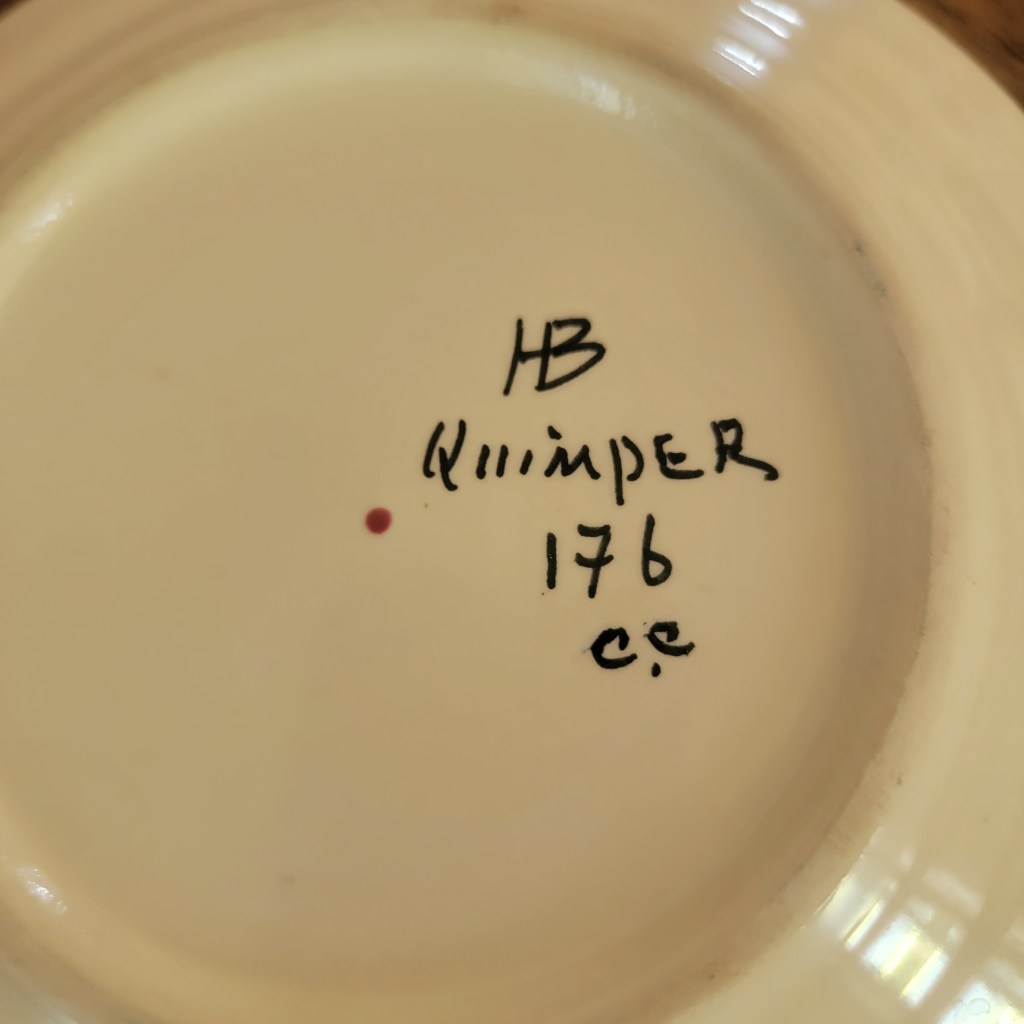
The word “faïence” refers to tin-glazed earthenware. Faïence pottery-making in Quimper can be traced back to around the beginning of the 18th century, so it goes back a bit further than the much-loved Crown Lynn dinner plates the Kiwis of my generation grew up with!
In the1700s Quimper had easy access to clay deposits, timber for furnaces and transportation via the Odet River, so it was an ideal place for this industry to take root. Originally, its style was basic and utilitarian. However, production progressed and by the middle of the 19th century the artistic component of faïence had also developed. It is now well known for its hand-painted, folksy artwork, which often includes Breton traditional costumes, floral patterns and scenes of rural life. My Mum would love it!
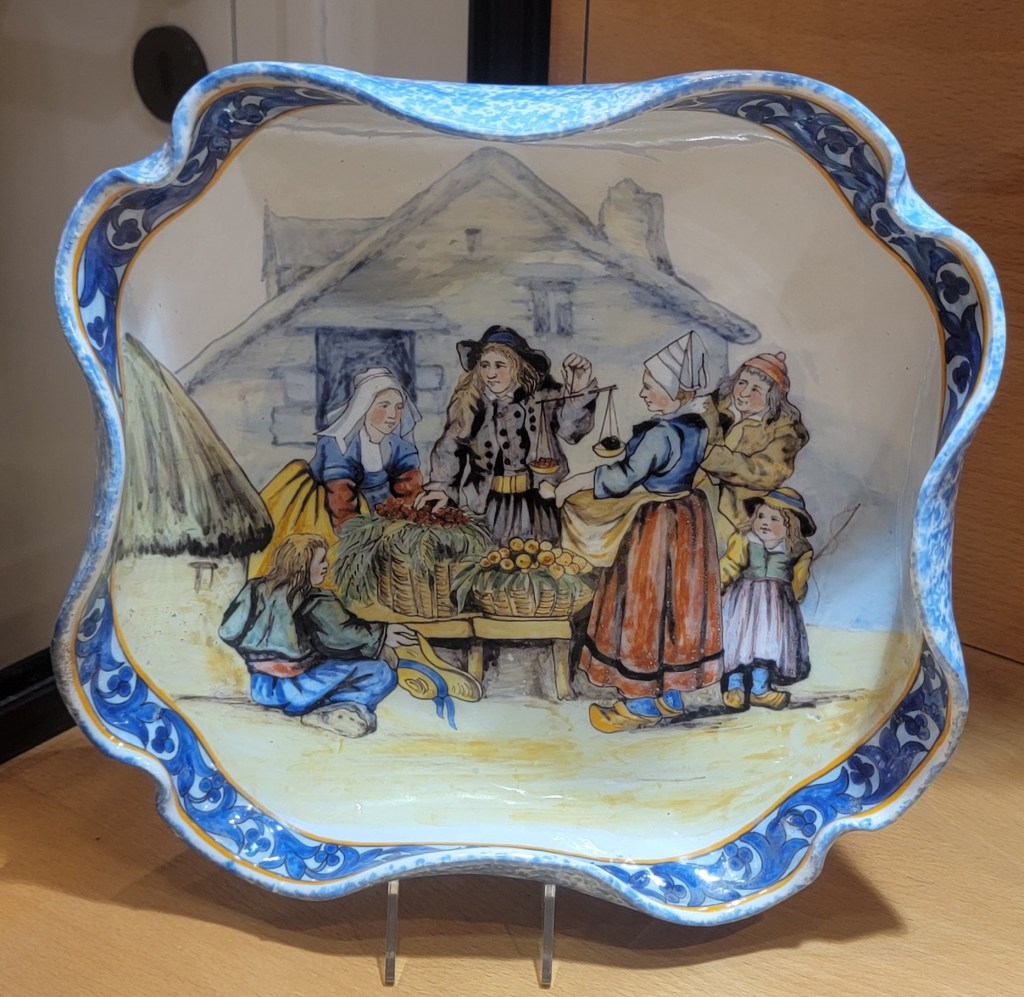
Madame Julia is an expert in faïence, being both a collector and trader of the same. In fact, I have been eating off this history-rich crockery three times a day during my time with her! However, after visiting the Quimper Faïence Store recently, I came home quite alarmed.
“I’m too afraid to use your faïence now that I know how much it’s worth!”, I wailed to her.
“Nonsense!” she replied. “It was made to be used. If it breaks, it breaks.”
This is the same lady who also uses her grandmother’s silver cutlery set at every meal. For her, it all adds to la joie de vivre – the joy of life. I like her style.
With Madame as my personal tour guide, we paid a visit to the Musée de la Faïence (the Faïence Museum), which sits sweetly alongside the Odet River.
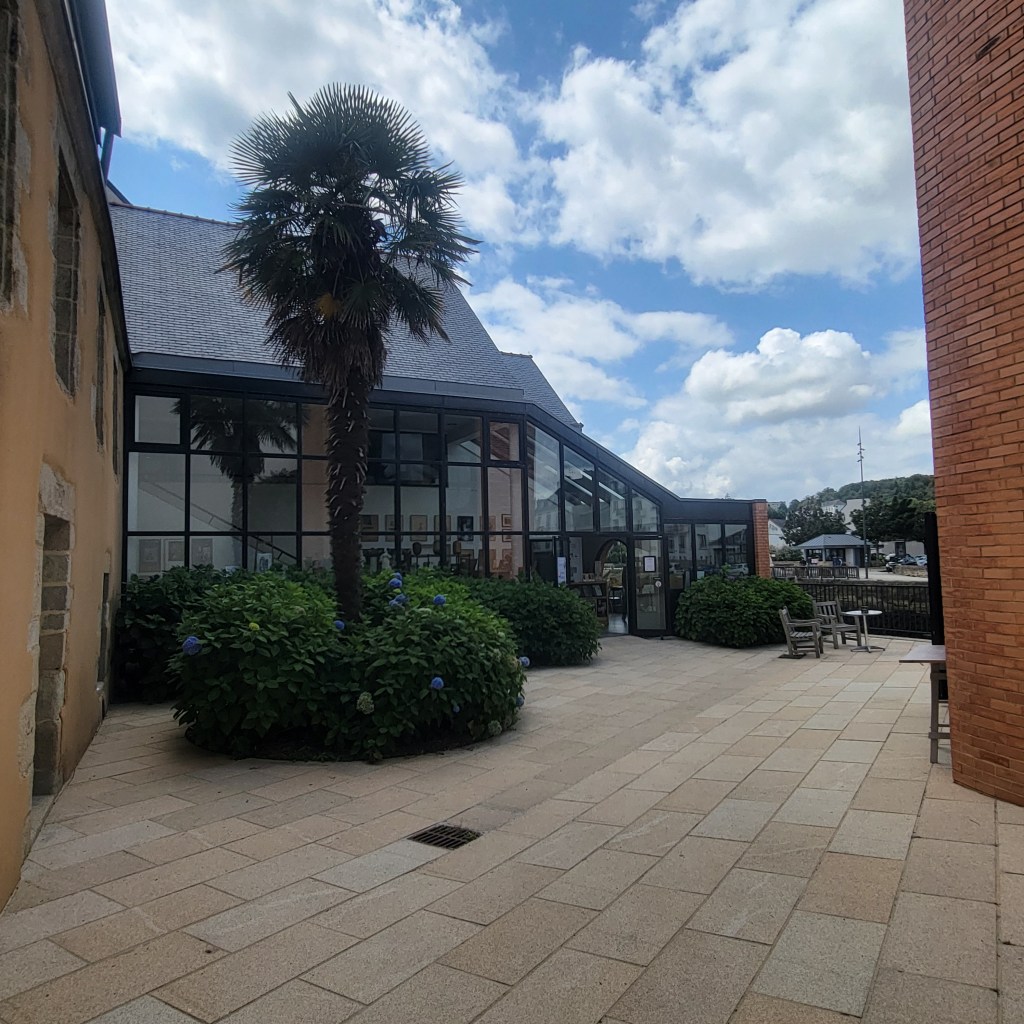
Over our many meals together, Madame Julia had already explained a lot of the history of faïence production to me, including various artwork styles, and I loved seeing the variety of pieces on display at the museum. I returned by myself the next day and went through the whole museum again.
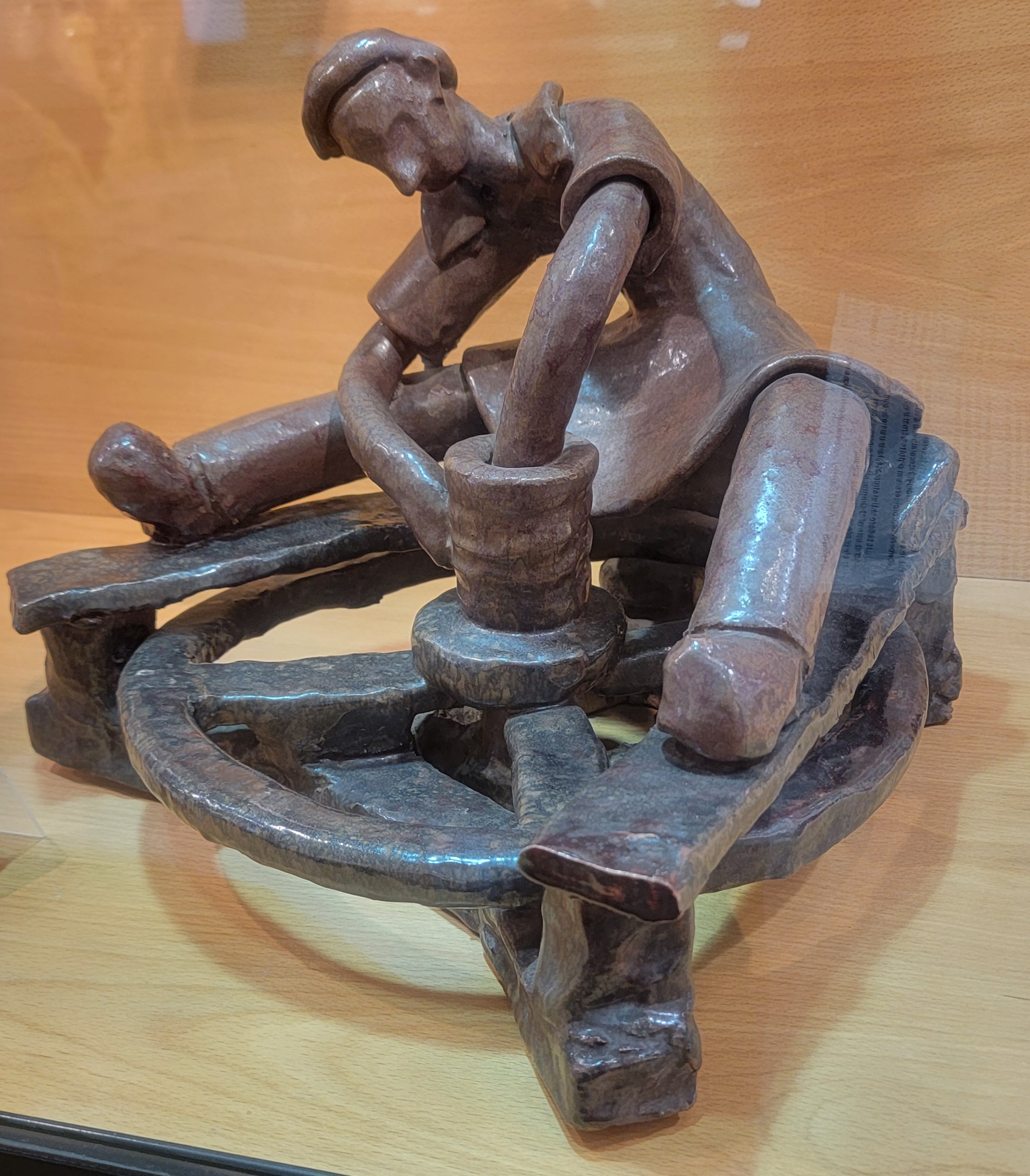
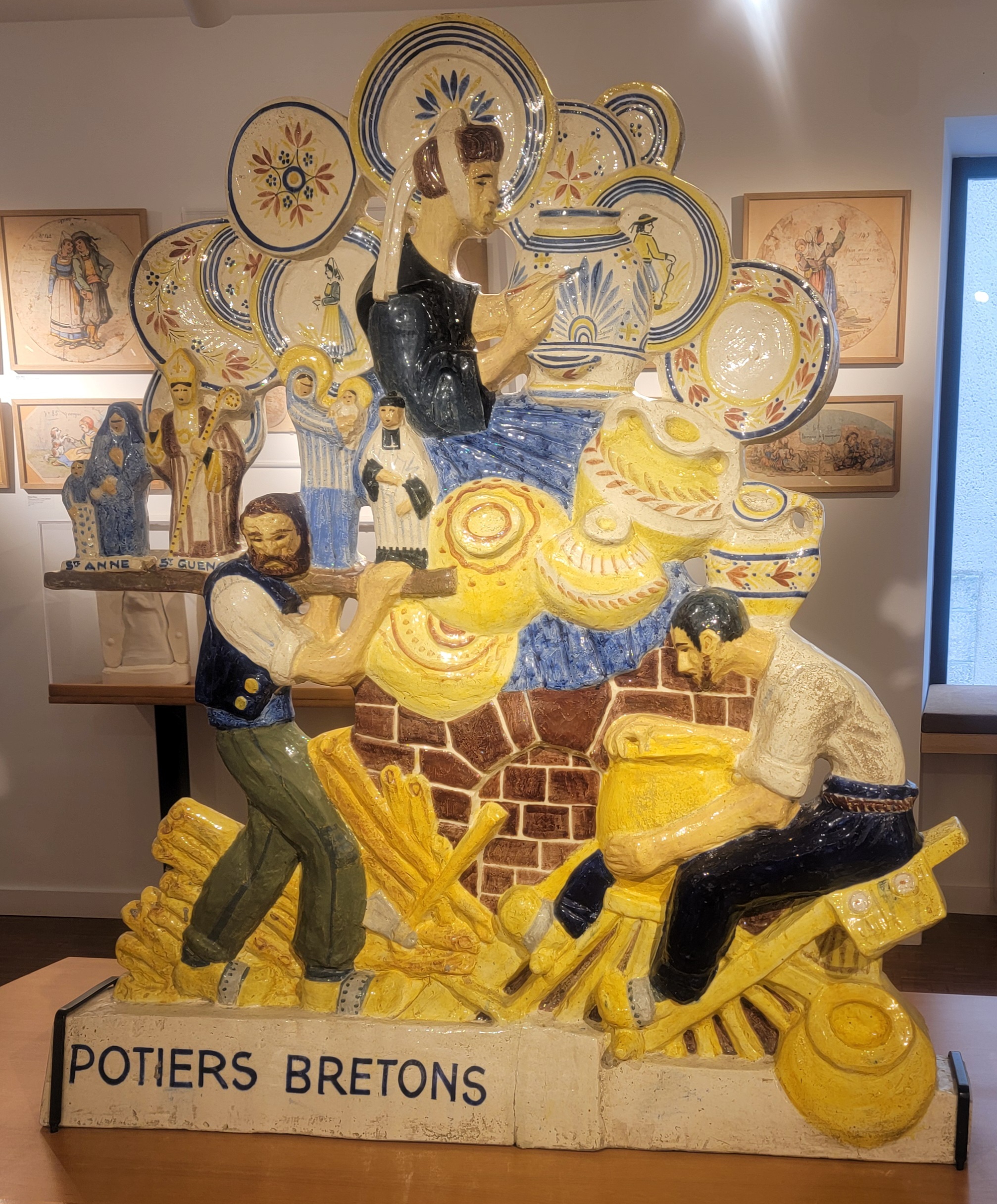
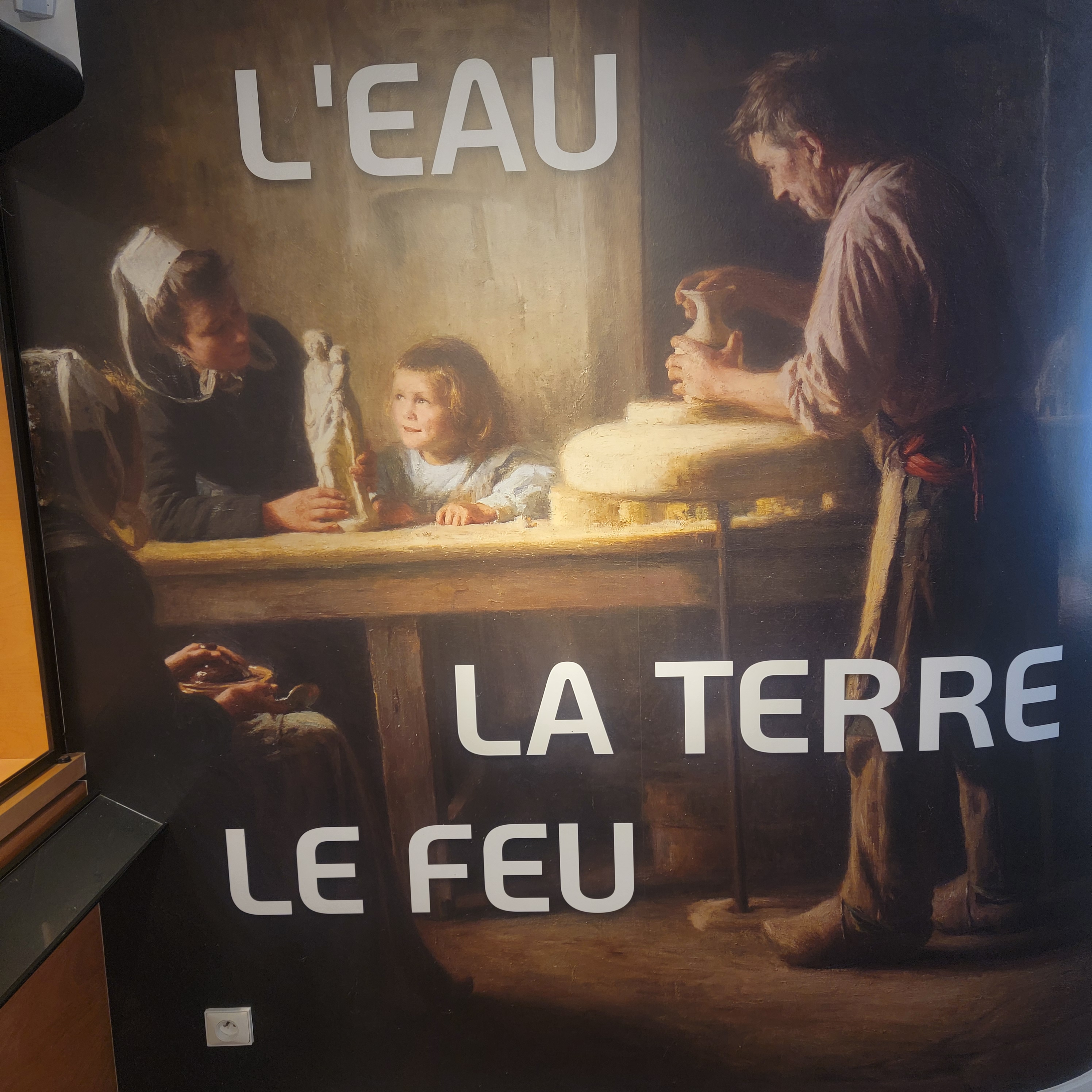
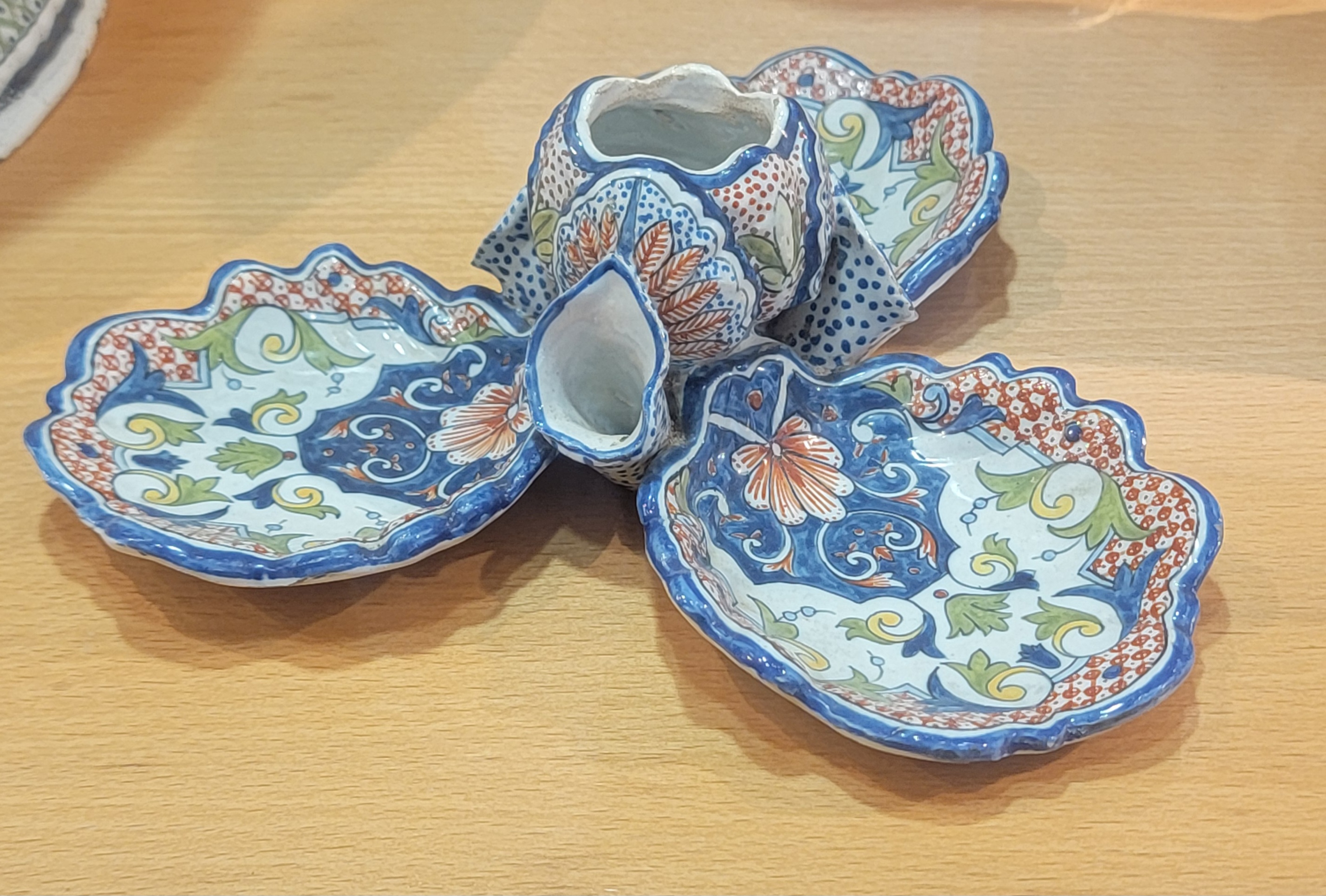
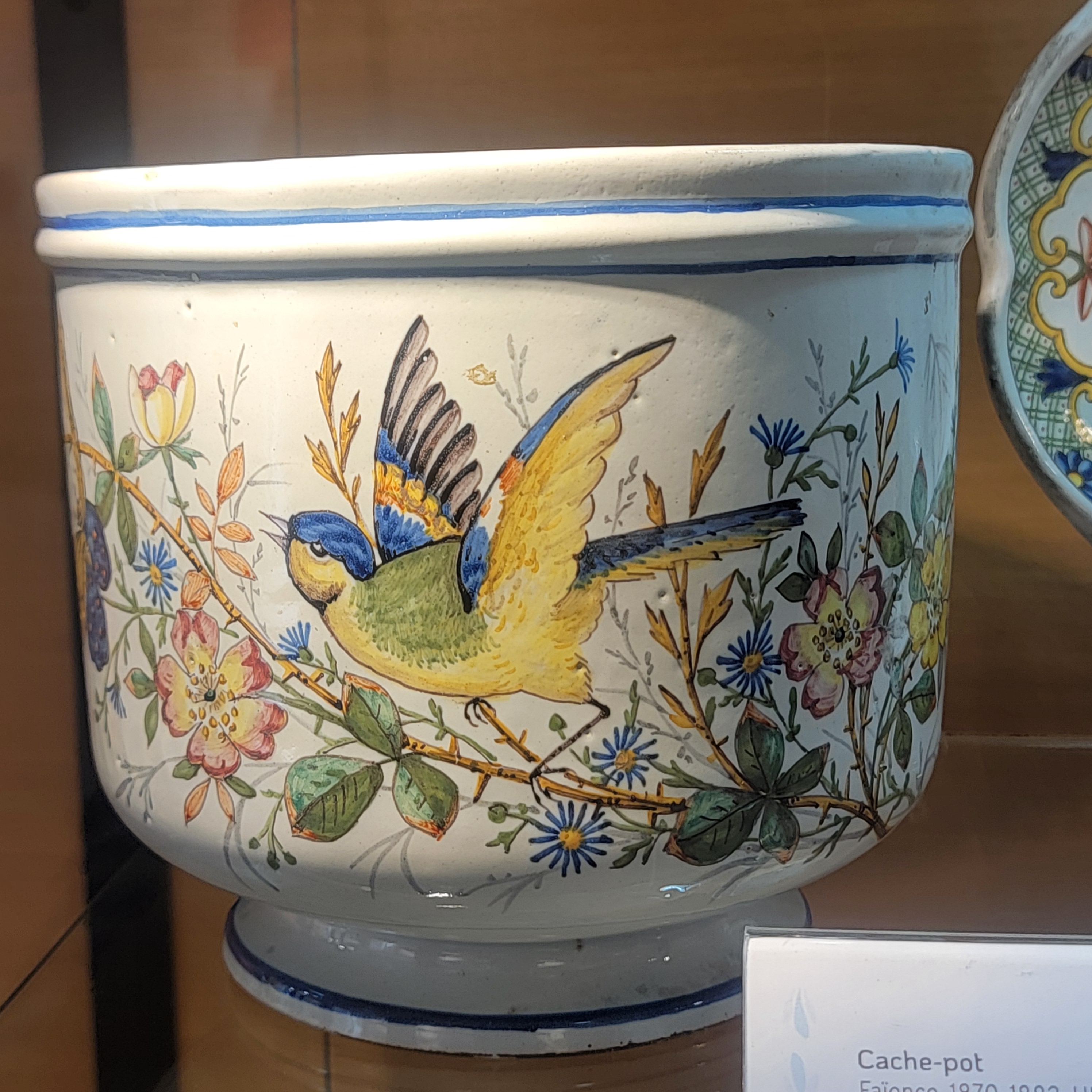
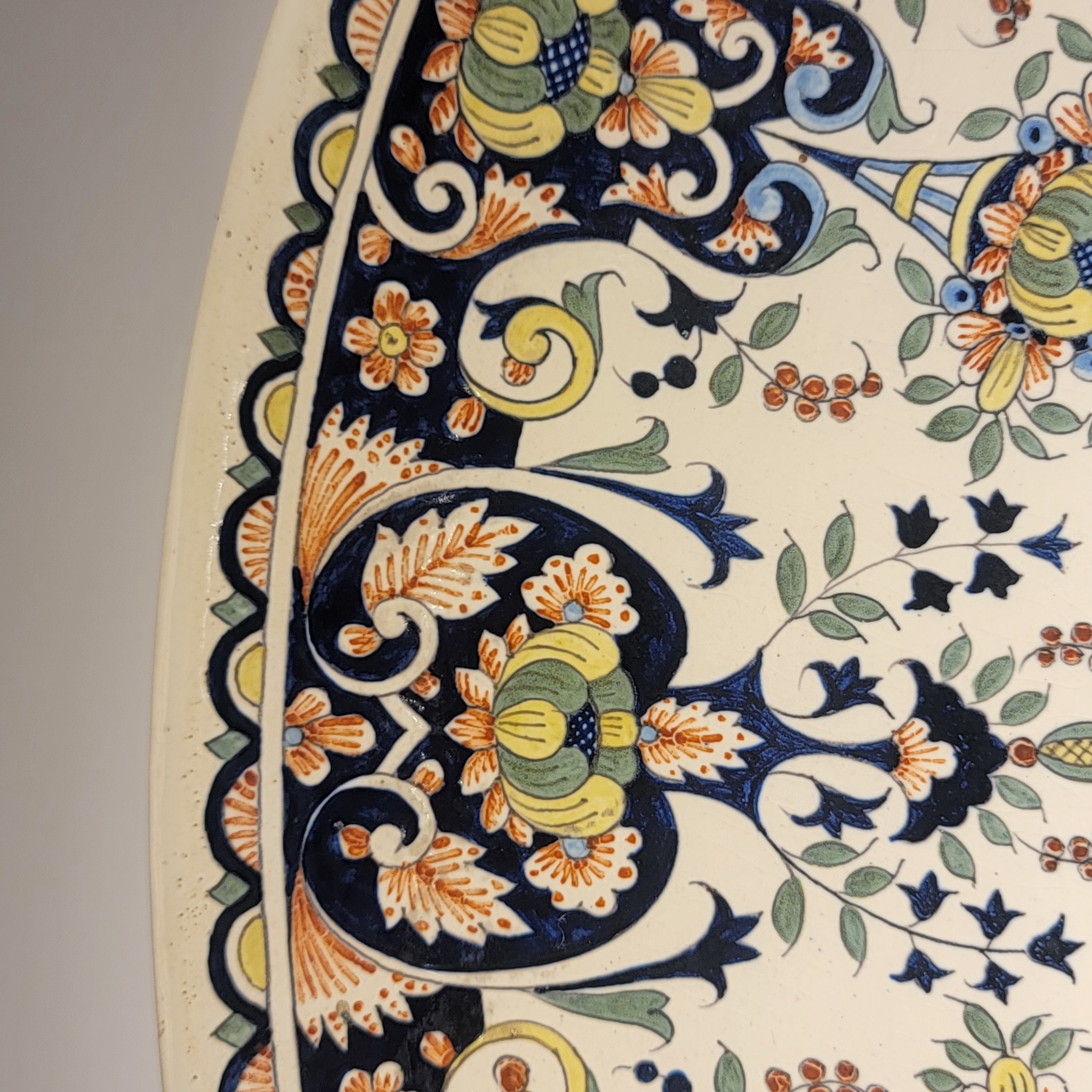
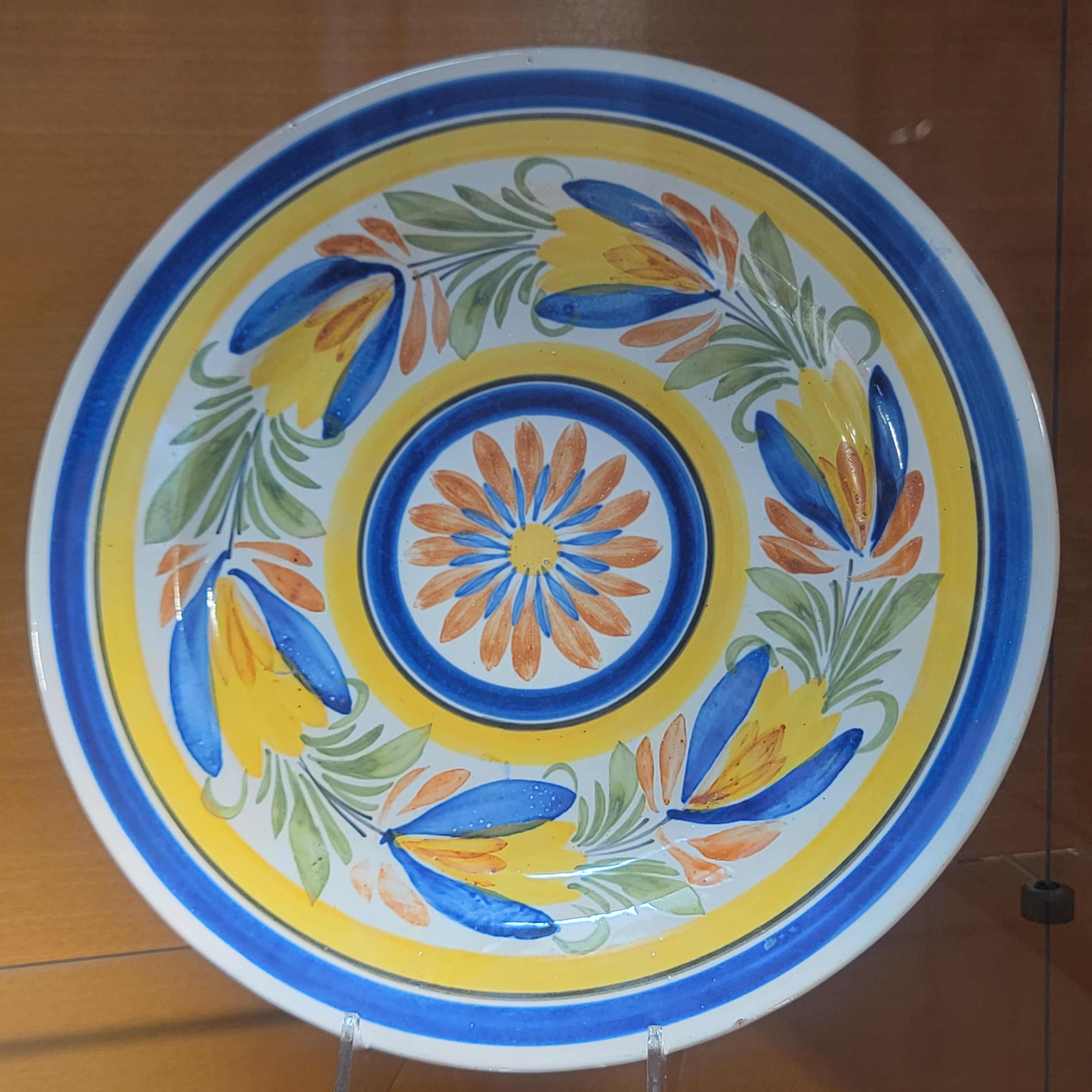
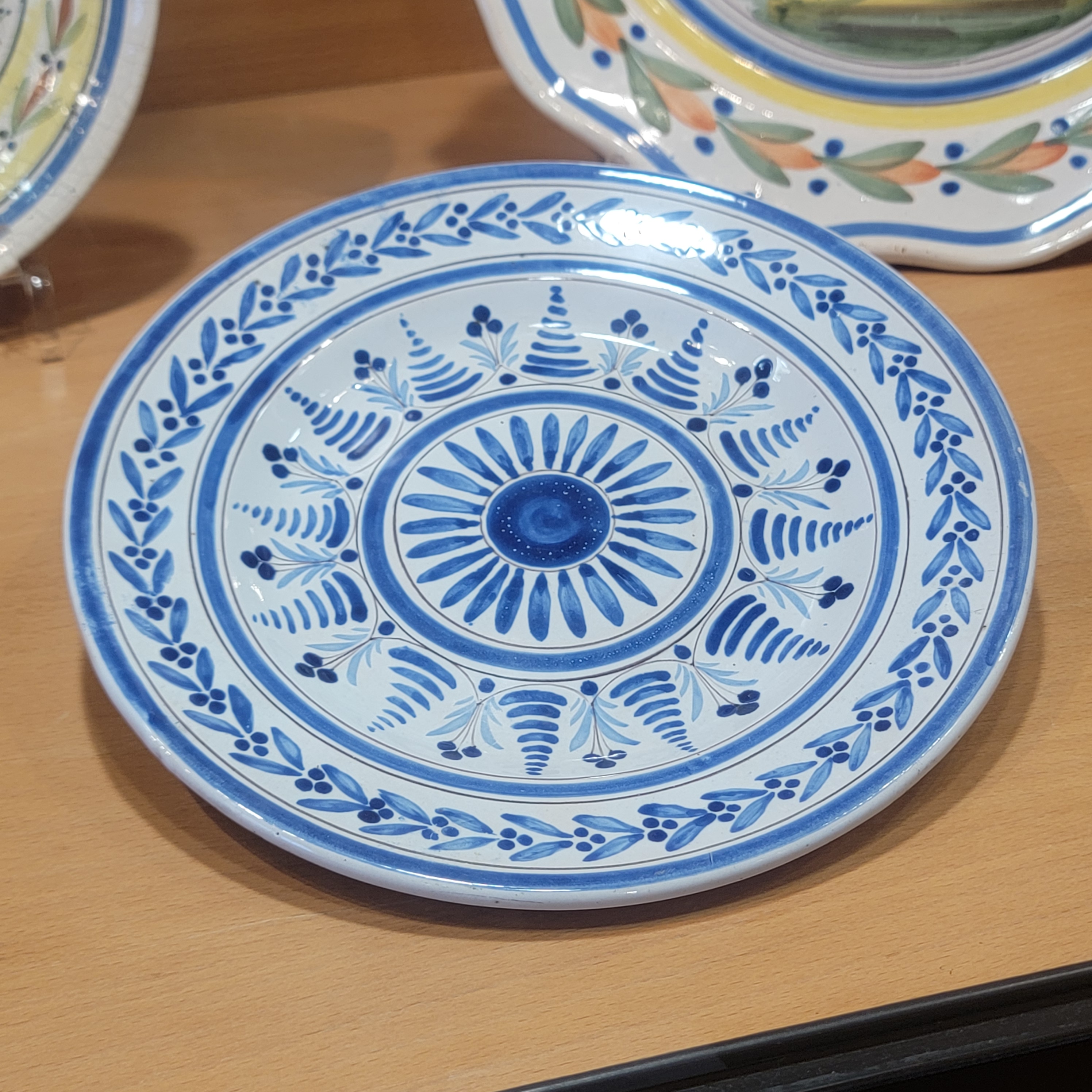
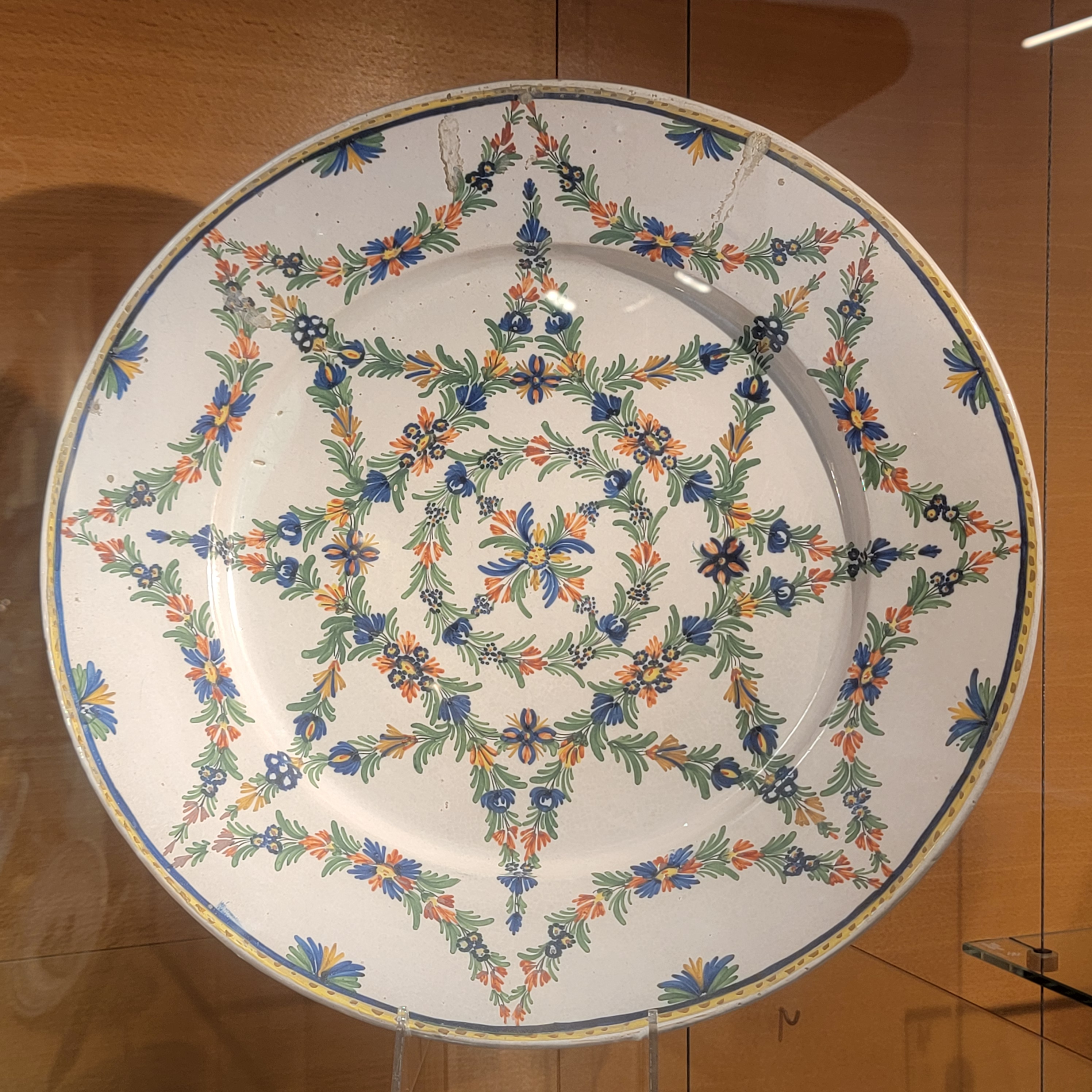
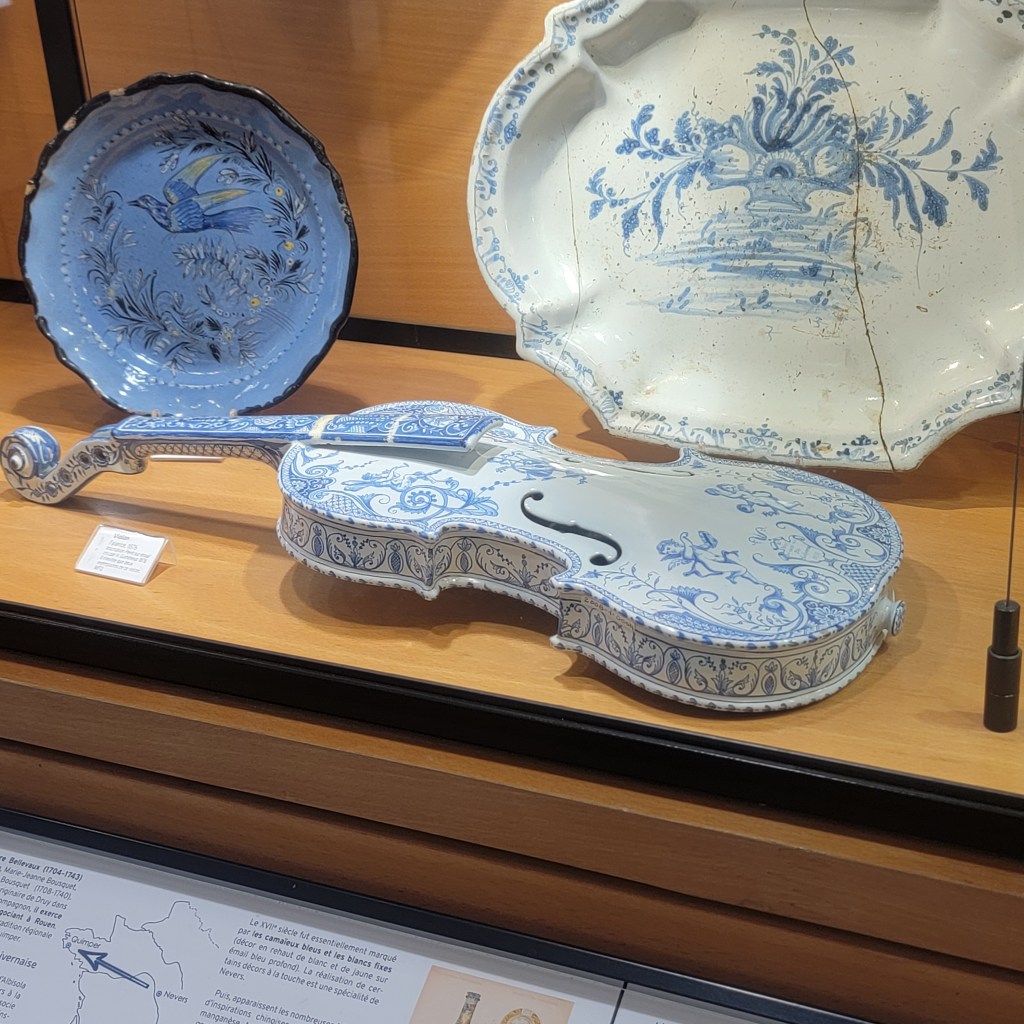
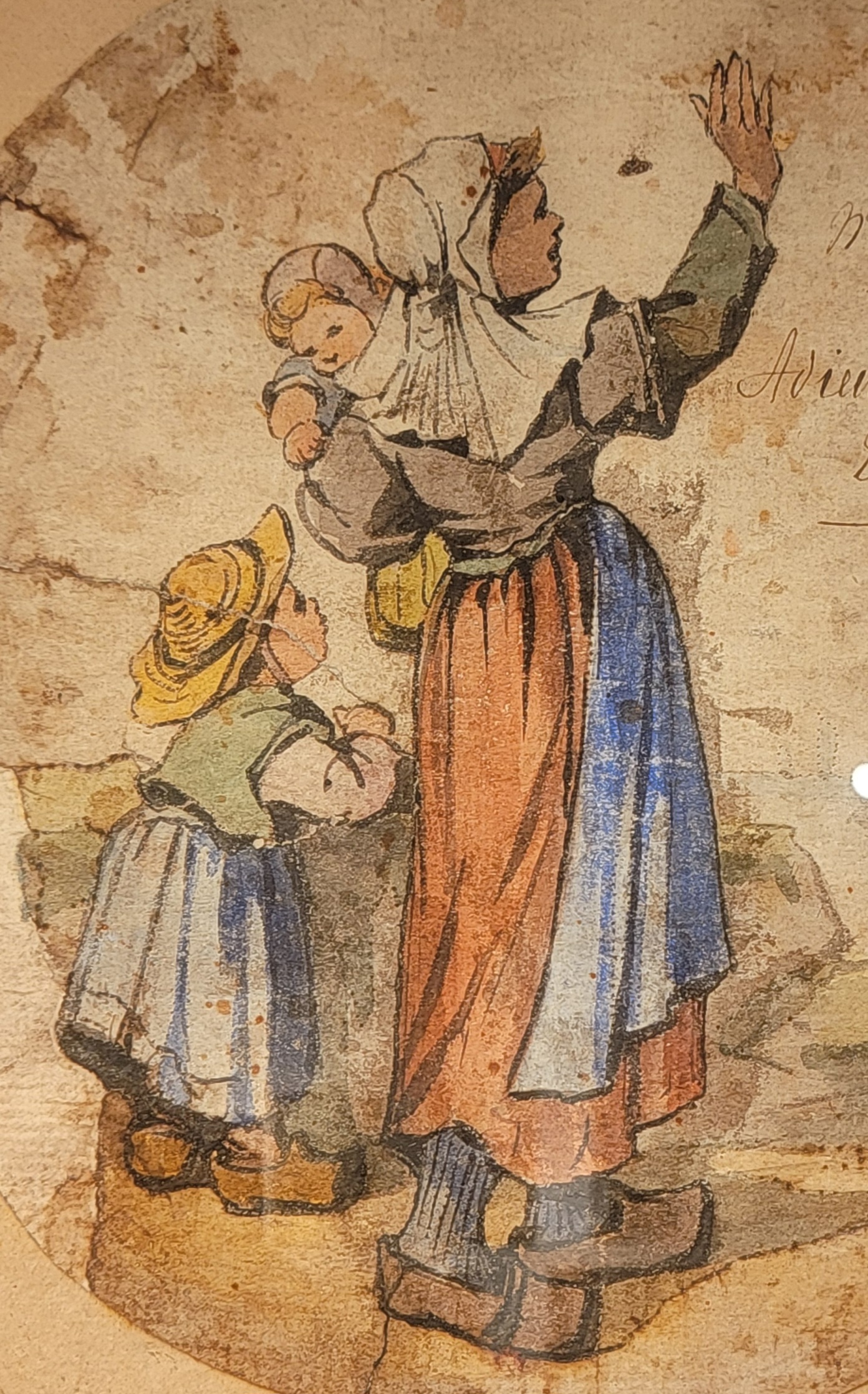
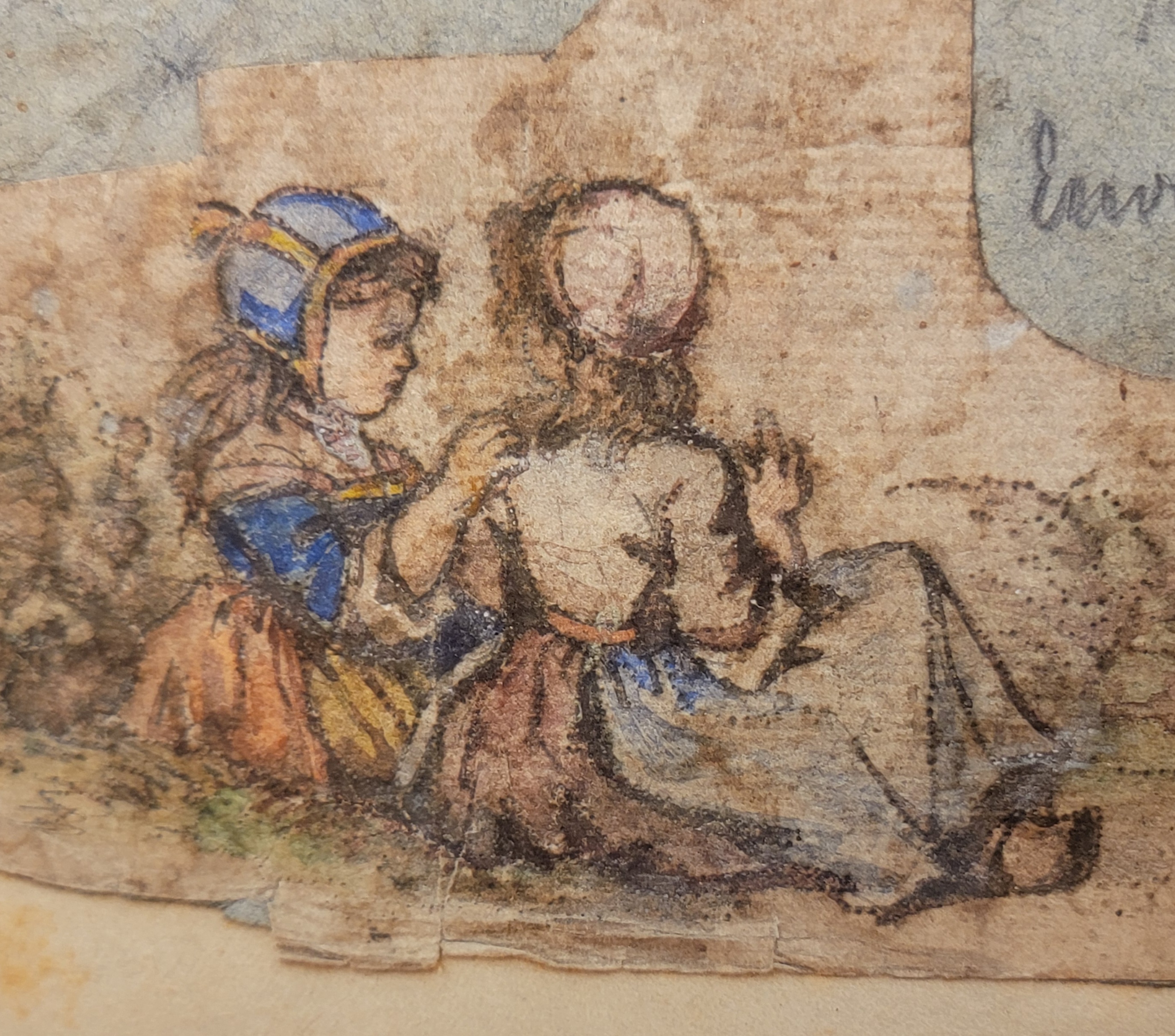
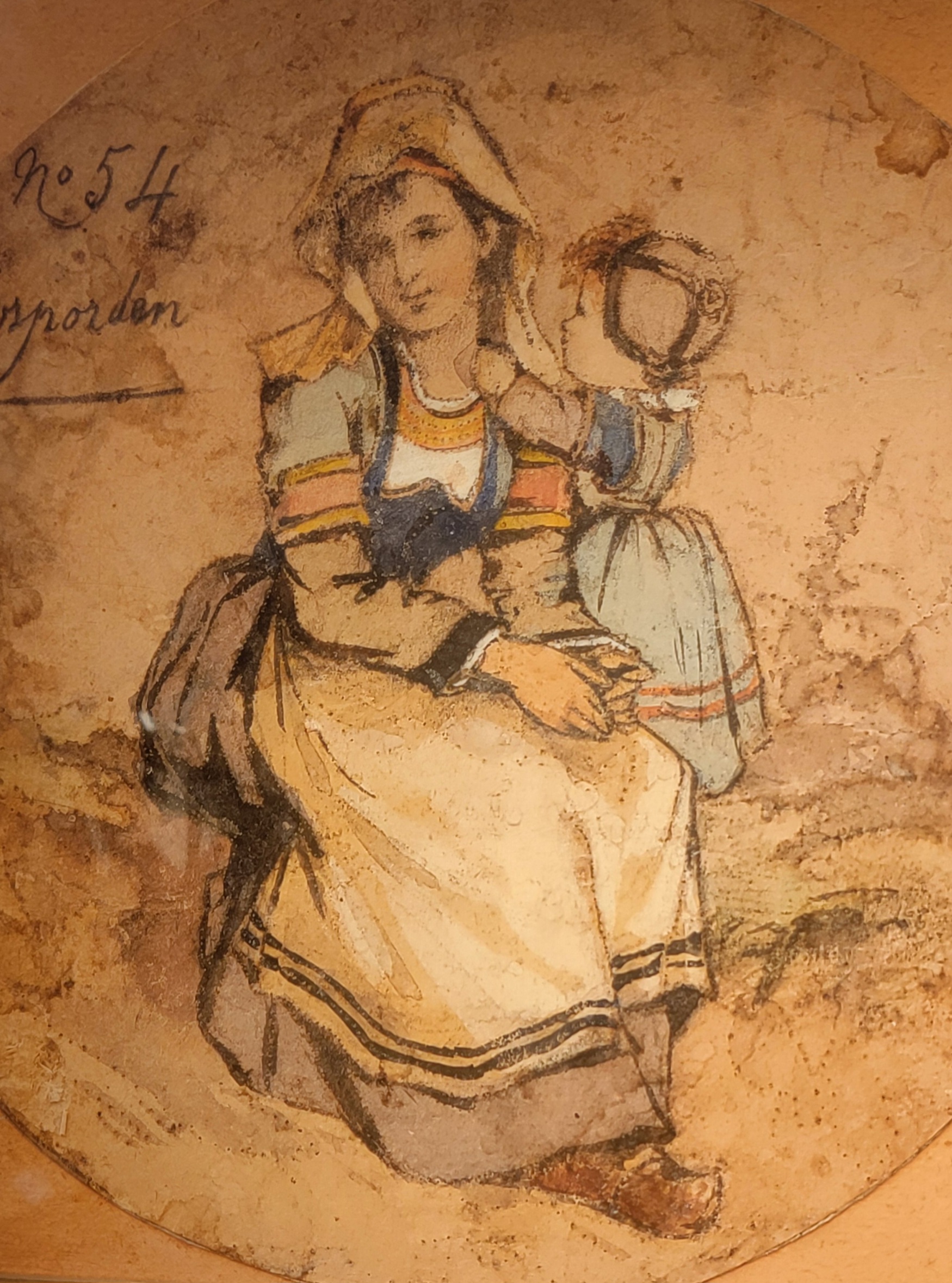
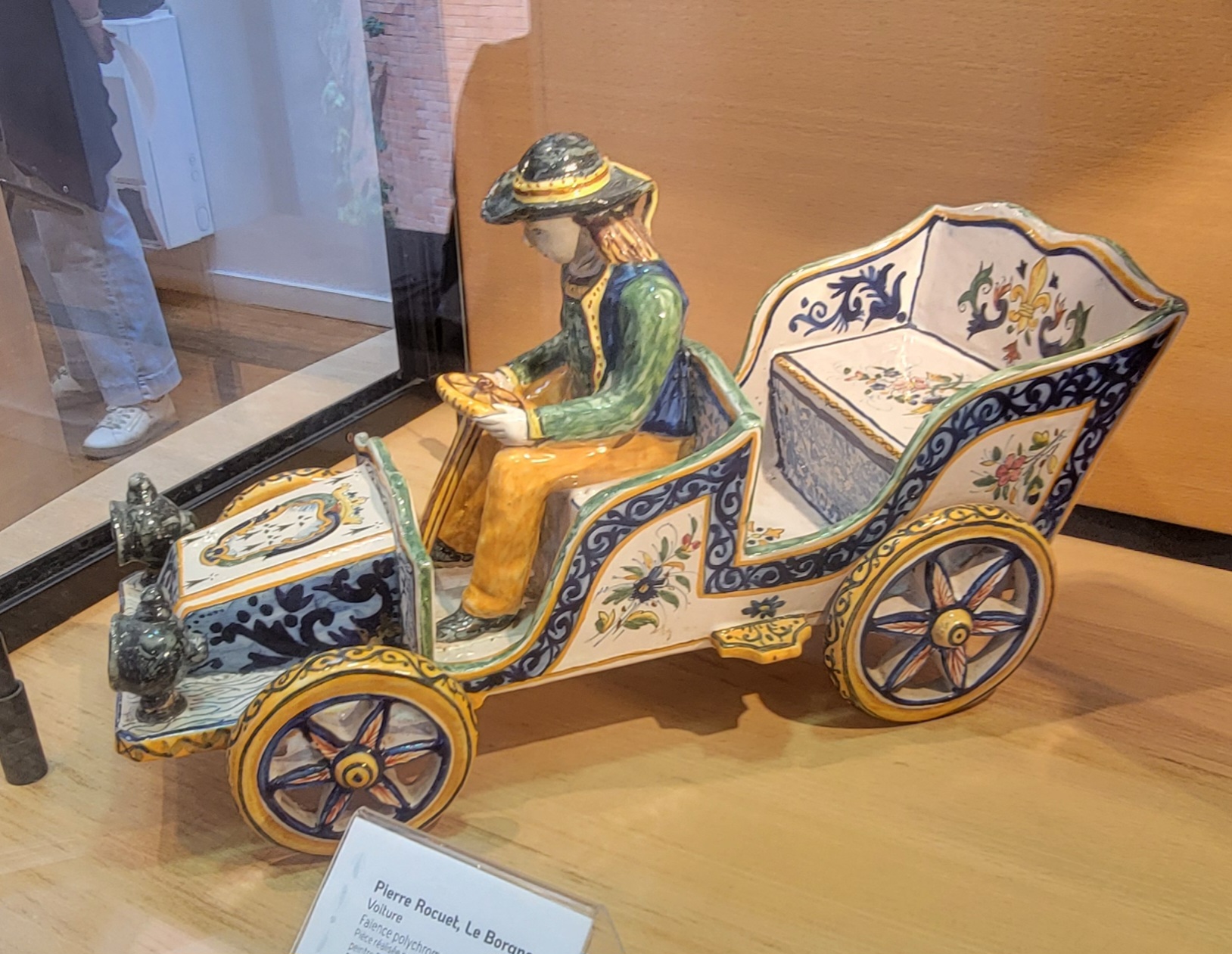
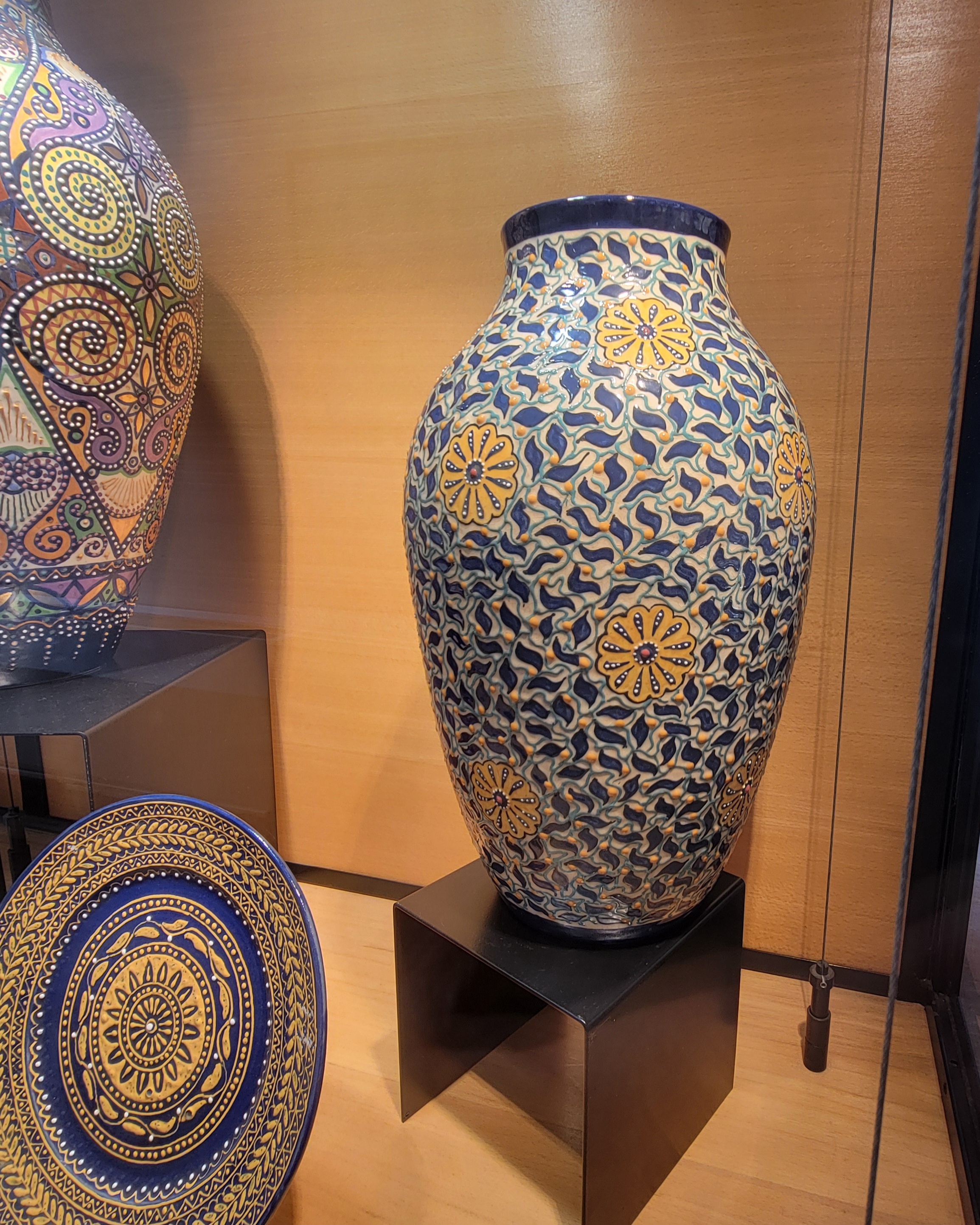
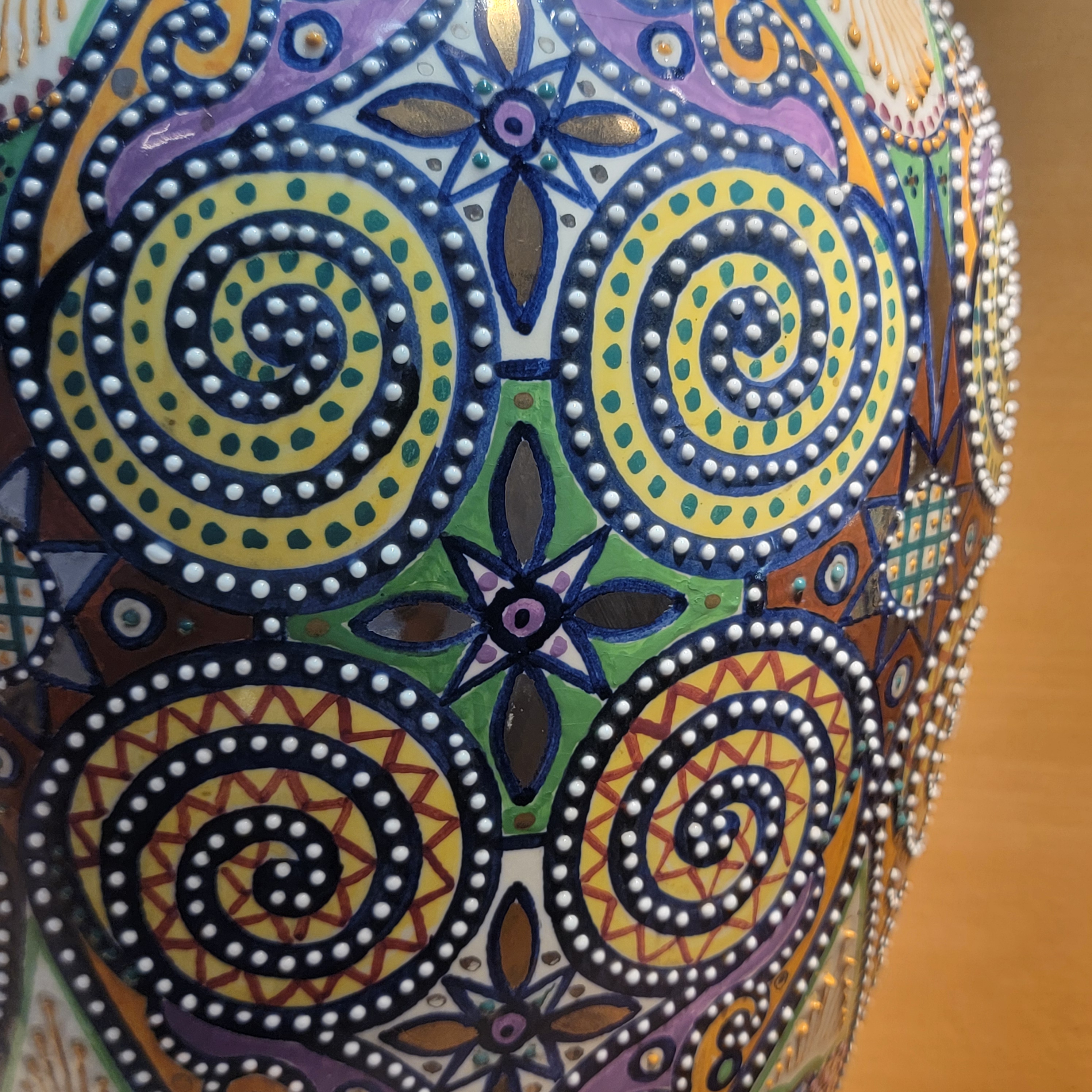
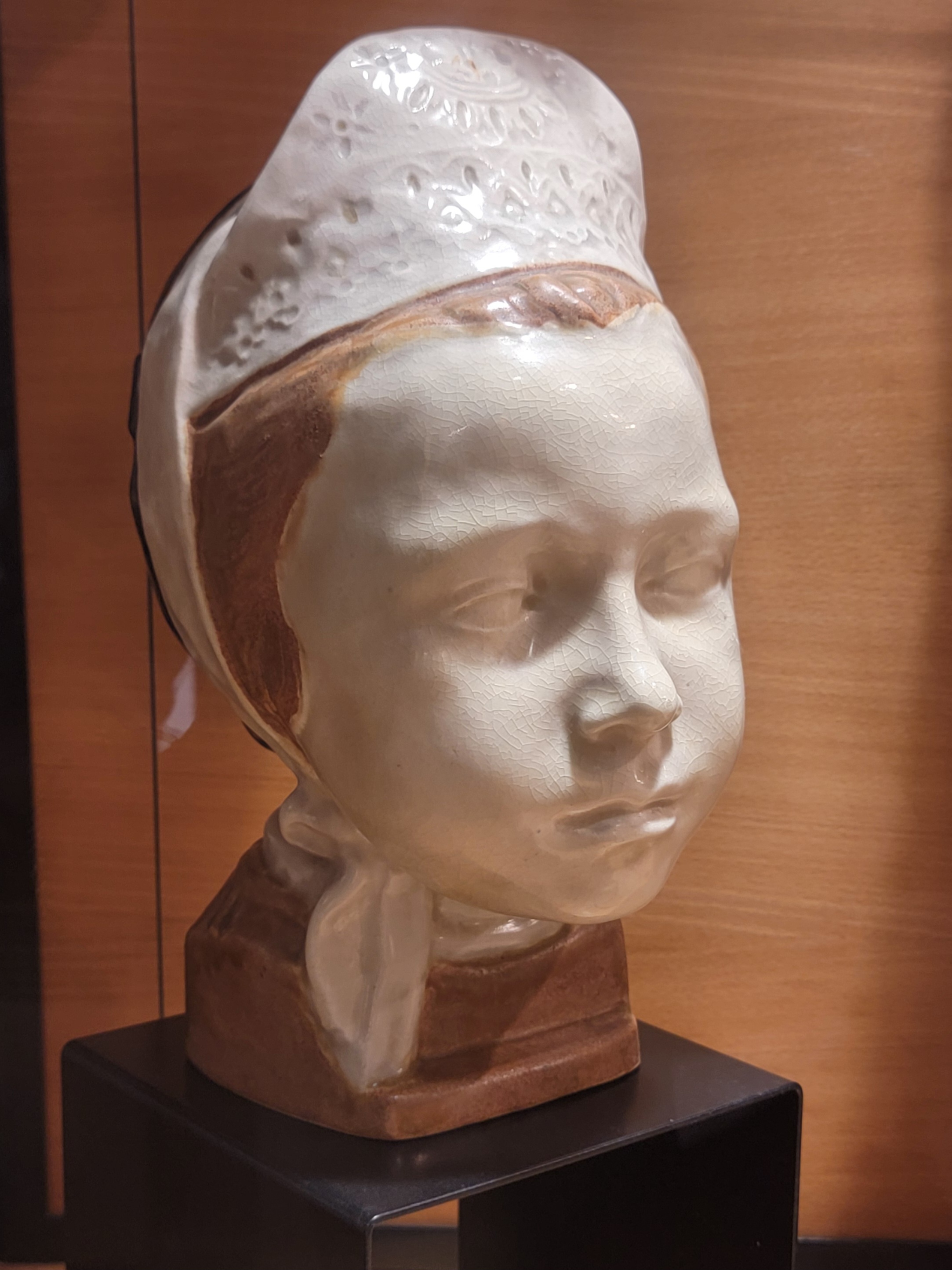
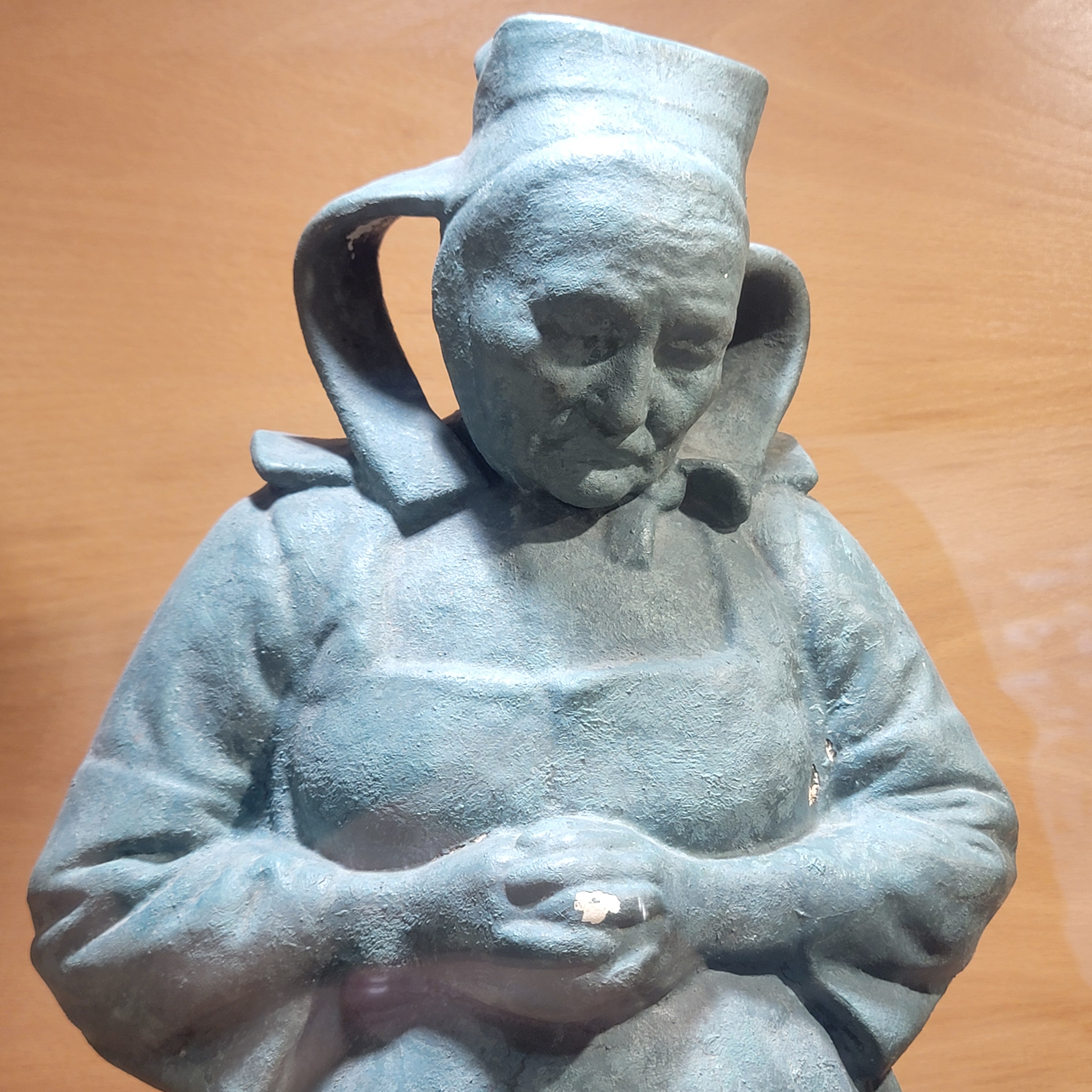


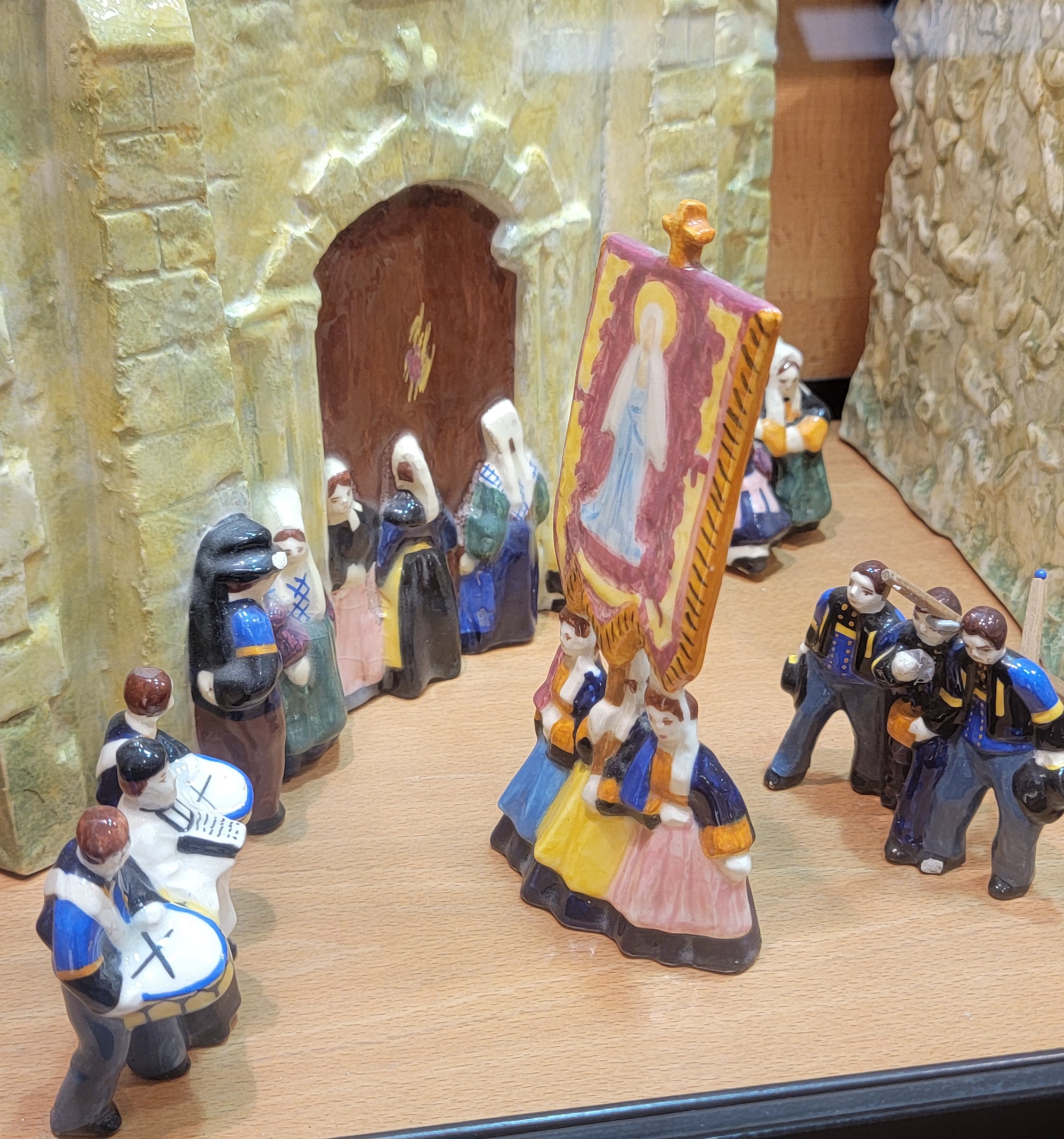
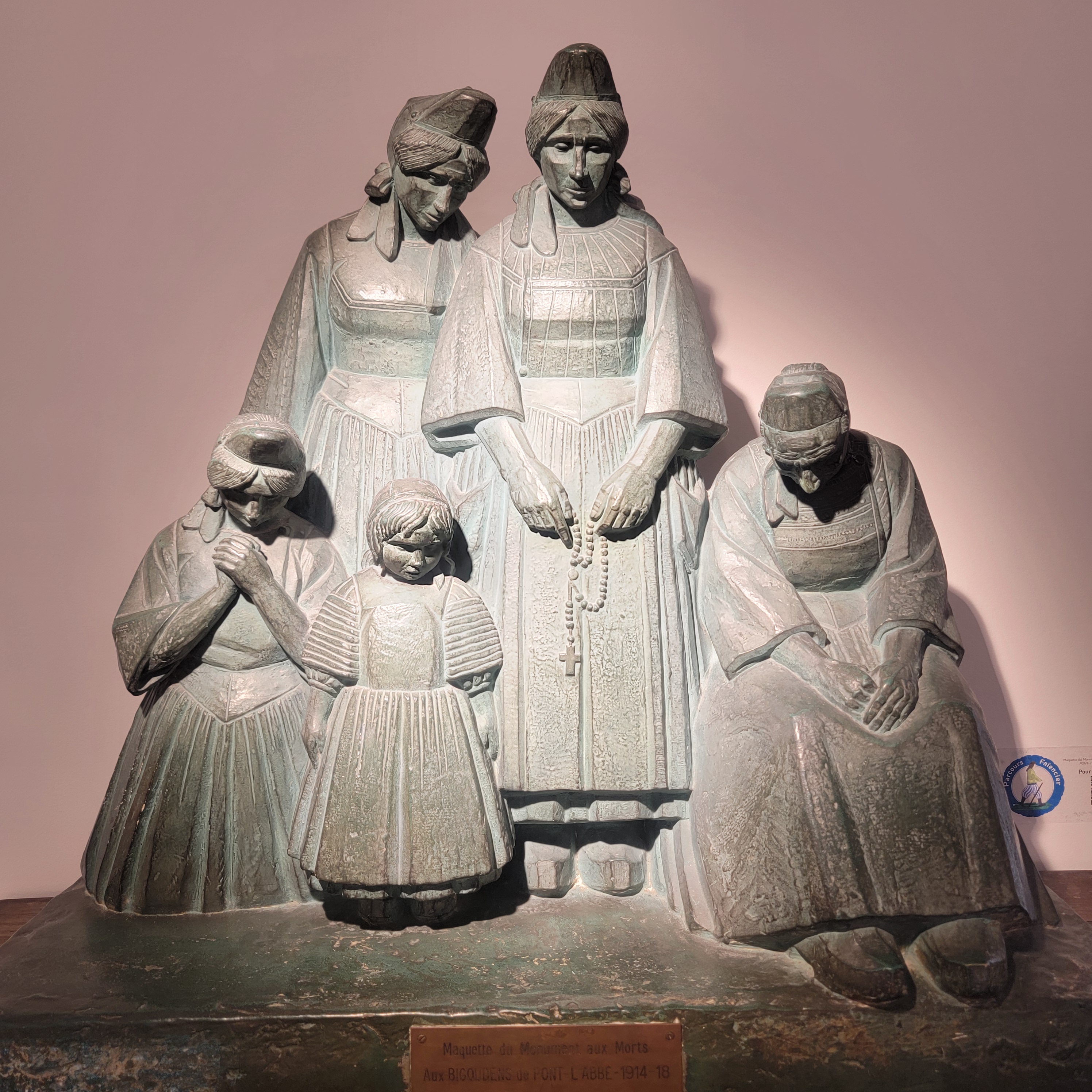
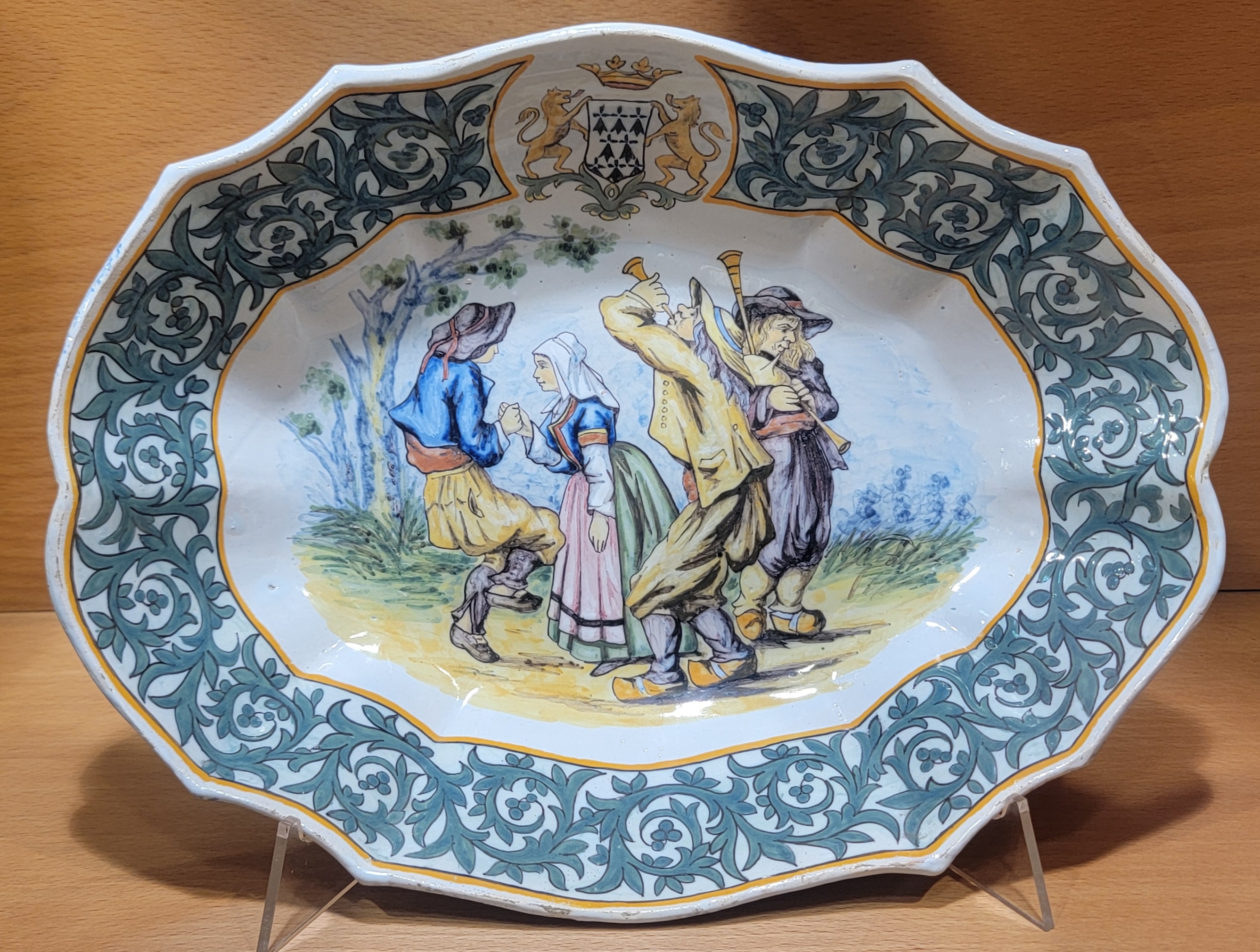
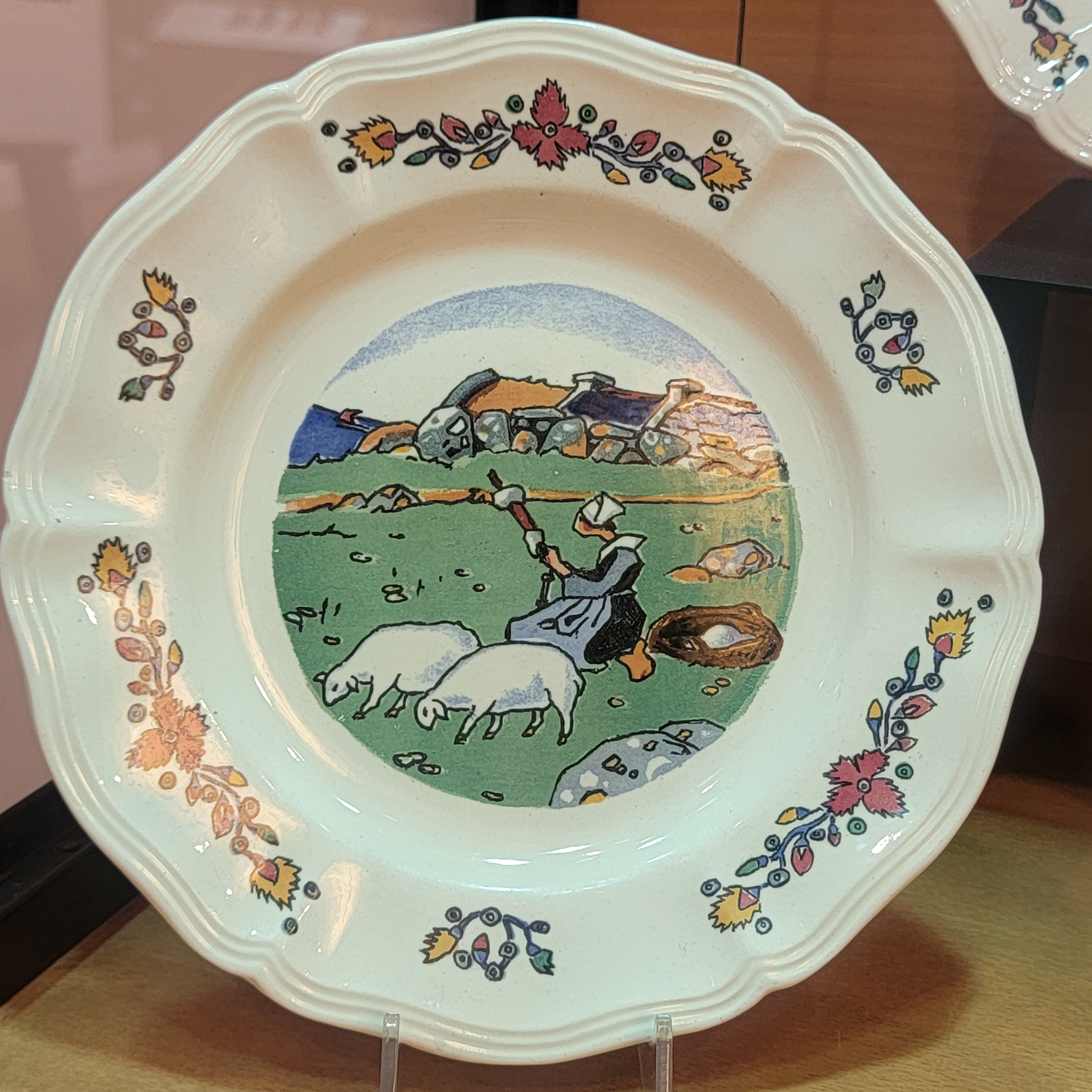
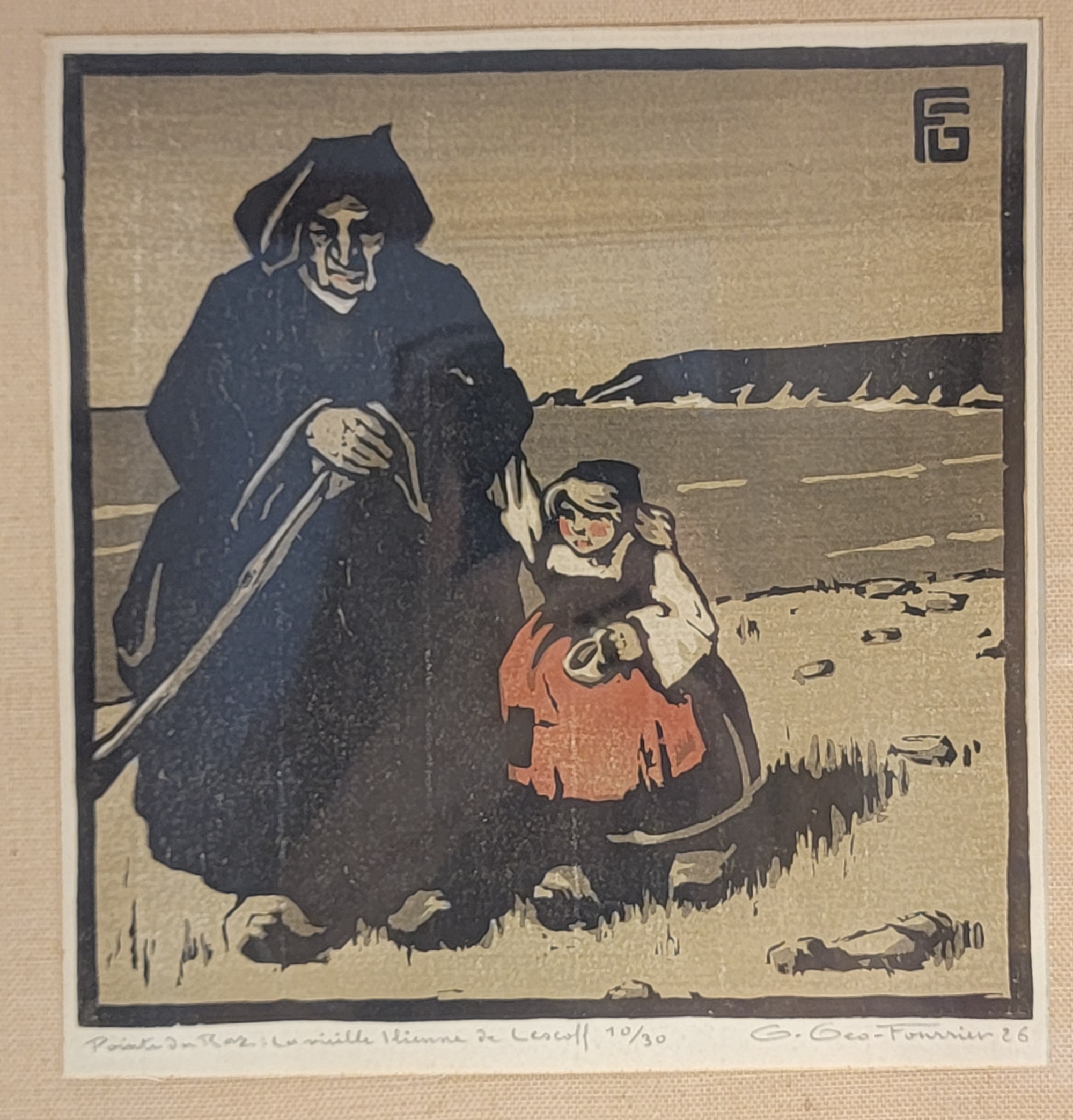
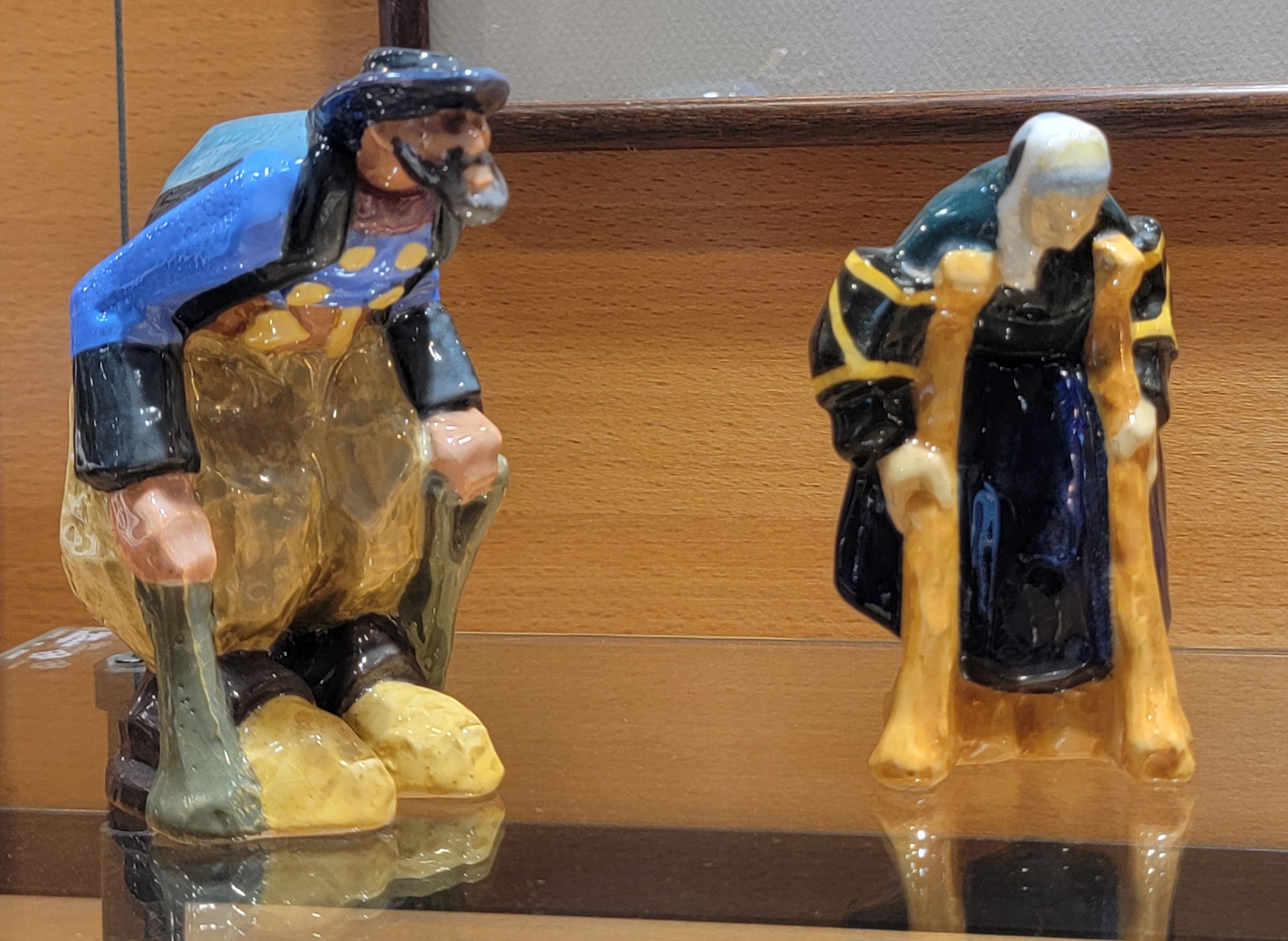
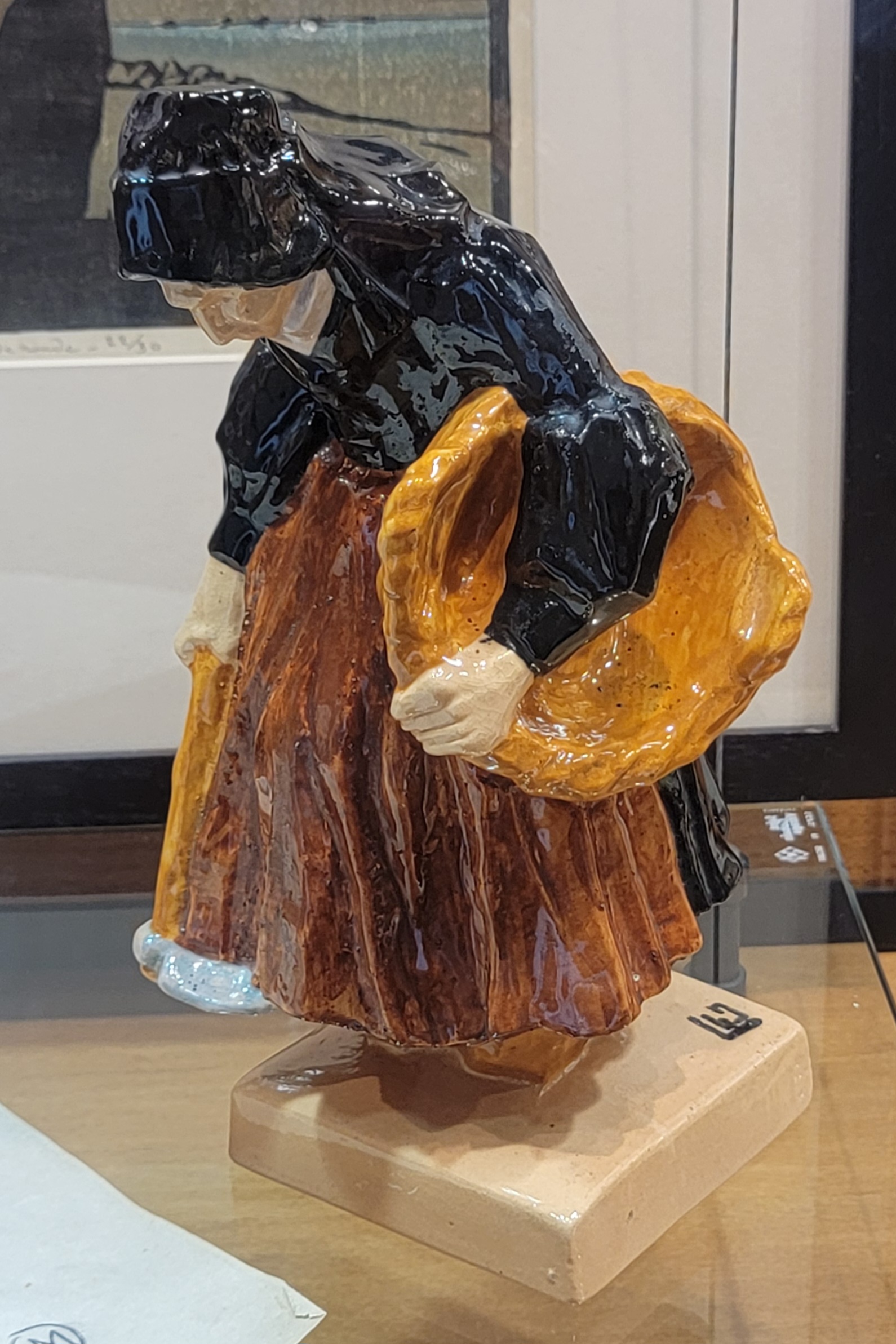
Despite seeing many intricate and elaborate works, my favourite pieces are still the simpler ones, showing guys and gals in traditional Brenton clothes carrying out daily tasks.
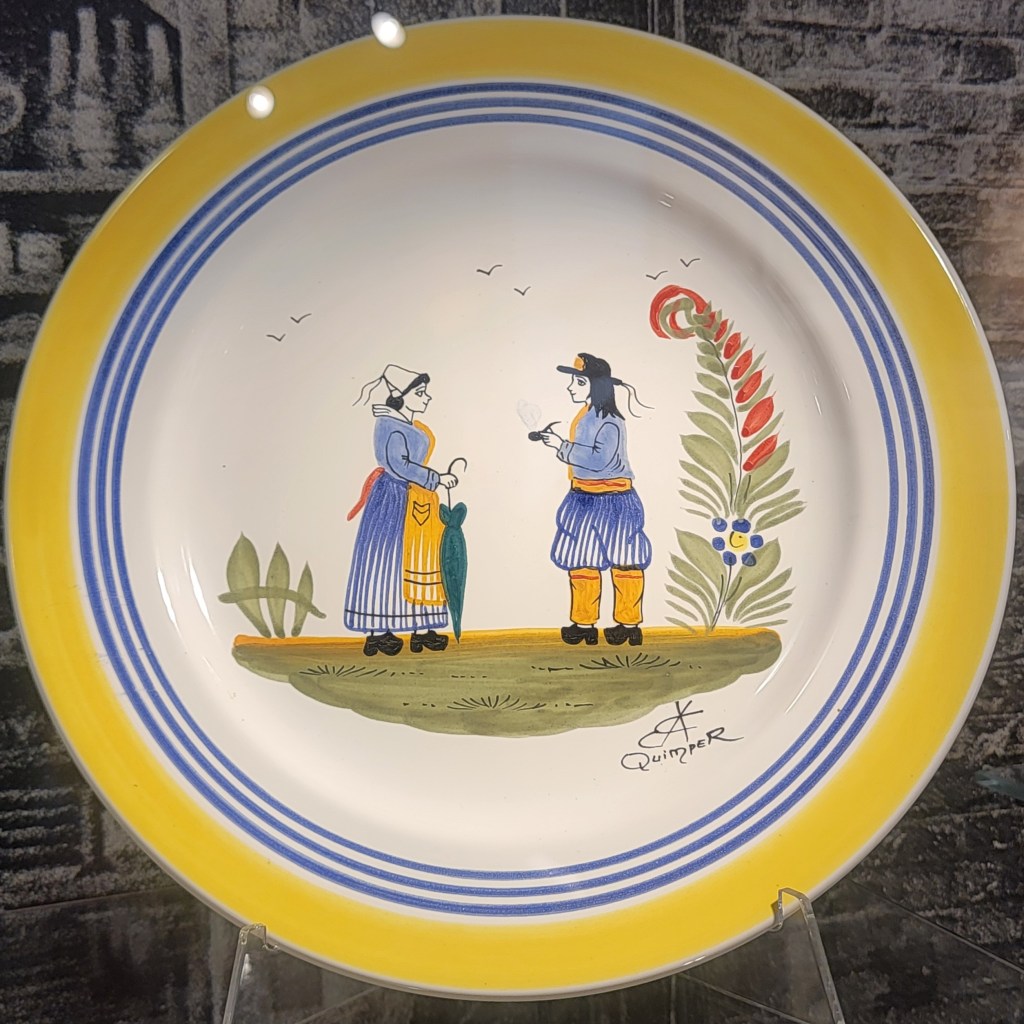
As whimsical as these painted scenes are, the life of the Breton peasant was not an easy one. Most of them were farmers who worked long hours on the land to cultivate their crops, often in difficult weather conditions. Peasant women worked in the fields alongside the men. They were also responsible for childcare, preparing meals and activities like knitting, spinning, and sewing to produce clothing and other household items. Many peasants lived in poverty, struggling to make ends meet and facing food shortages during certain times of the year.
To me, this makes the history of faïence even richer. And despite Madame’s down-to-earth attitude about using her plentiful collection, I still feel just a tad nervous loading them into her dishwasher!
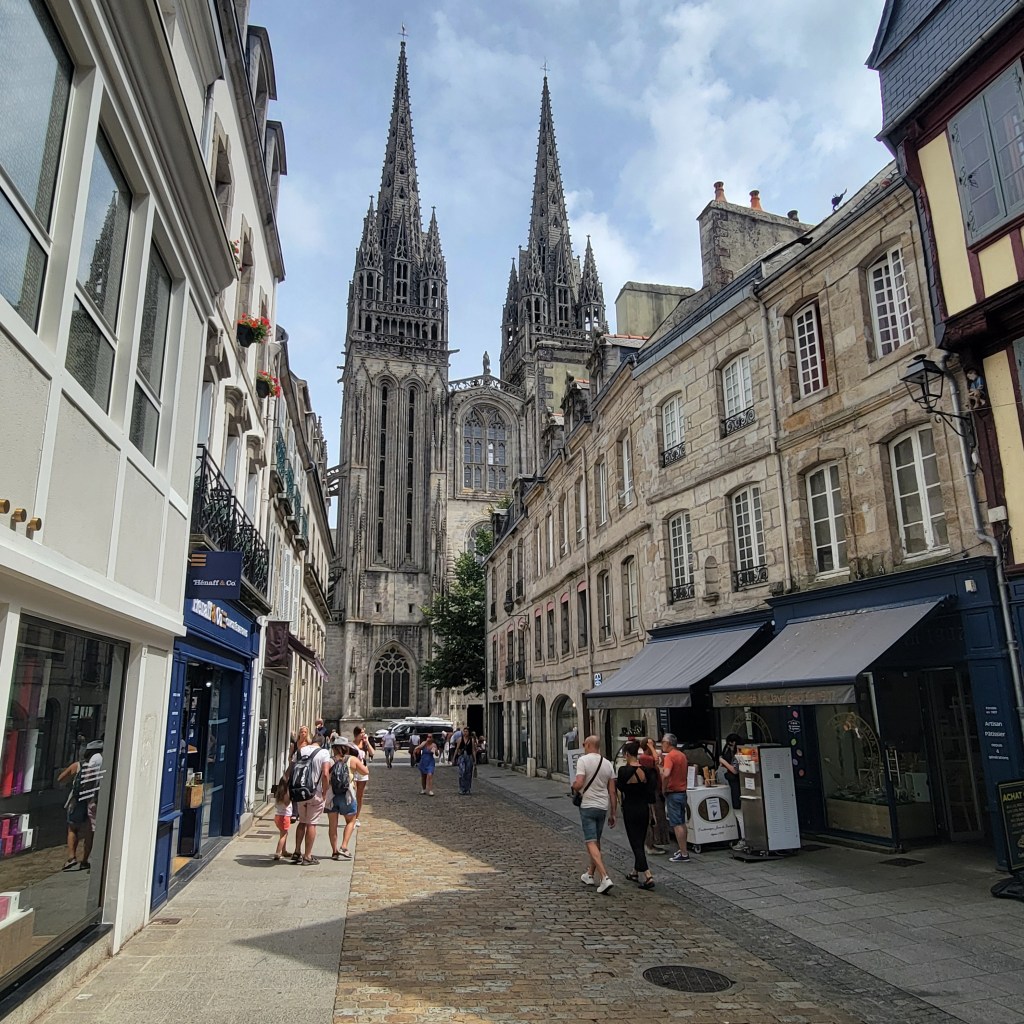
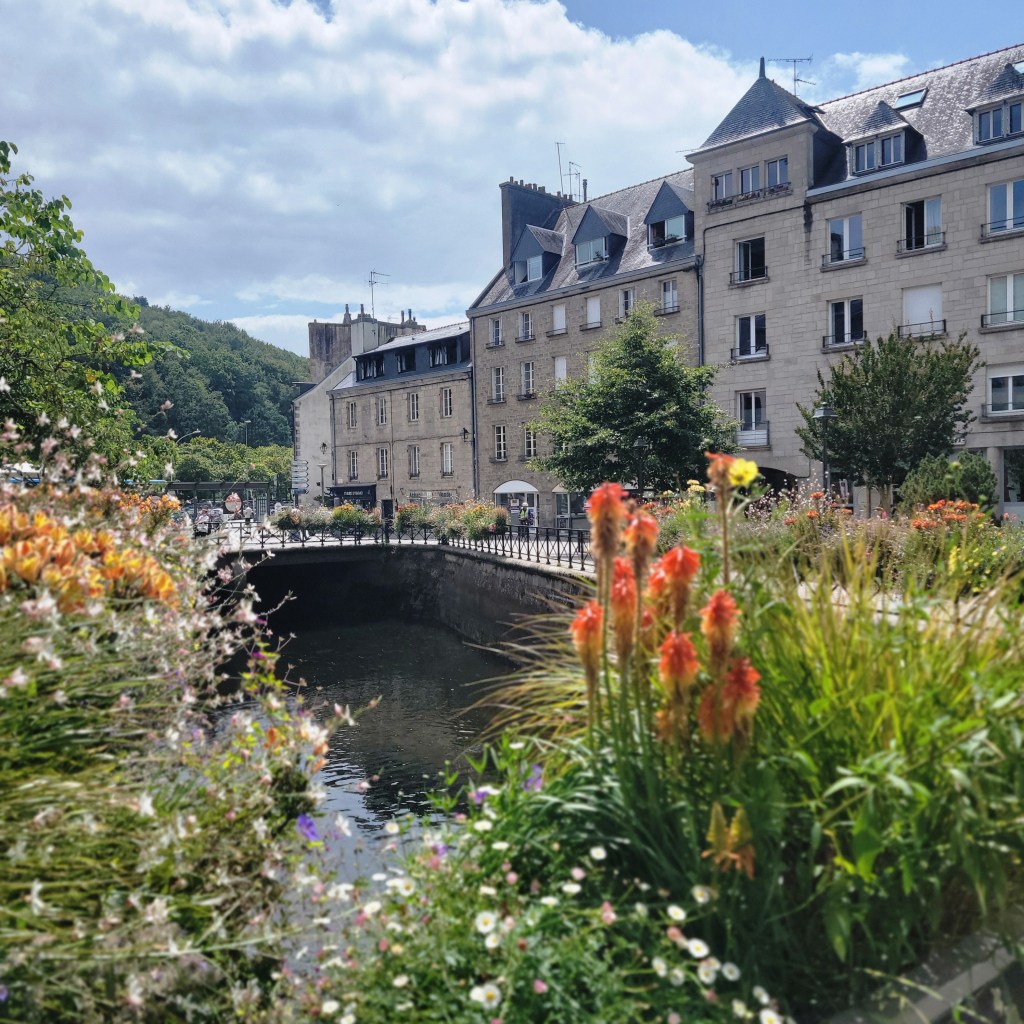
Saint-Corentin Cathedral stands proudly and beautifully in the heart of Quimper. I have mentioned this cathedral in a previous post, but I haven’t yet told you how absolutely charming Quimper’s historic centre is. Its many narrow streets are lined with half-timbered houses which create a picturesque medieval atmosphere. It’s like walking through an old storybook.
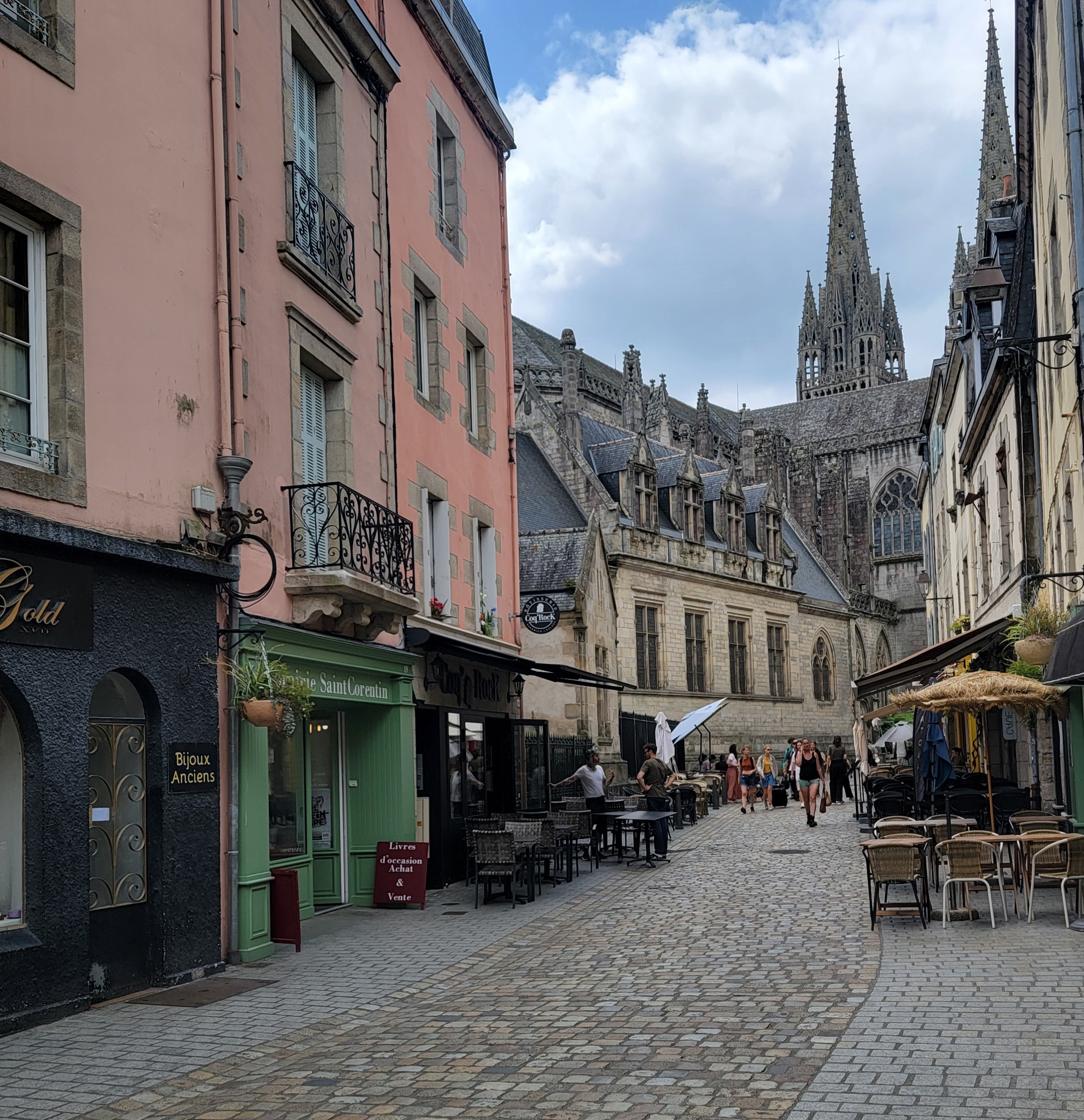
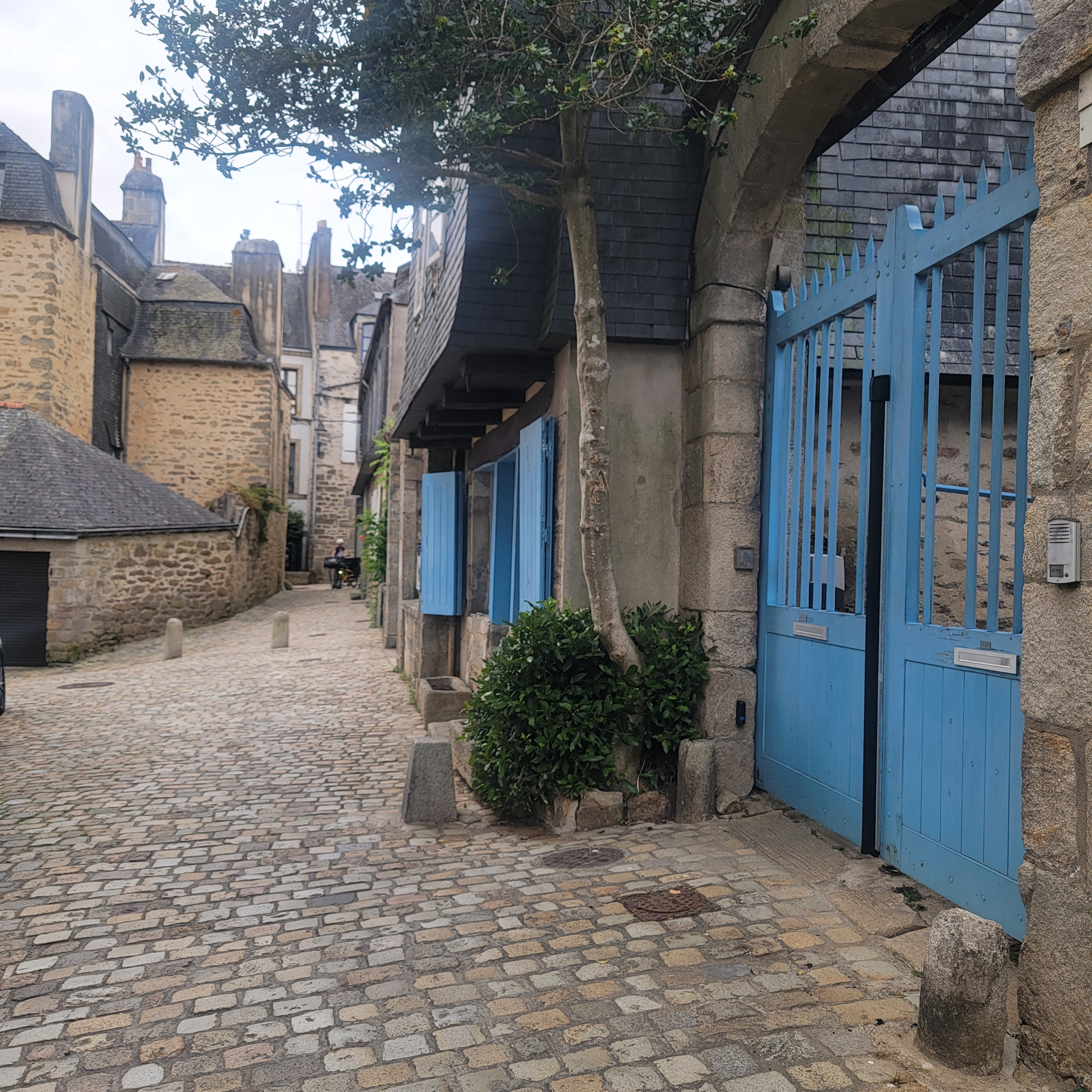
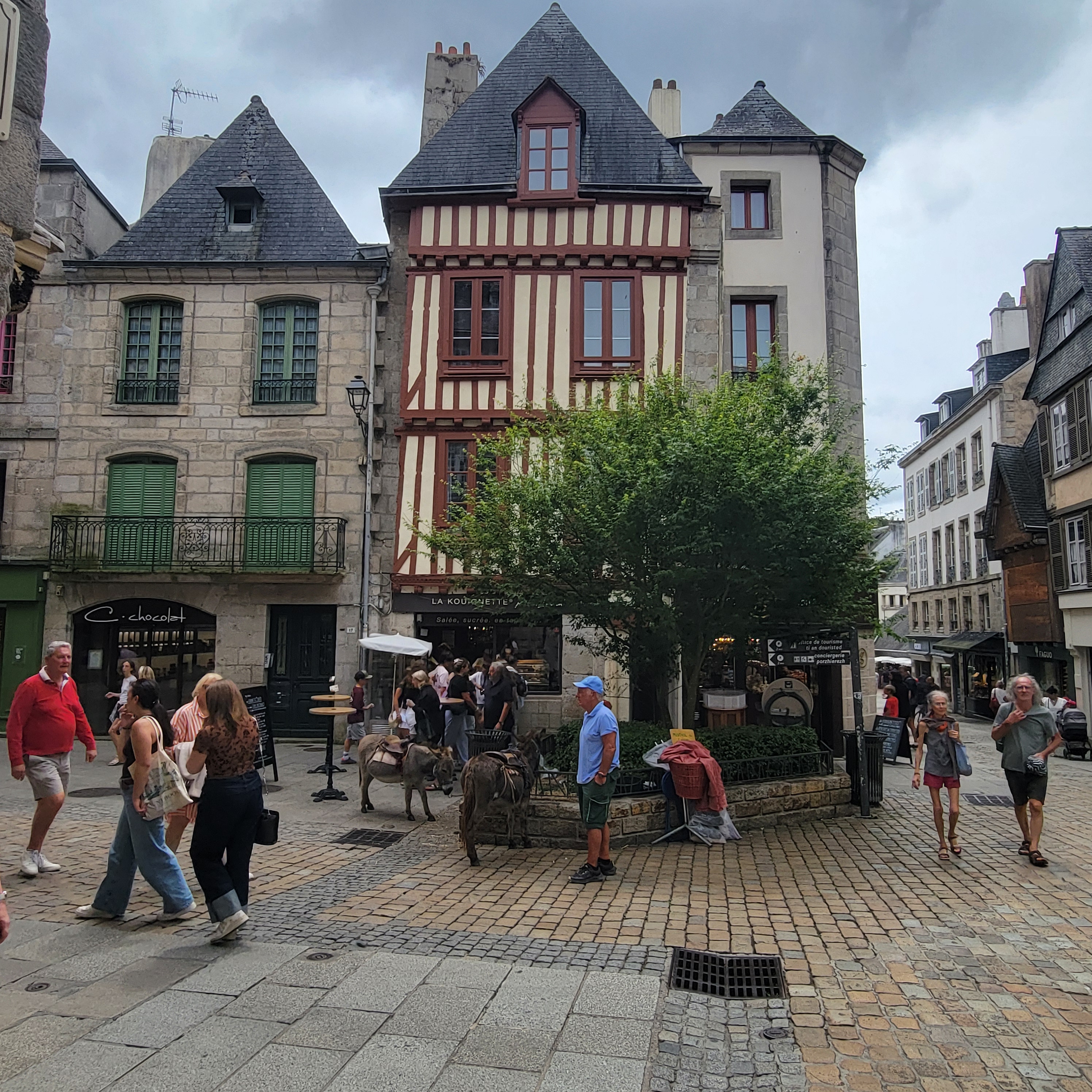
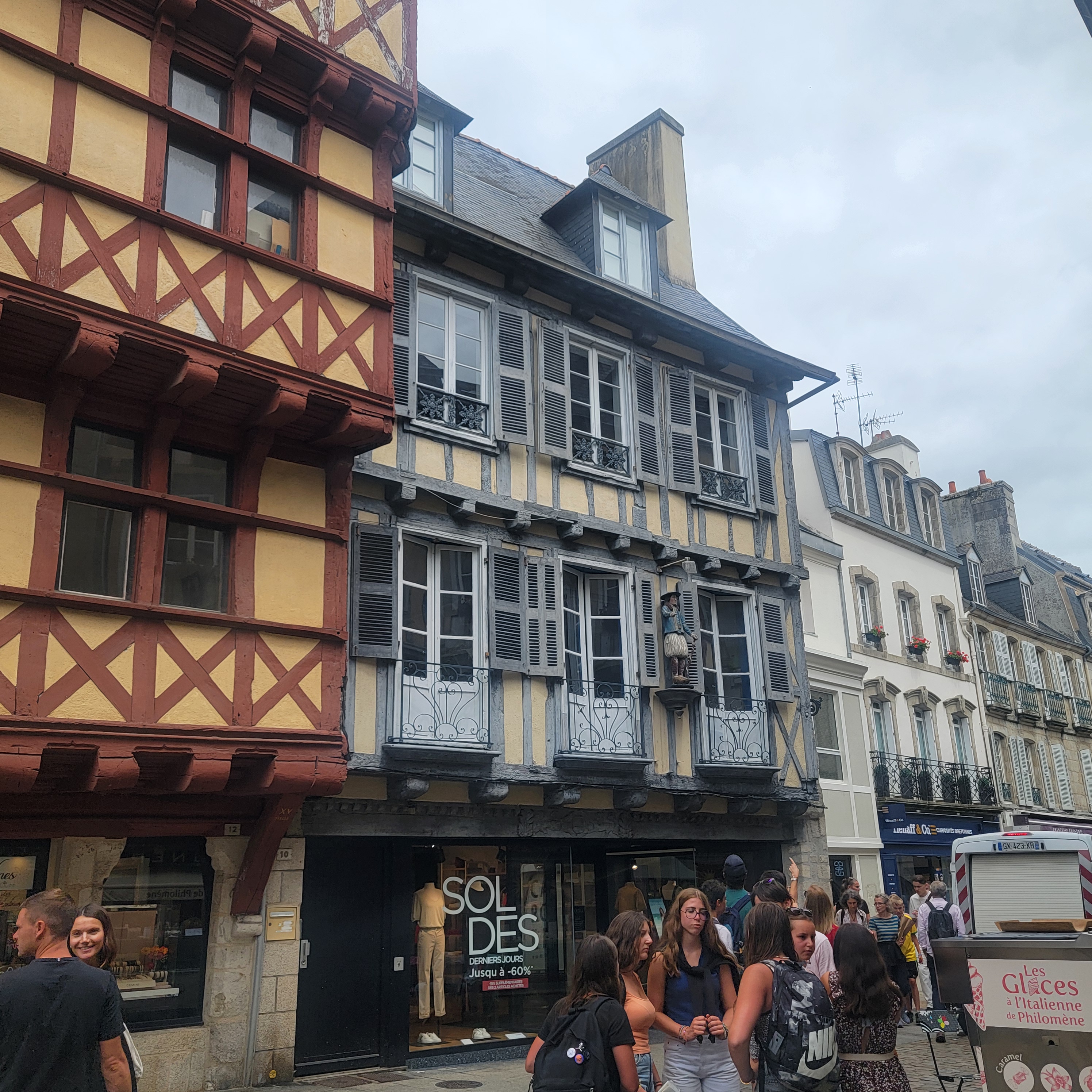
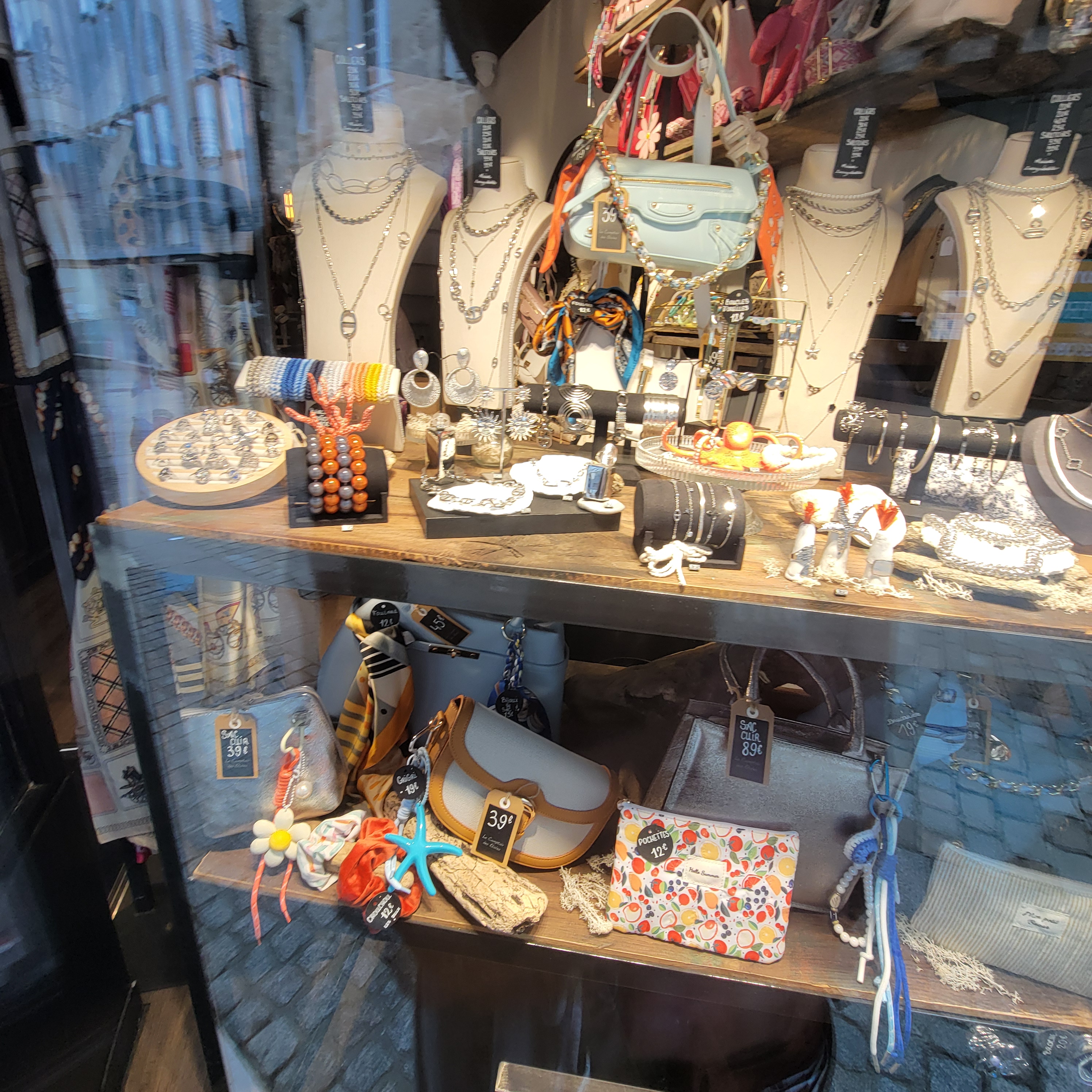
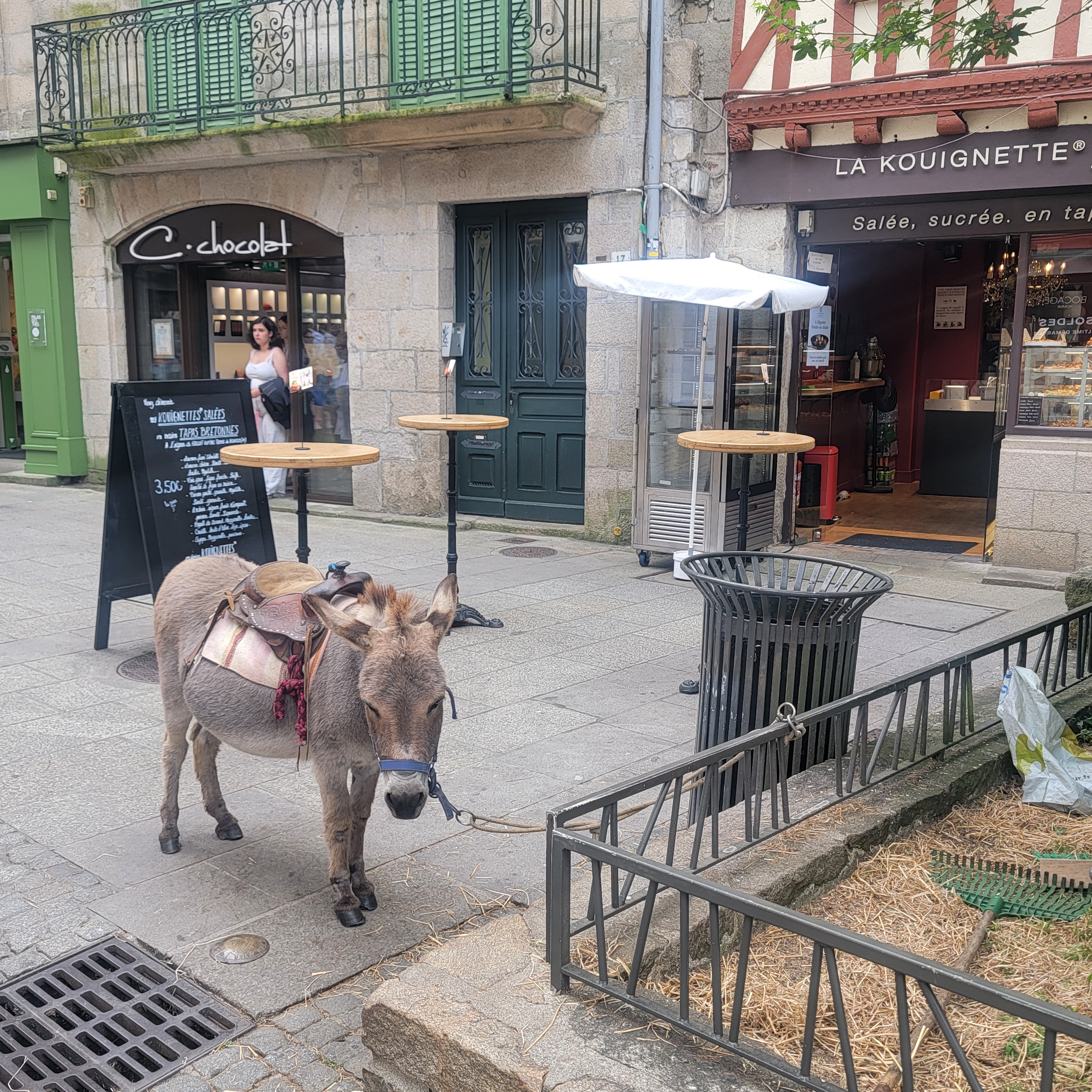
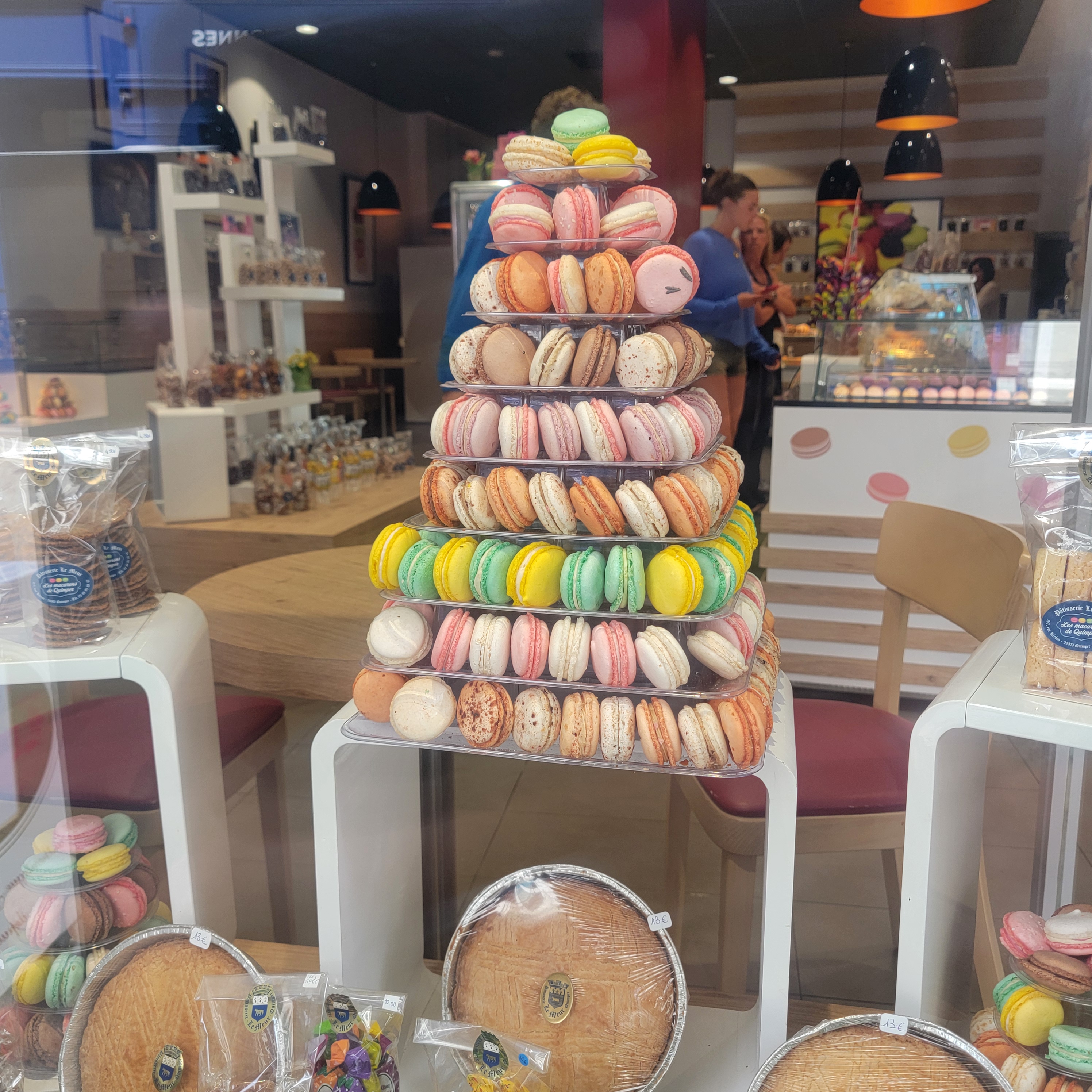
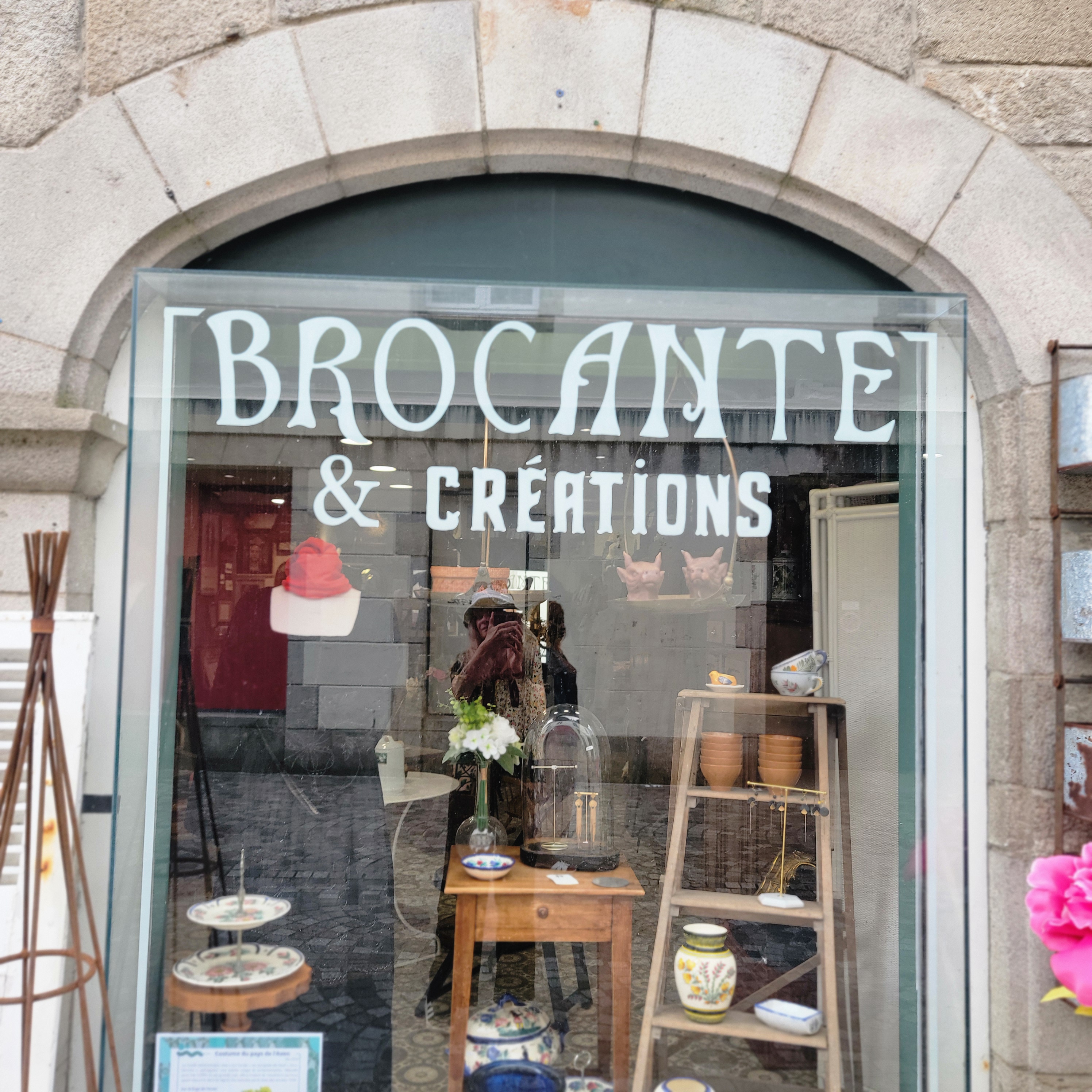
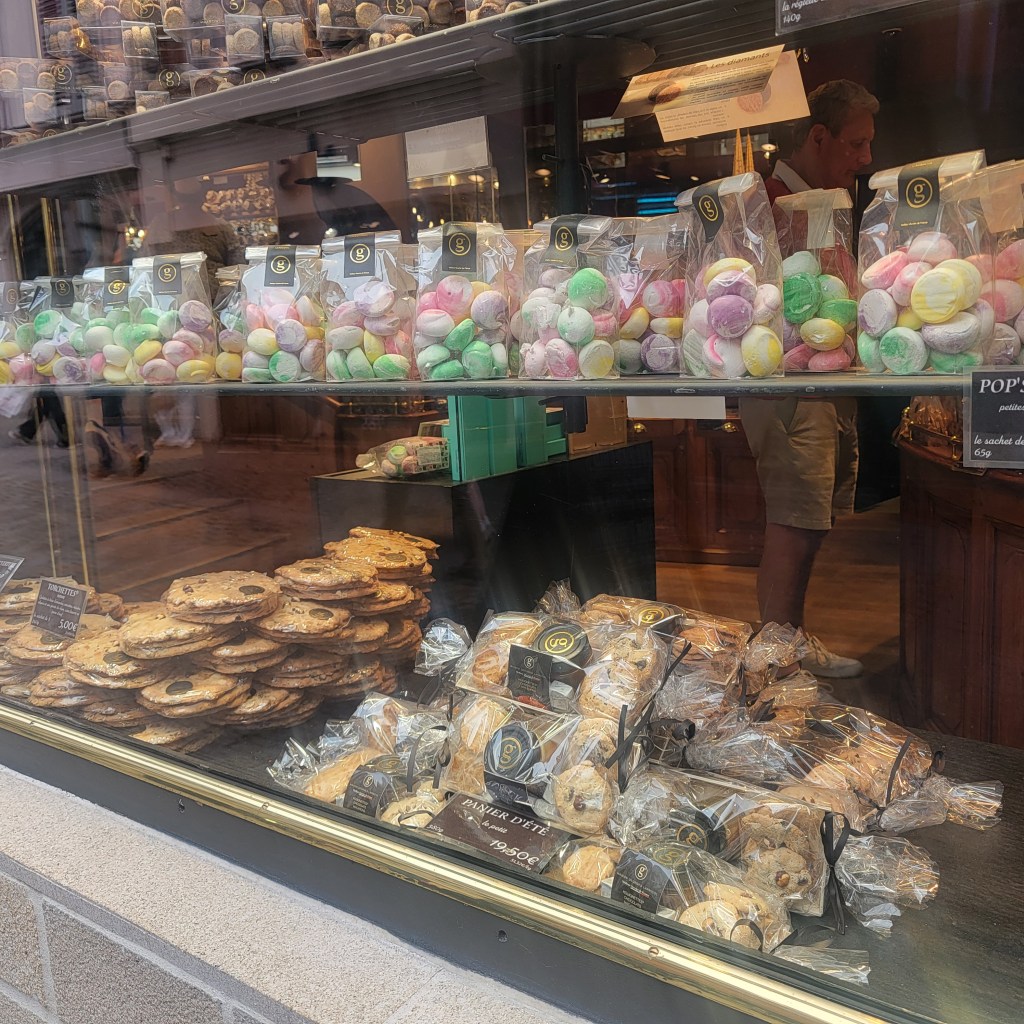
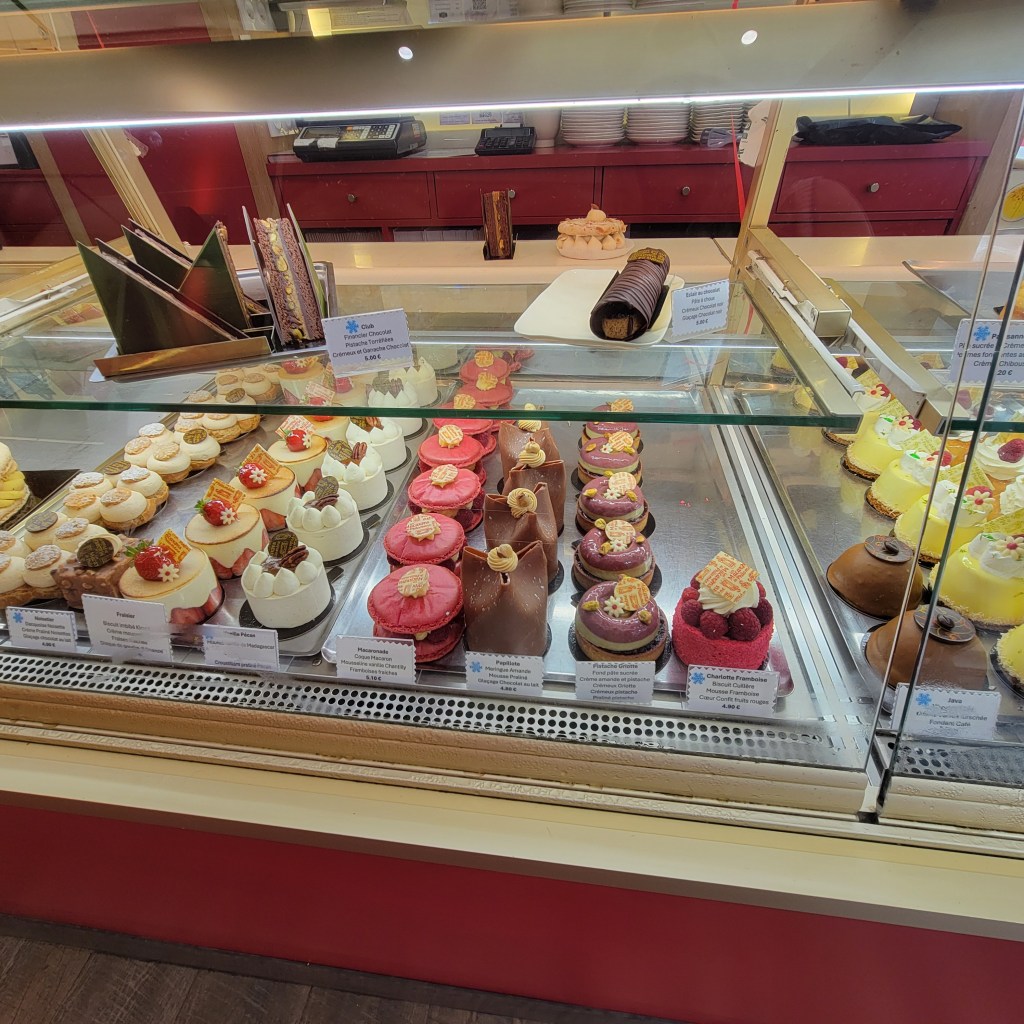
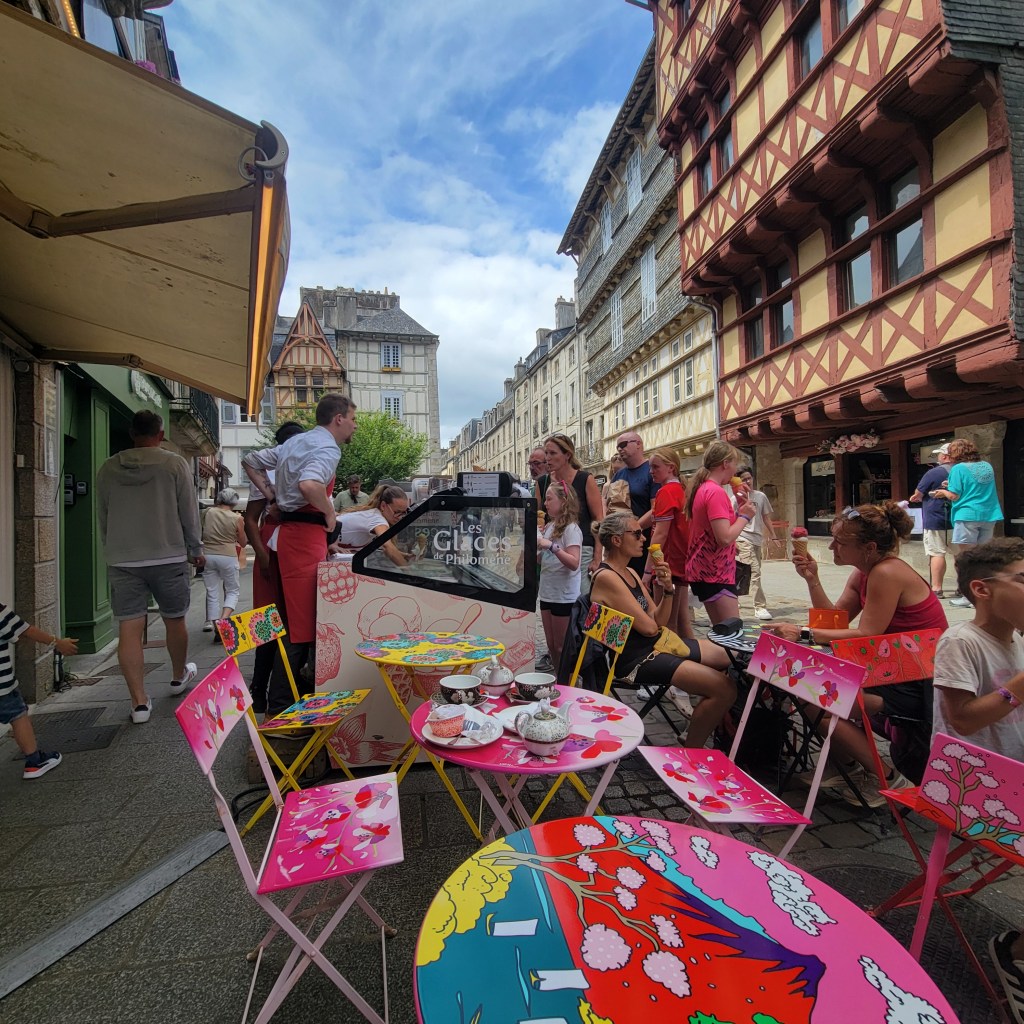
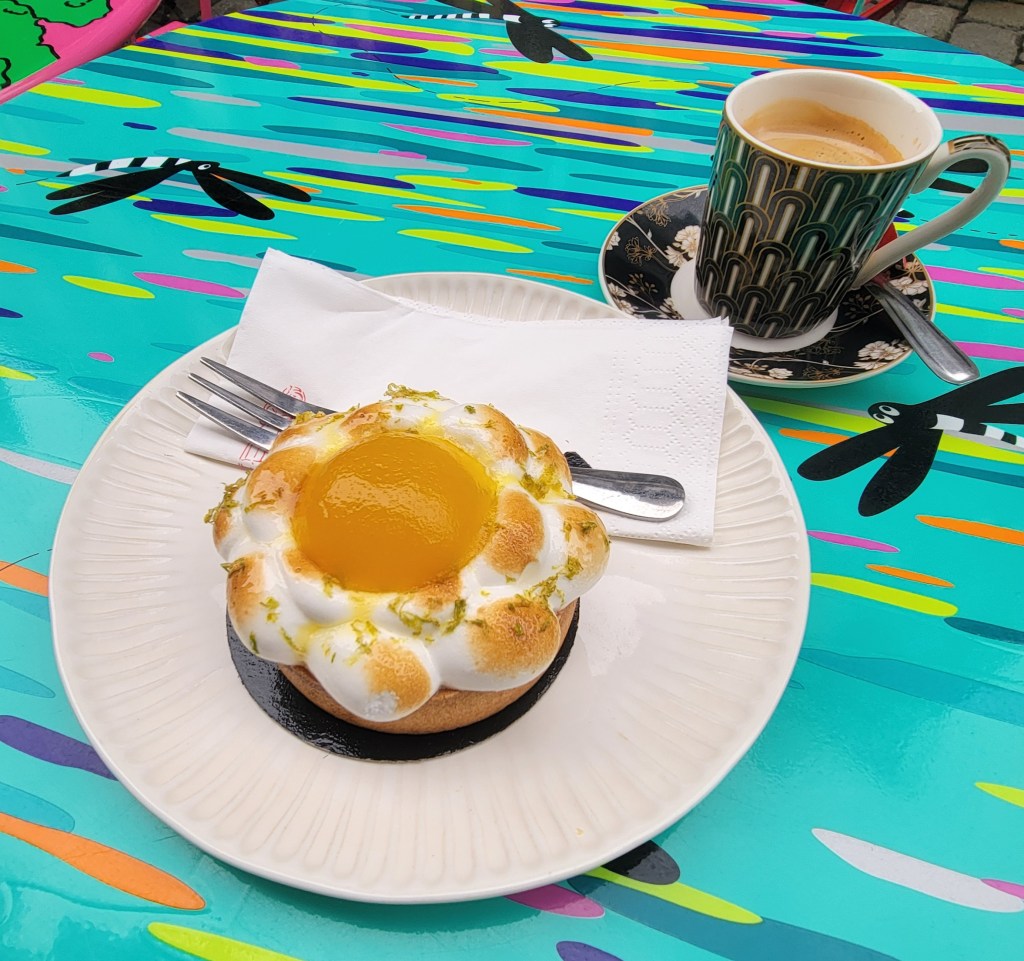
I have spent quite a few hours wandering these gorgeous streets and may have also spent a fair bit of time at a particularly lovely shop, which sells particularly lovely yummies. Sitting at a wee table on the cobbled street outside Macarons De Philome, eating an elegant tart and drinking an espresso, surrounded by such beautiful old buildings and watching people pass by, it feels like I’m in one of the French movies that I love to watch!
And of course, Quimper is famous for its Breton culture, of which Le Festival de Cornouaille plays an important part. This festival is an annual event, which runs over several days in late July and is held in the centre of Quimper.
The festival was founded in 1923 as a sort of beauty contest. The idea was to choose the most beautiful girl in the region and crown her queen of the festival. Things have moved on a bit since then thankfully, and the festival has developed into a celebration of Breton culture, language, literature and music. It is now one of the biggest cultural events in Brittany.
As I had enjoyed the Fête des Brodeuses so much, my host thought I might be interested in going along to this one. The main parade was to be held on a Sunday and Madame Julia kindly dropped me into the city centre nice and early on the Sunday morning. It was an hour or so before the parade was due to start so, as thoughtfully suggested by Madame, I took the opportunity to slip into a back pew of Saint Corentin’s Cathedral, just as the catholic mass was about to begin.
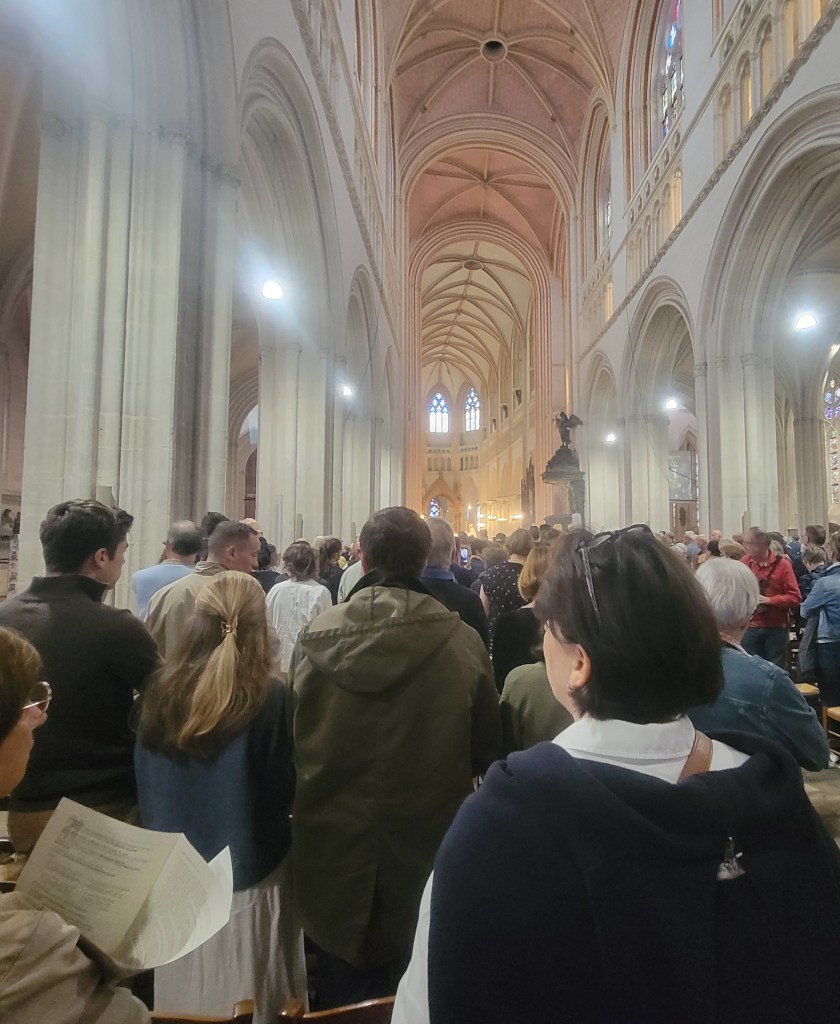
I have been attending church services all my life, but never before in a cathedral. It was also my first experience of a catholic mass, so I’m not sure what the “norm” is but I suspect the regal-like entrance of a group of people in Breton costume was probably more to do with the Cornouaille Festival than a weekly event.
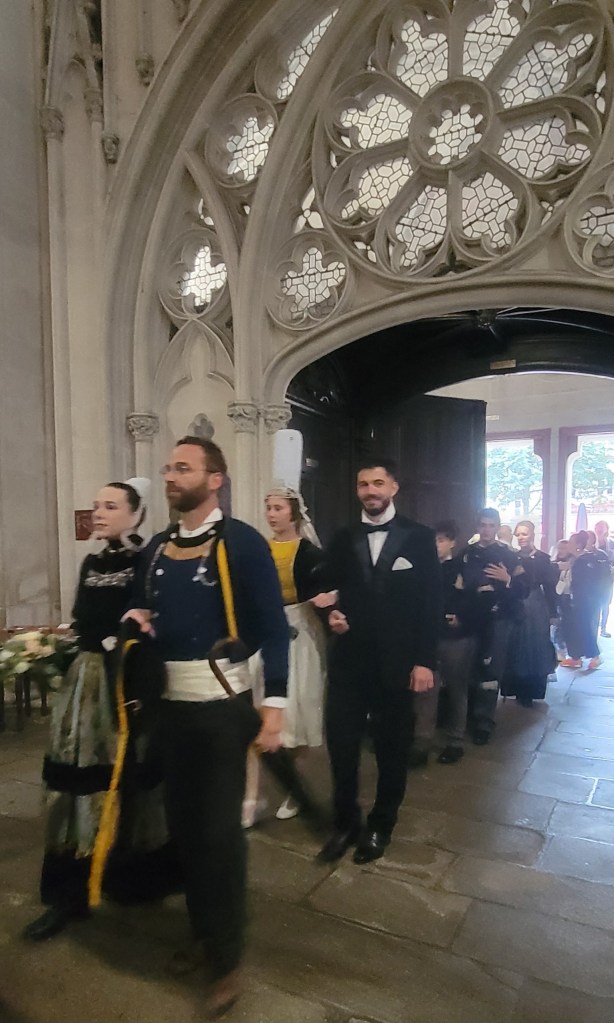
The mass was held in Breton and French, and although I couldn’t really follow what was being said it was still a remarkable experience. The magnificent architecture, the stained-glass windows and art, the tremendous sound of the pipe organ accompanied by someone up in the eves playing the celtic bombarde (an oboe-type instrument) – it was all wonderful. As is the case with any church service, people would have been attending for a variety of reasons. For some it may have been simply another tick on their tourist itinerary. Others may have attended as part of the festival’s activities. But I’m sure many people would have been there to give praise to God and to learn from His Word. It was certainly a different environment to my normal Sunday morning church service at home, but it’s always wonderful to be amongst people who love Him.
The service ended just as the festival parade was about to begin. Again, it was such a fantastic cultural experience. Costumes, music, dancing and actors – it was all there. Once again it was so good to see people of all ages taking part in the parade. And just because you weren’t part of the parade, didn’t mean you couldn’t dress up. I was standing beside three men in their late seventies and early eighties, who were decked out in their Breton best!
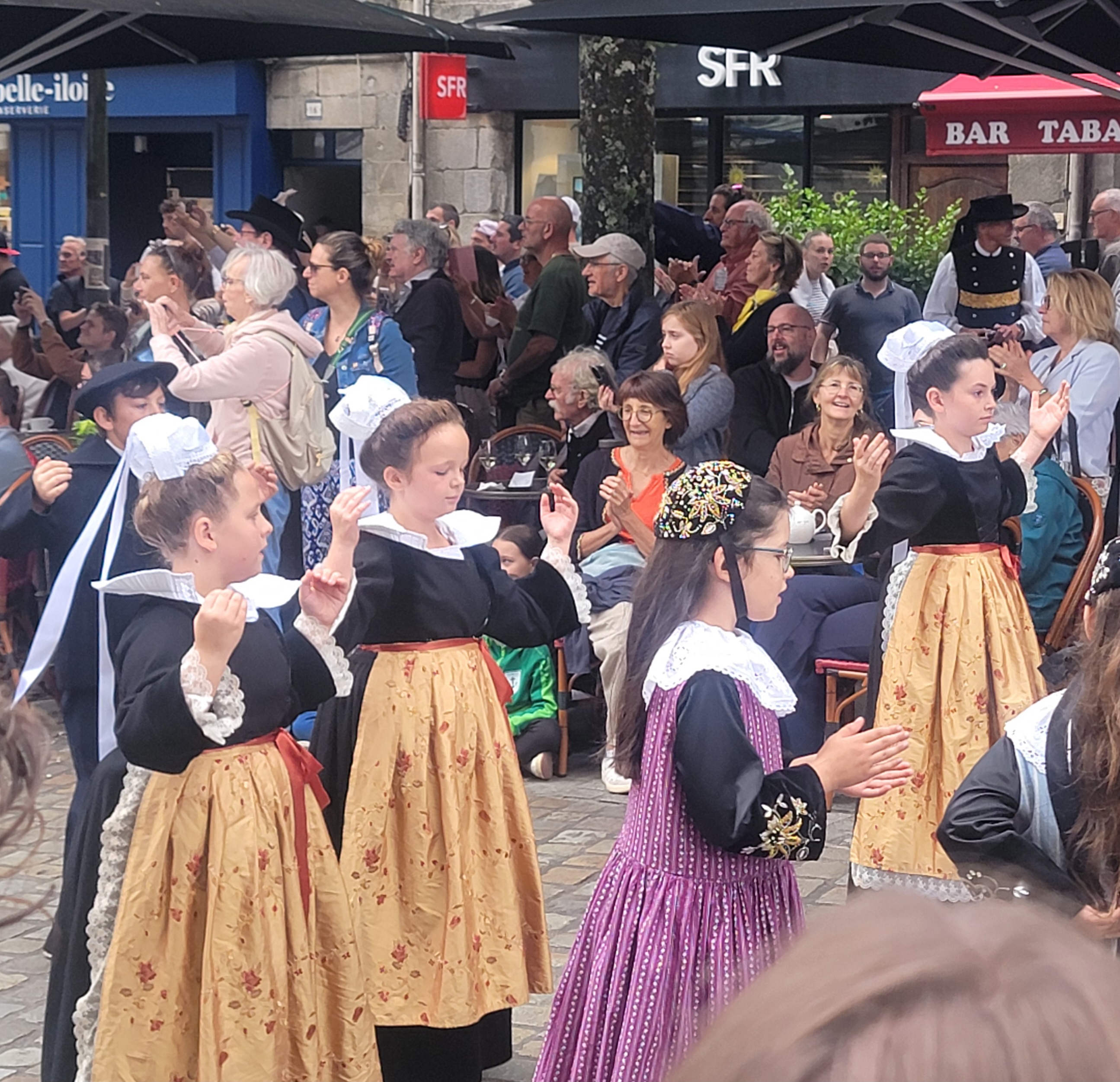
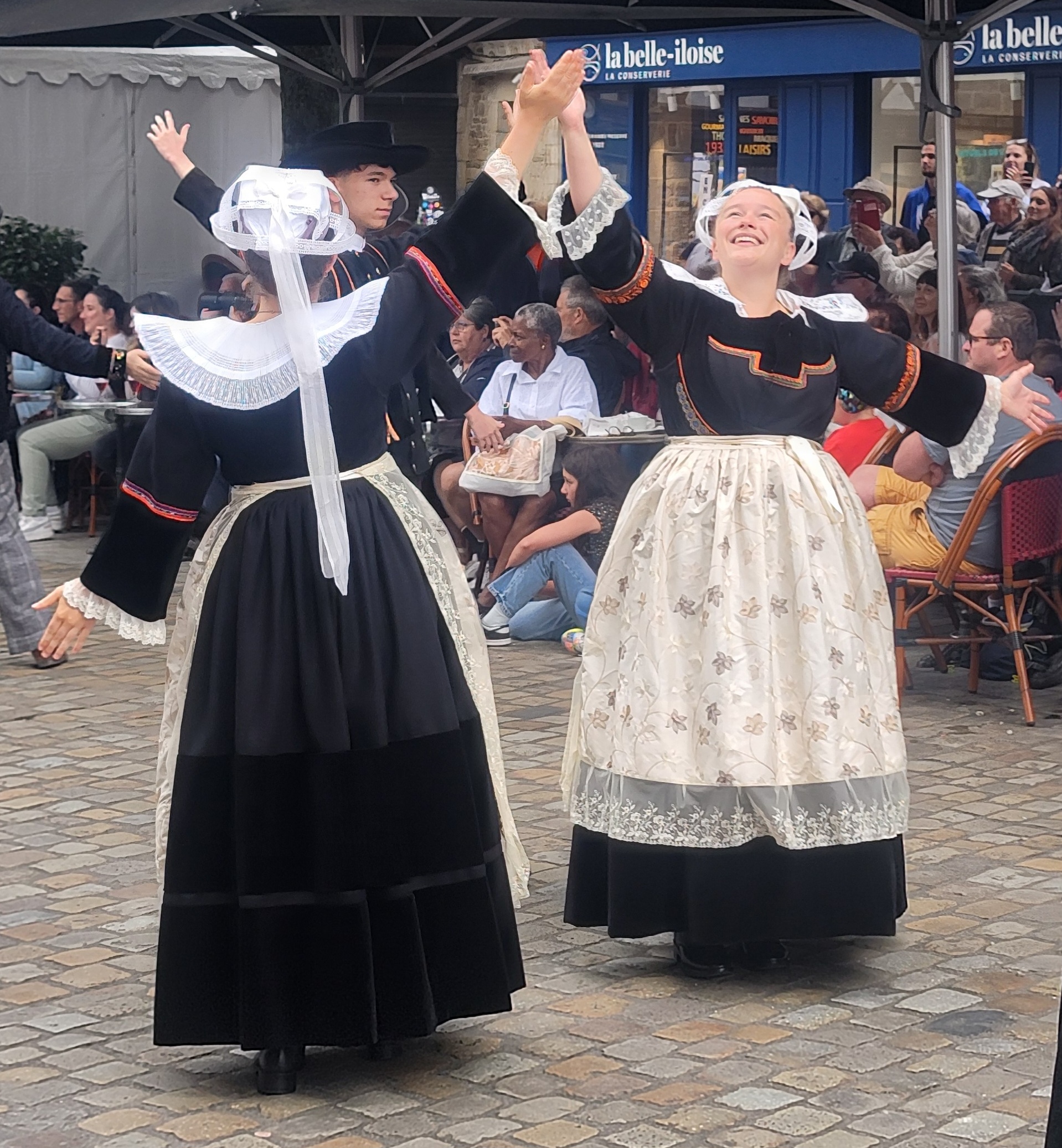
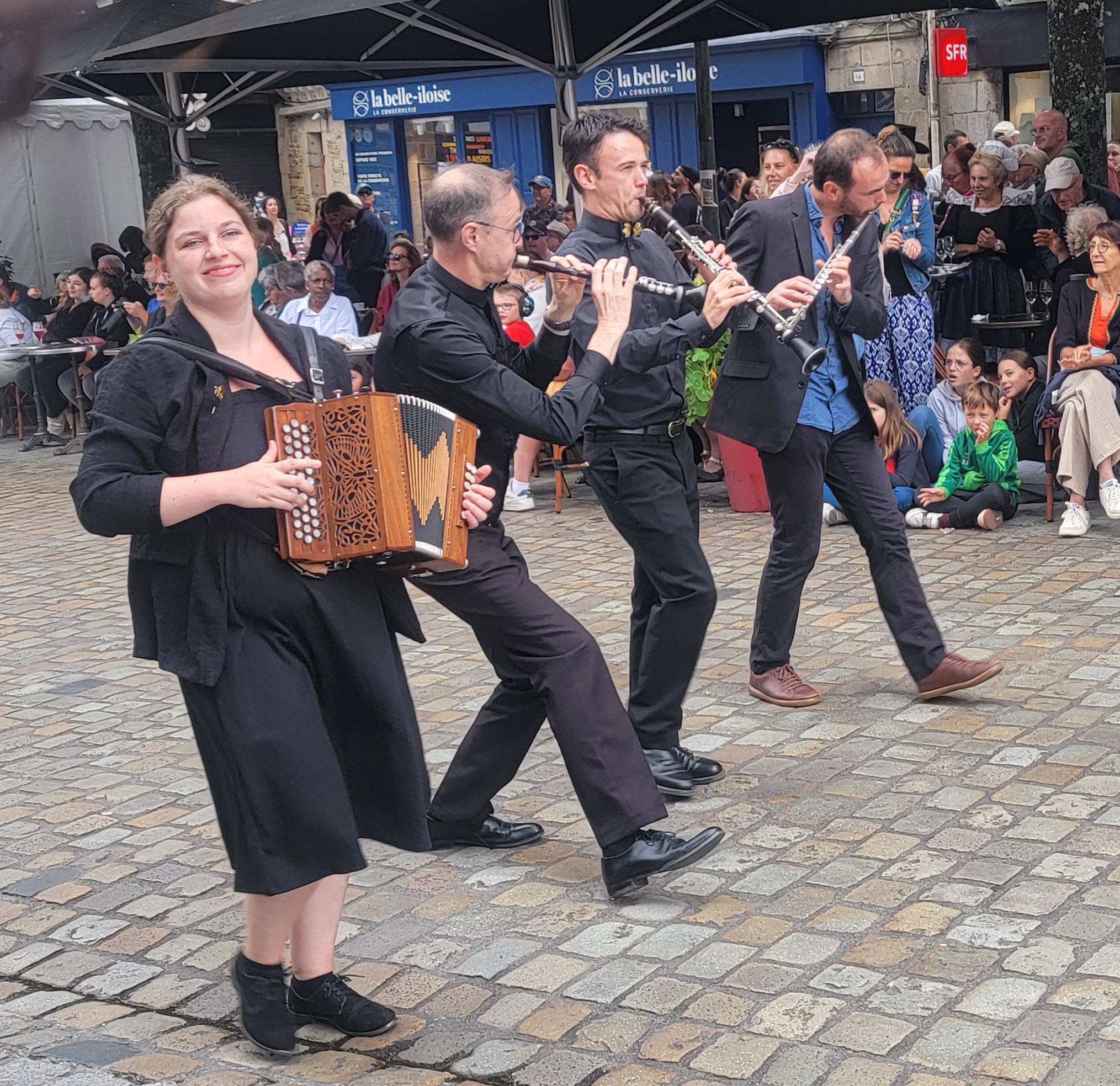
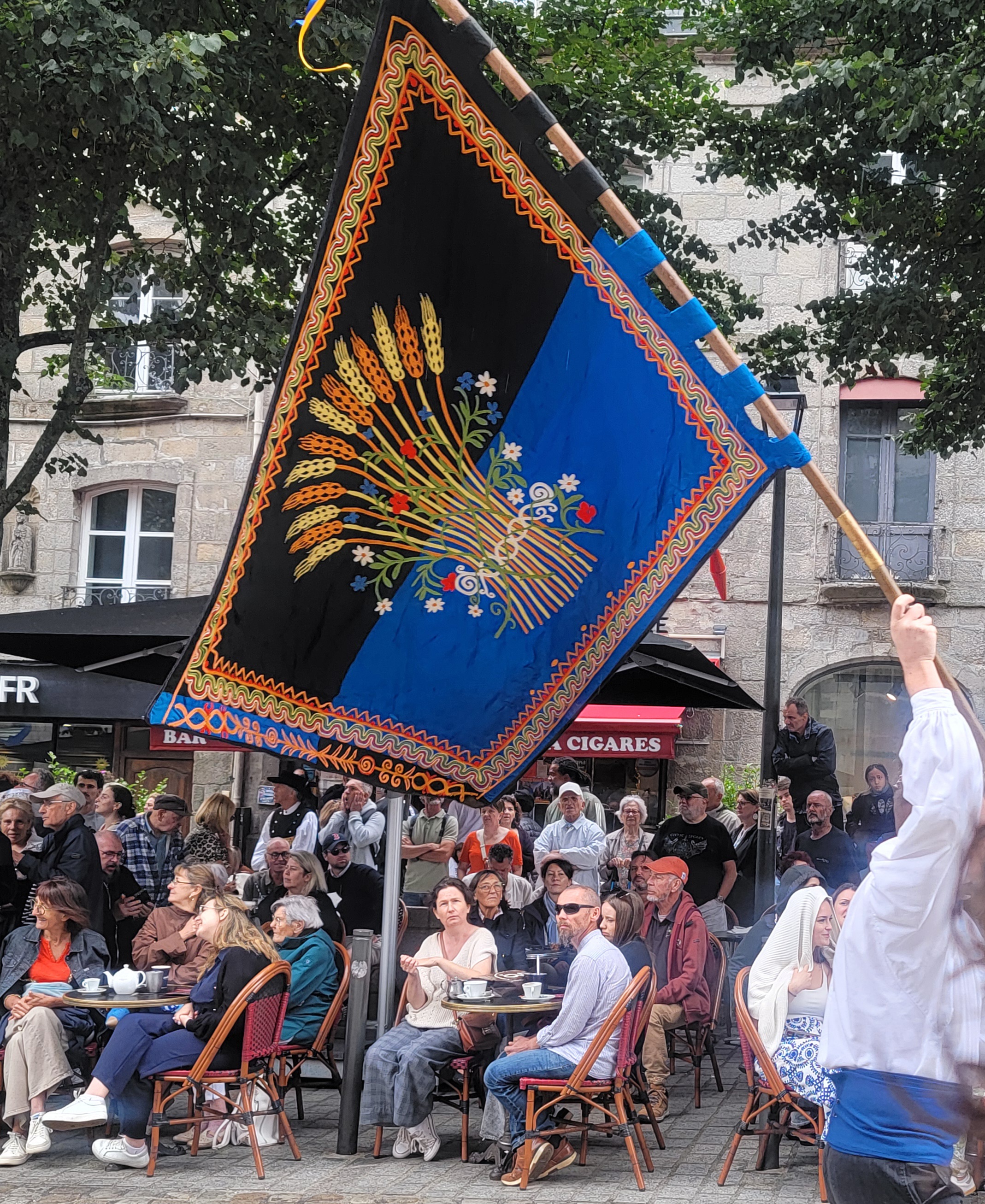
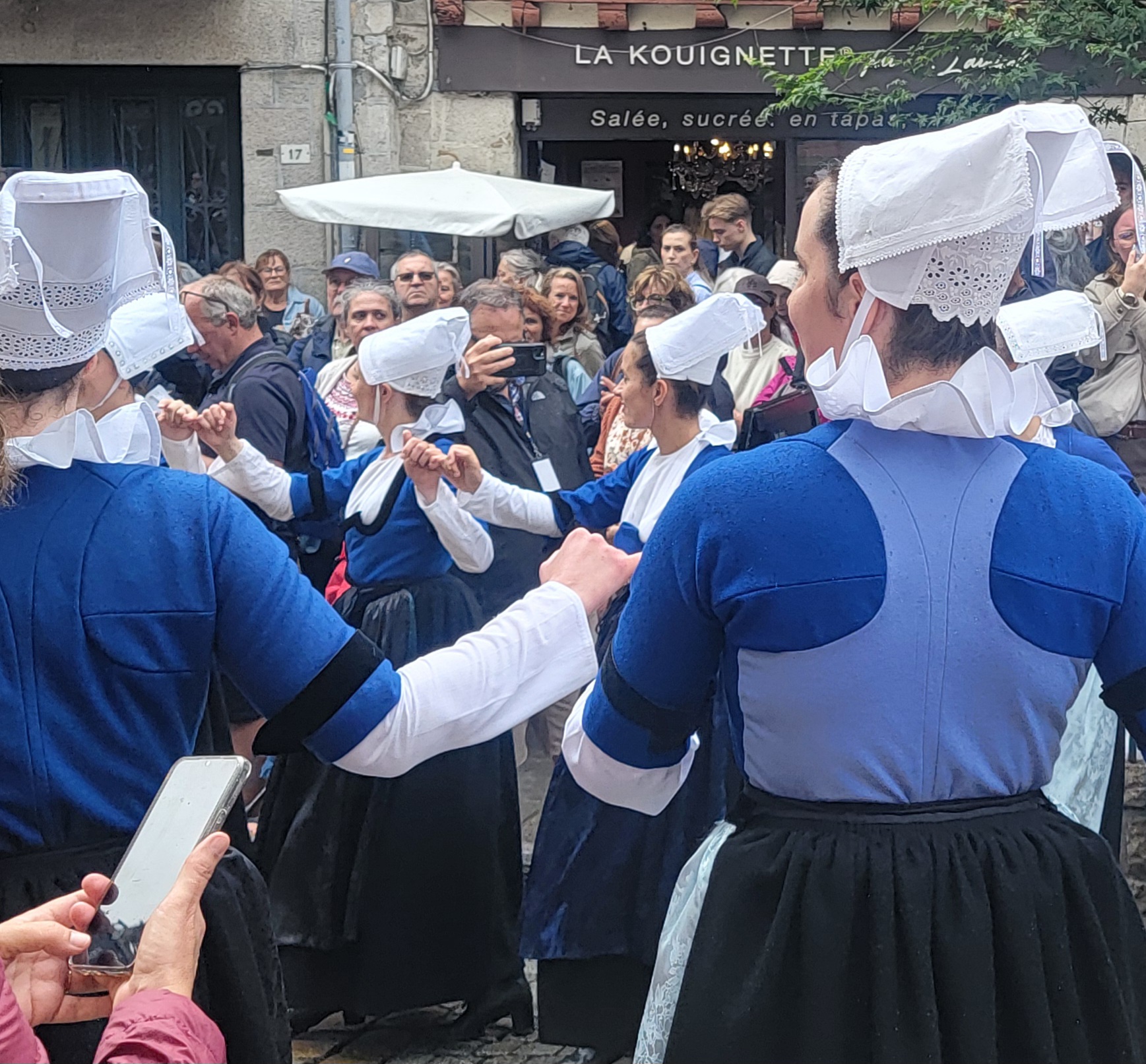
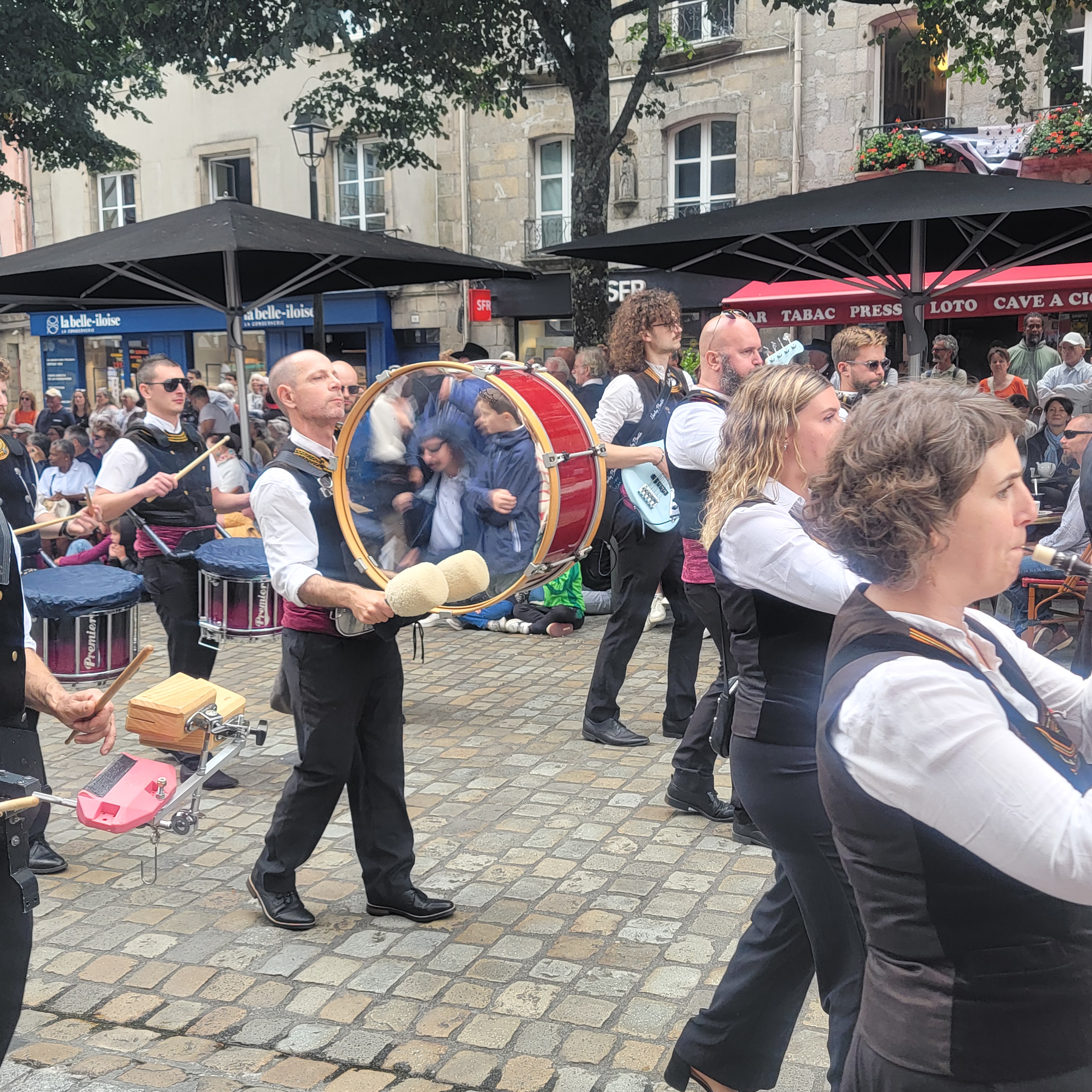
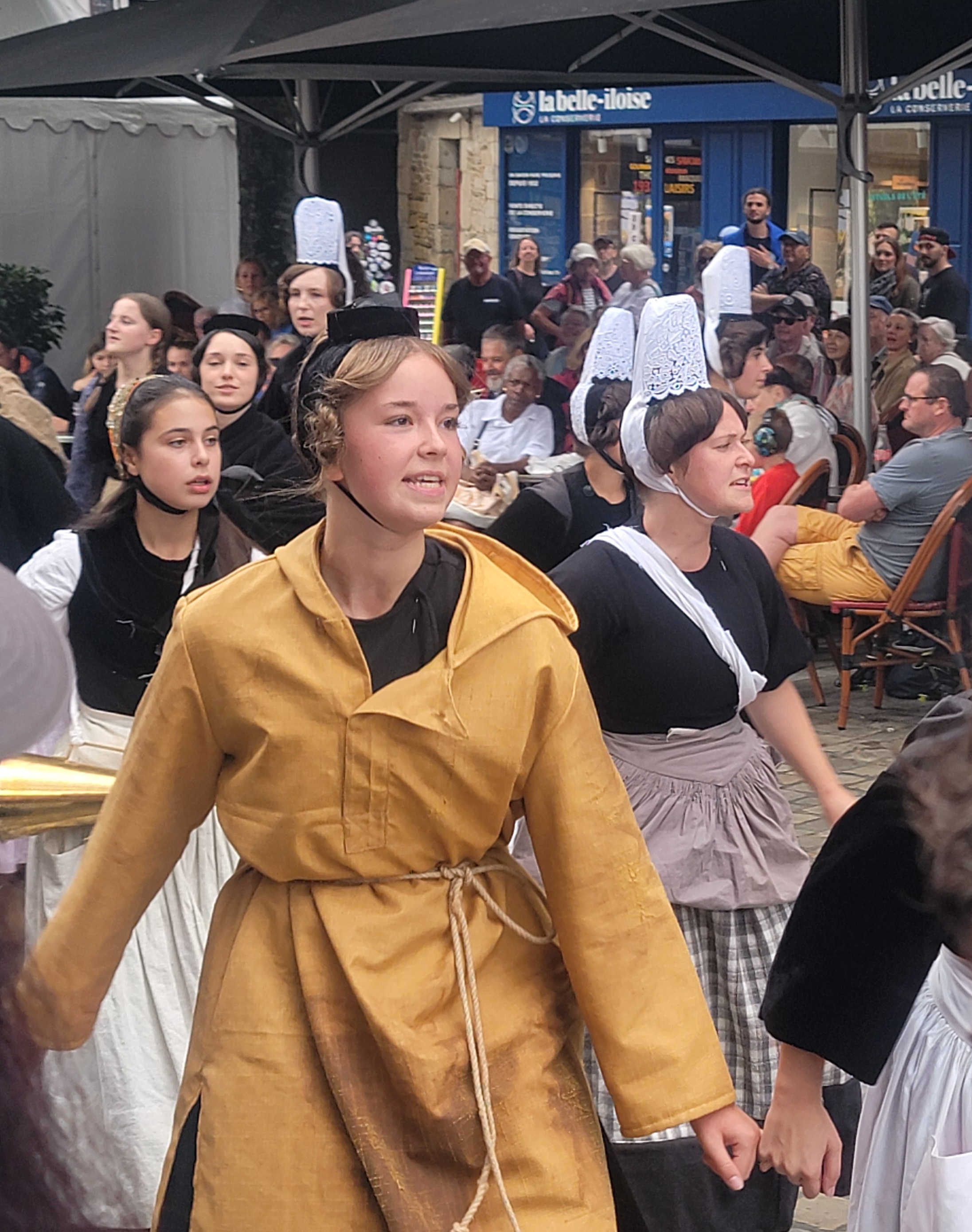
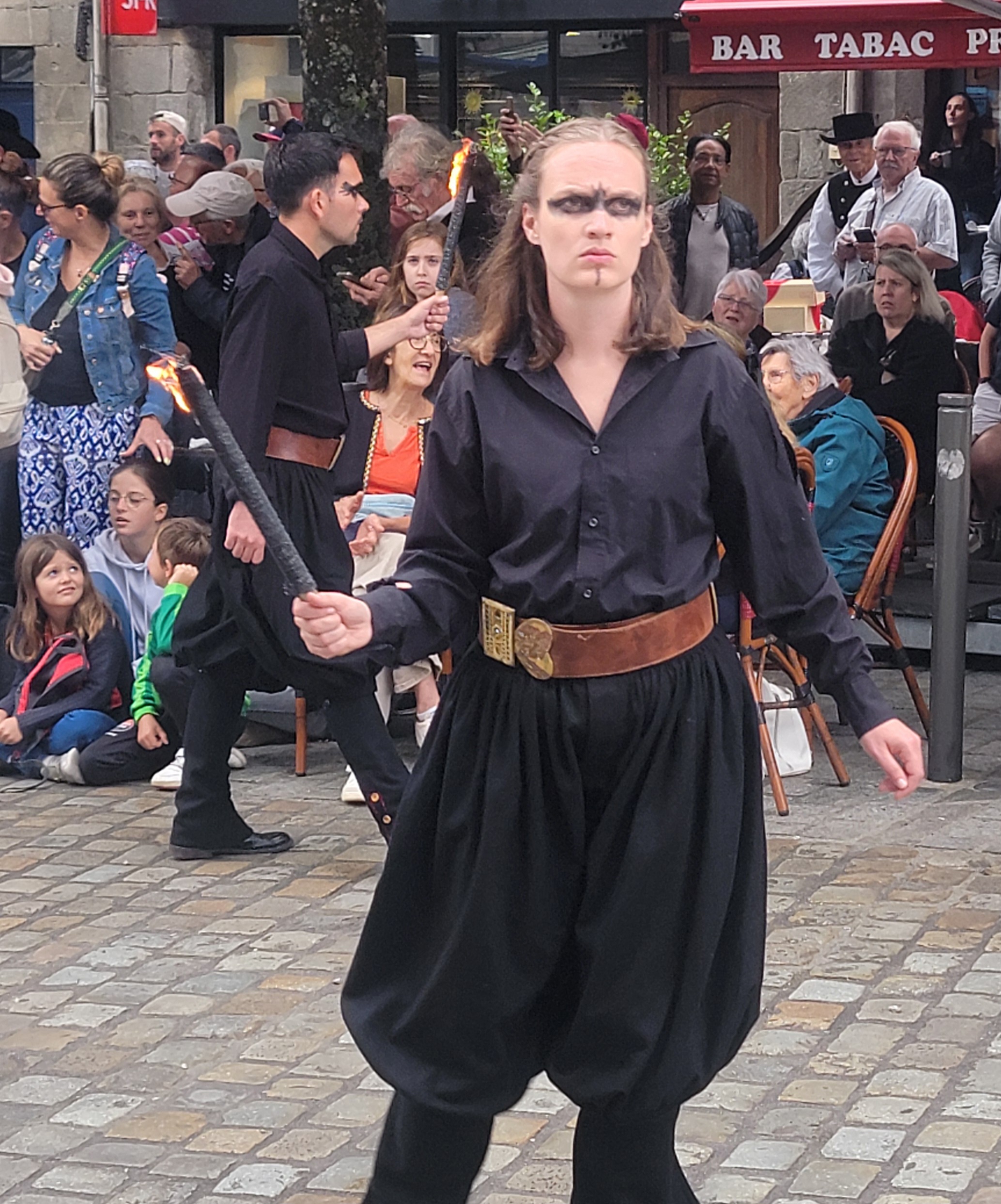
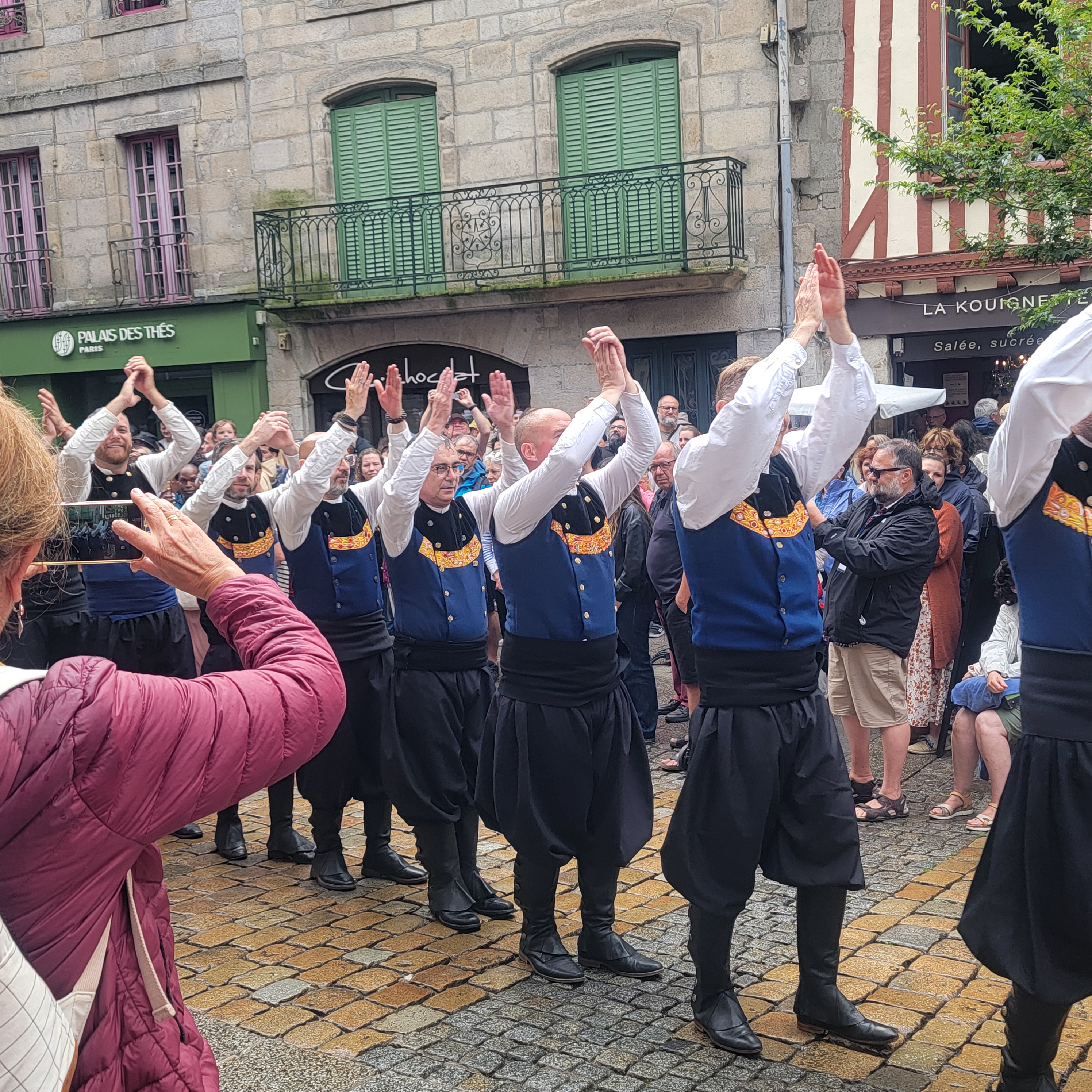
As the parade came to an end, I wandered the streets, watching various cameo acts along the way. I only had to follow the sound of bagpipes warming up to find the next nearby performance. One of these groups had already played a couple of pieces on bagpipes and bombardes when all of a sudden a couple of rather flustered-looking young men in band attire arrived, carrying what looked like a drum kit. As they hurriedly unpacked and began to set up the kit, the conductor addressed the crowd apologetically saying “Je suis désolé – c’est la tour de france!”. This year’s Cornouaille Festival had coincided with the Women’s Tour de France, stage two of which was to come through Quimper that afternoon. This meant several main through-roads were closed to traffic, and getting in and out of the city centre by car would have been almost impossible. I hate to think how far the poor drummer and his friend had run with all that gear!
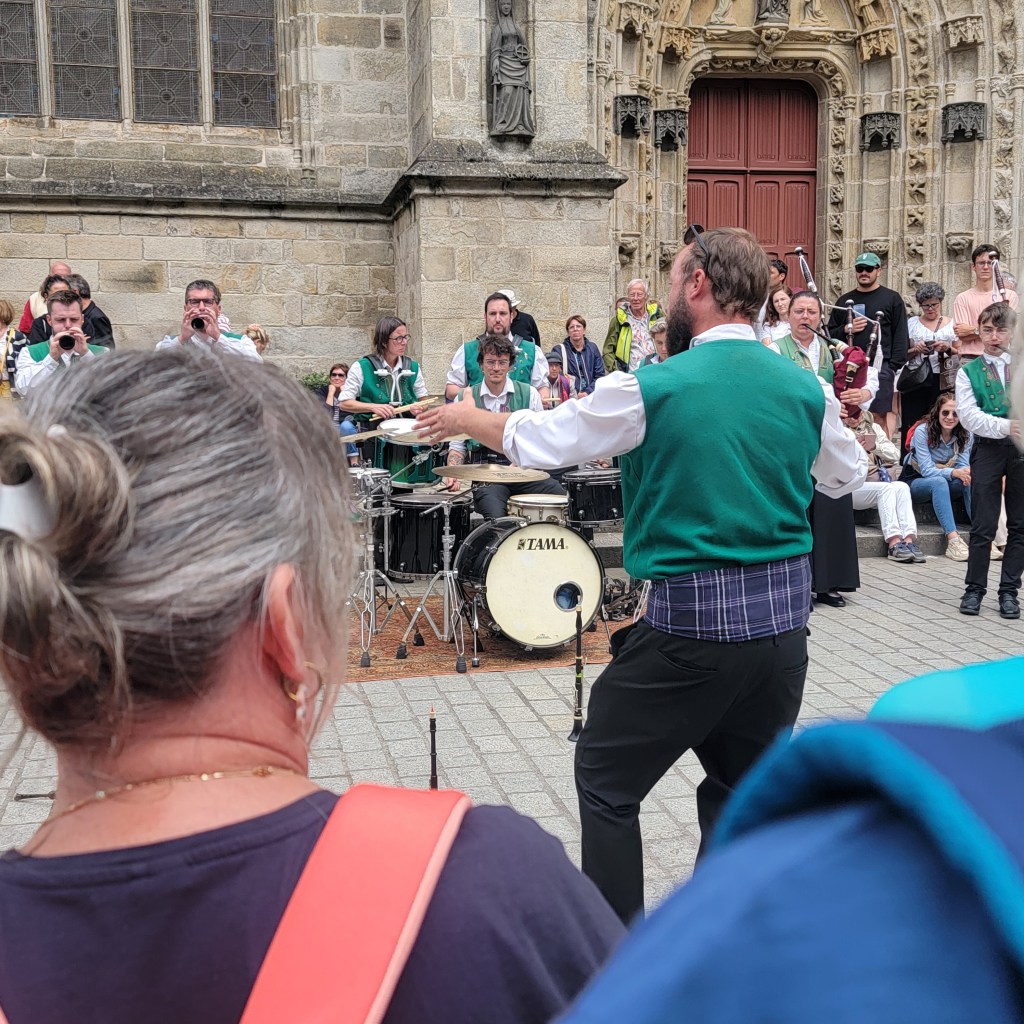
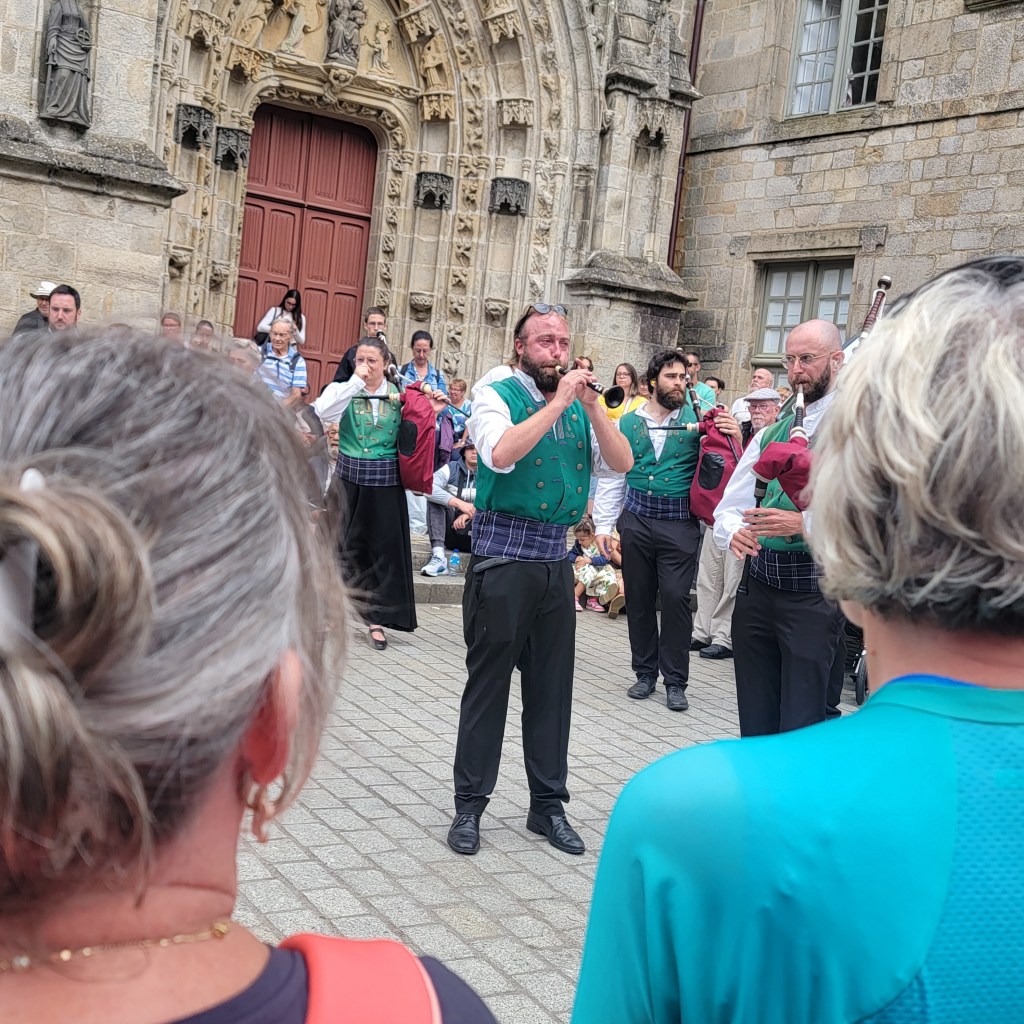
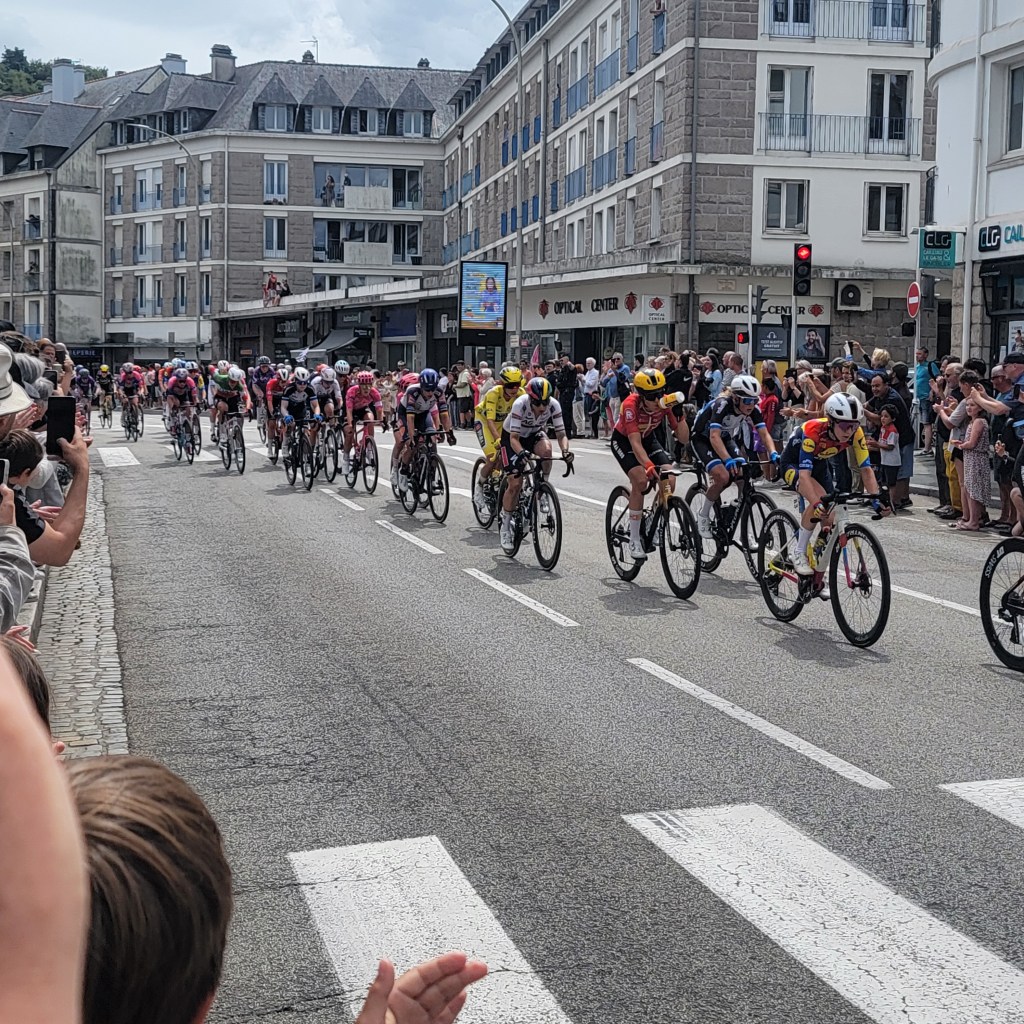
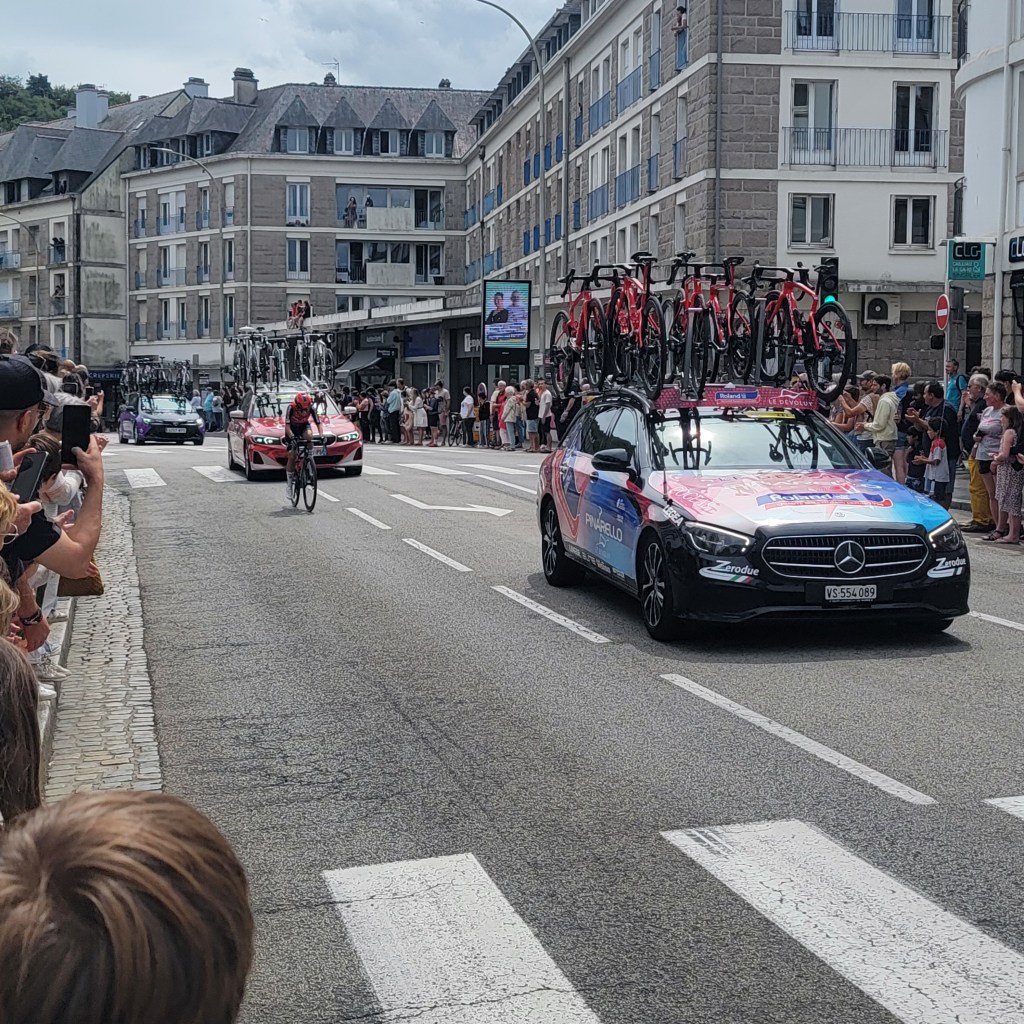
The festivities continued all day and into the evening. I had been dropped off for the day’s events at 8:30am and by 4:30pm I was petered out, so I had to give the rest of the program a miss. This being on holiday stuff is not for the faint-hearted!
No doubt, there will be other stories to share with you of my time in this lovely city – of the people, the markets and THE CHEESE! But for now, that’s a little bit from me about my experiences of the pretty city of Quimper. Bonne journée.


 Over To France
Leave a reply to Renie Downes Cancel reply