
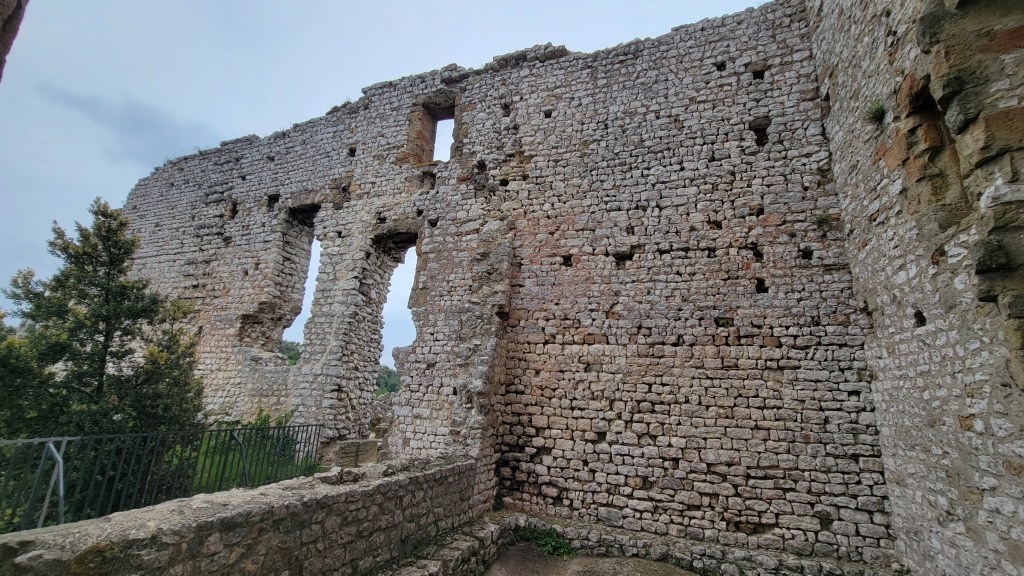
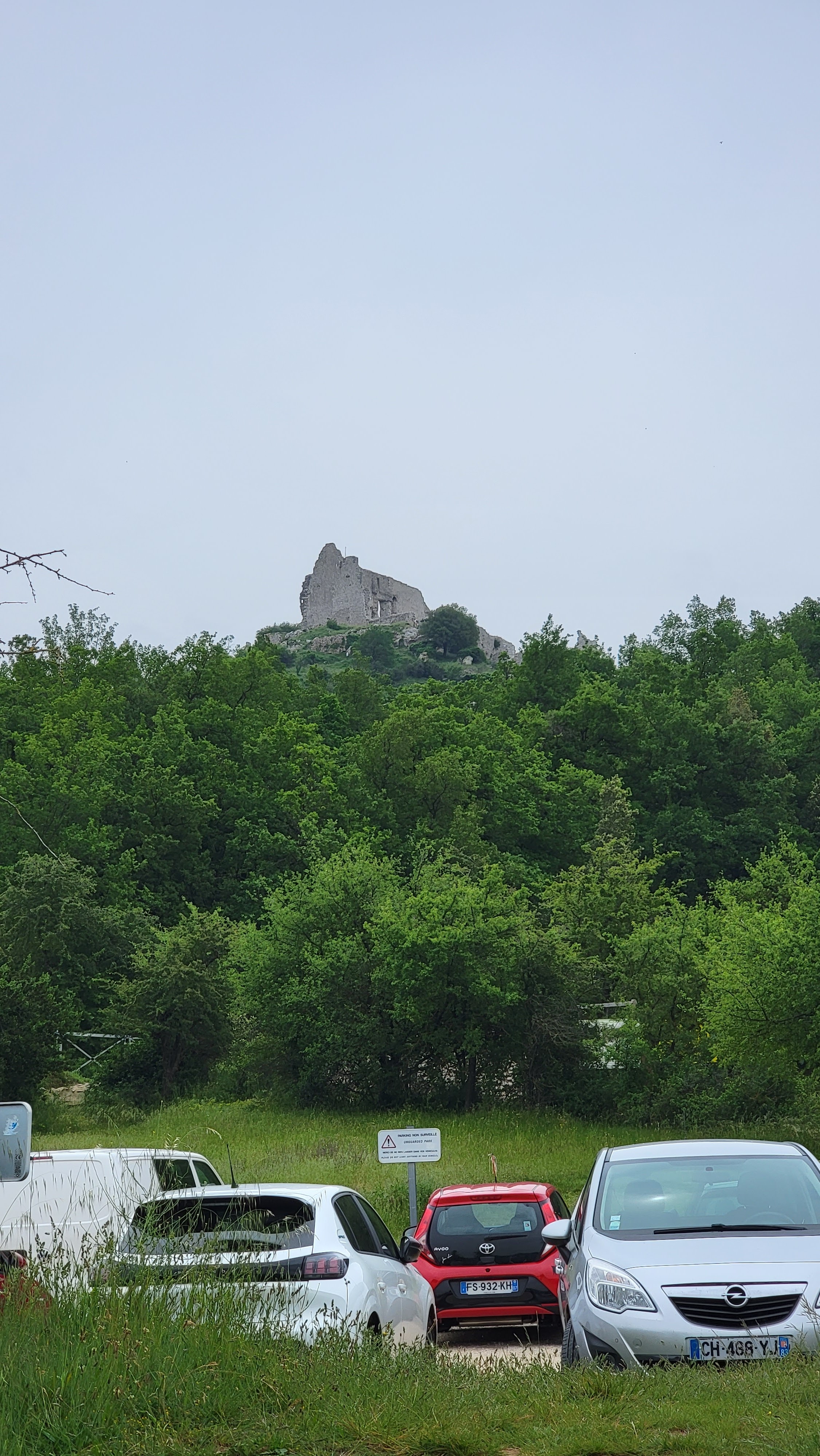
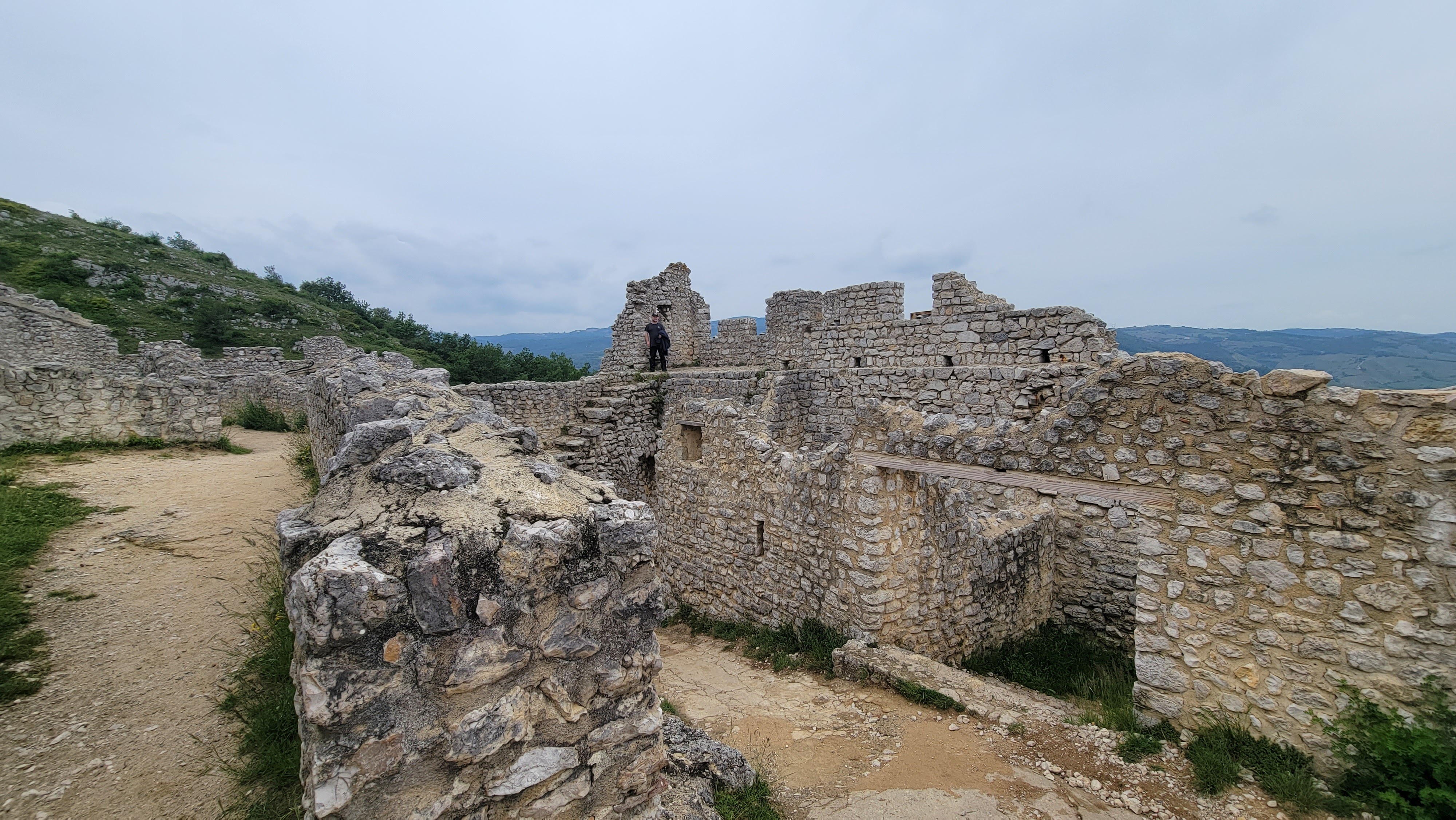
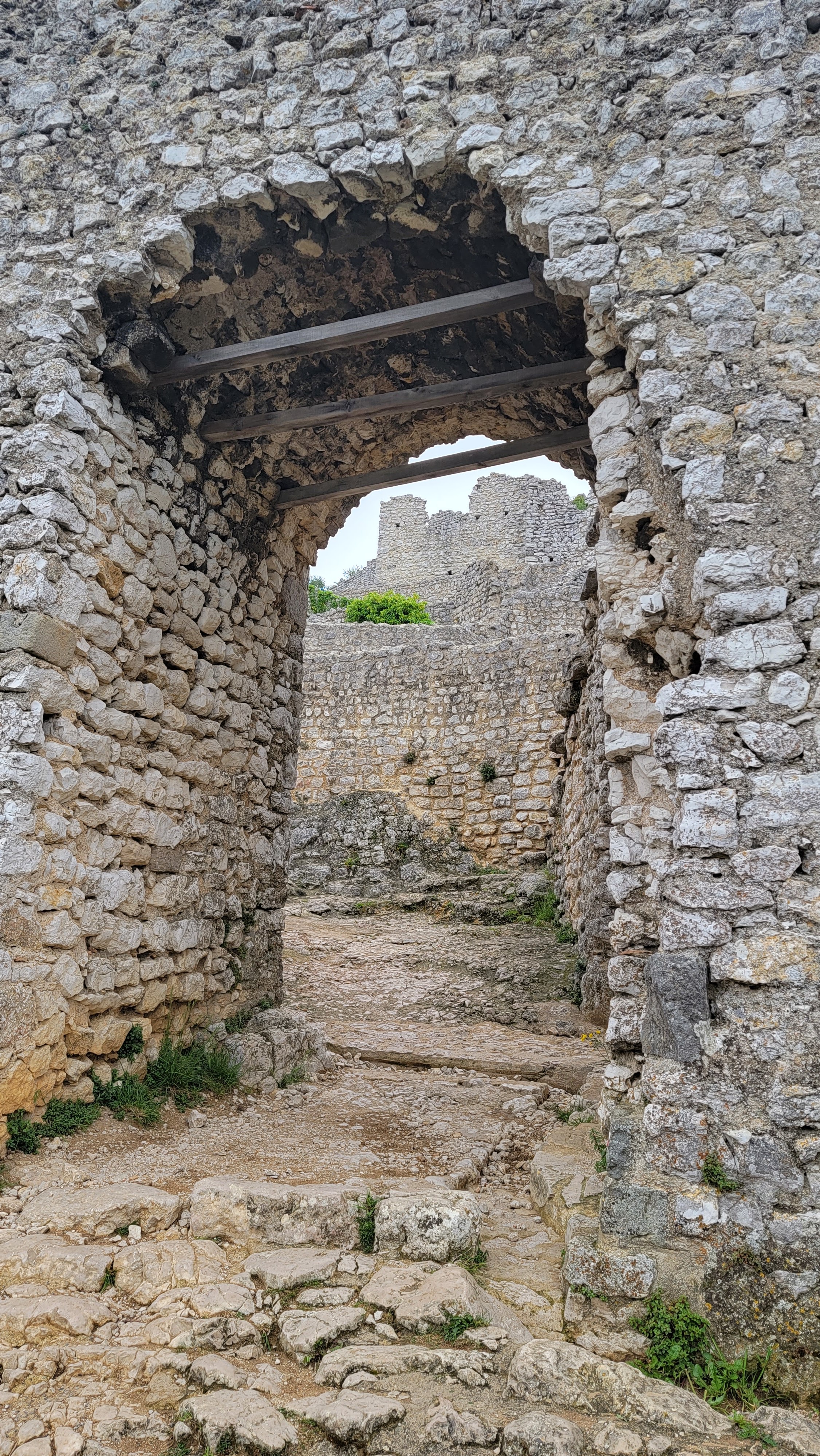
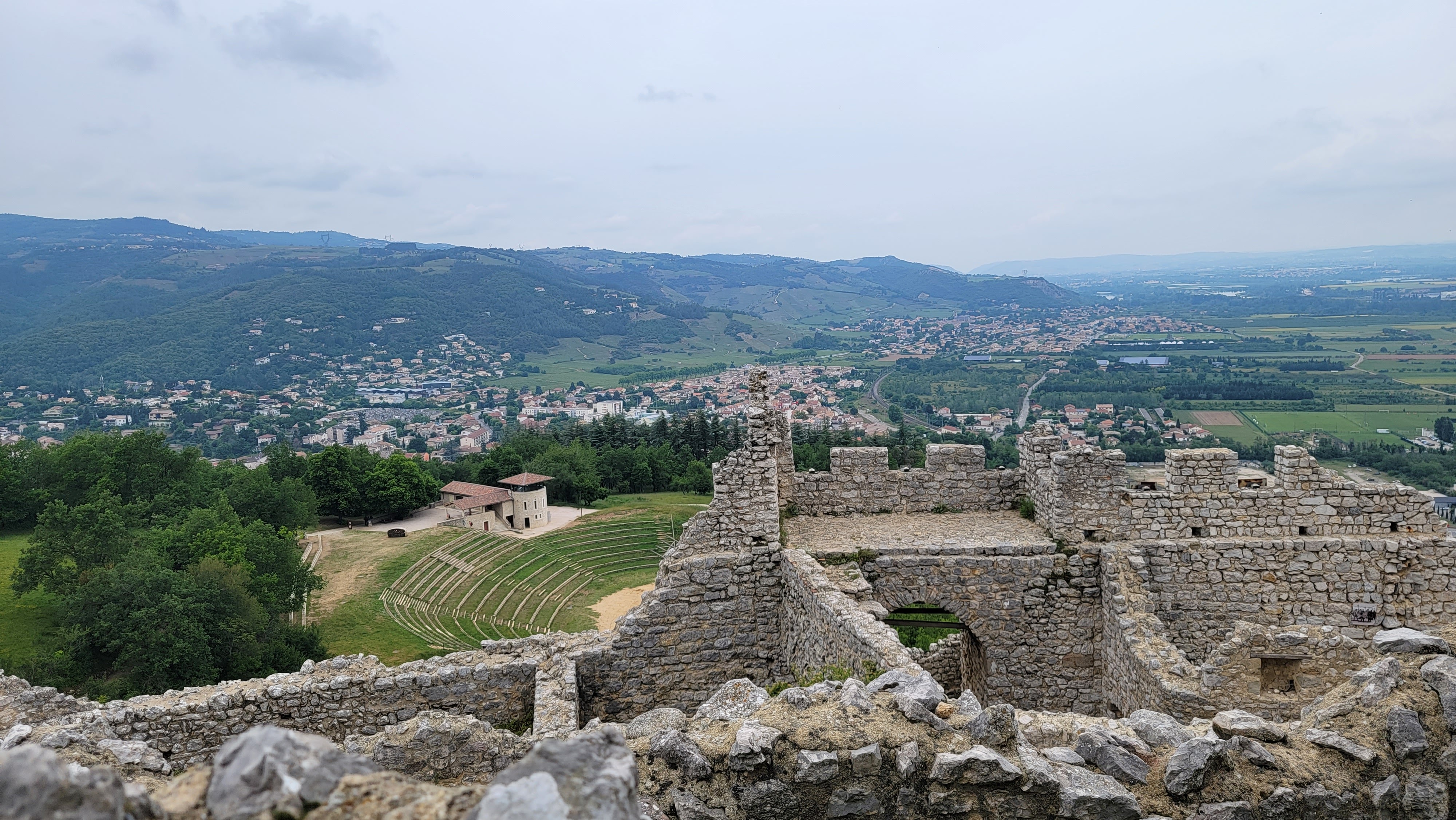
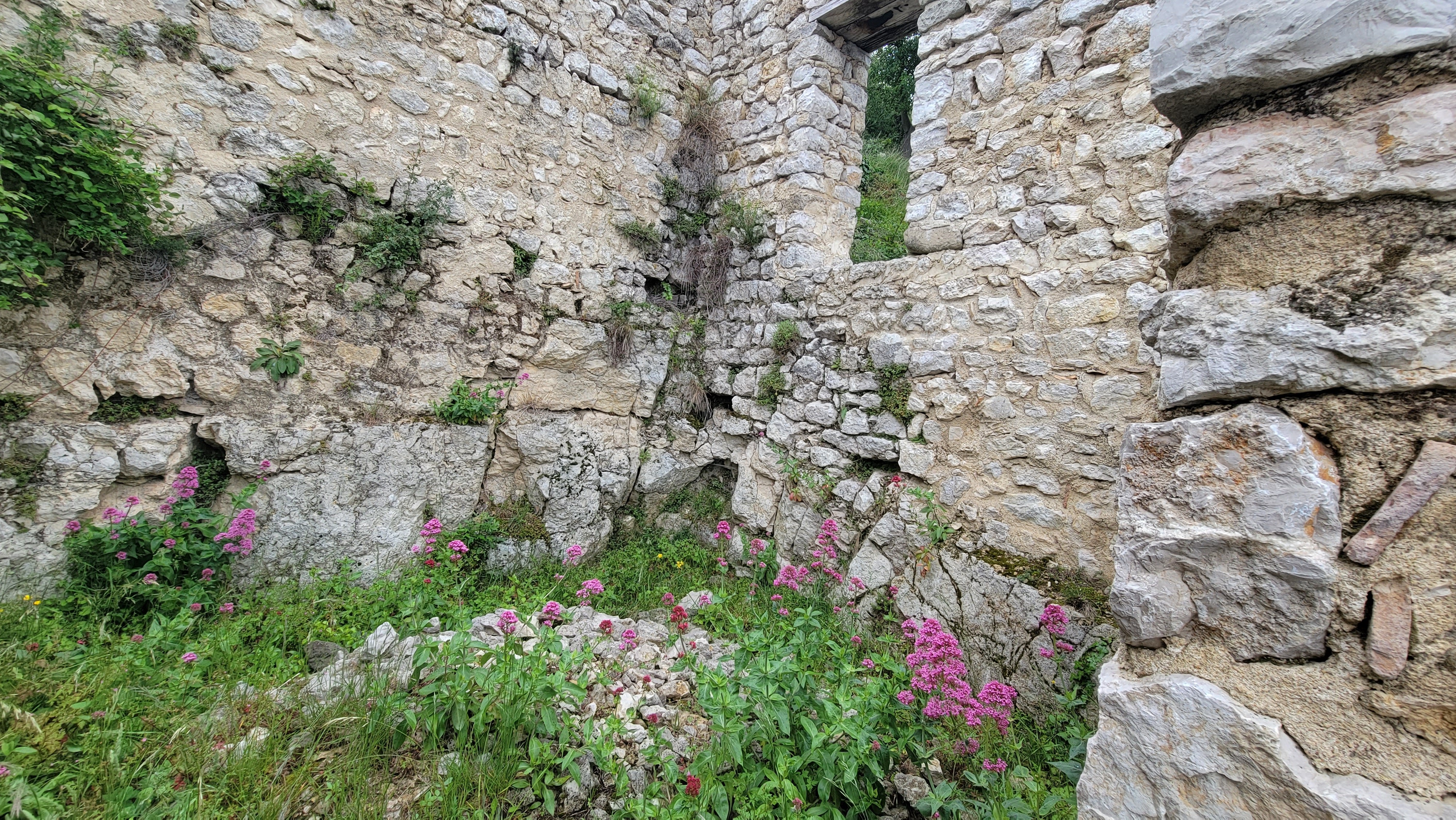
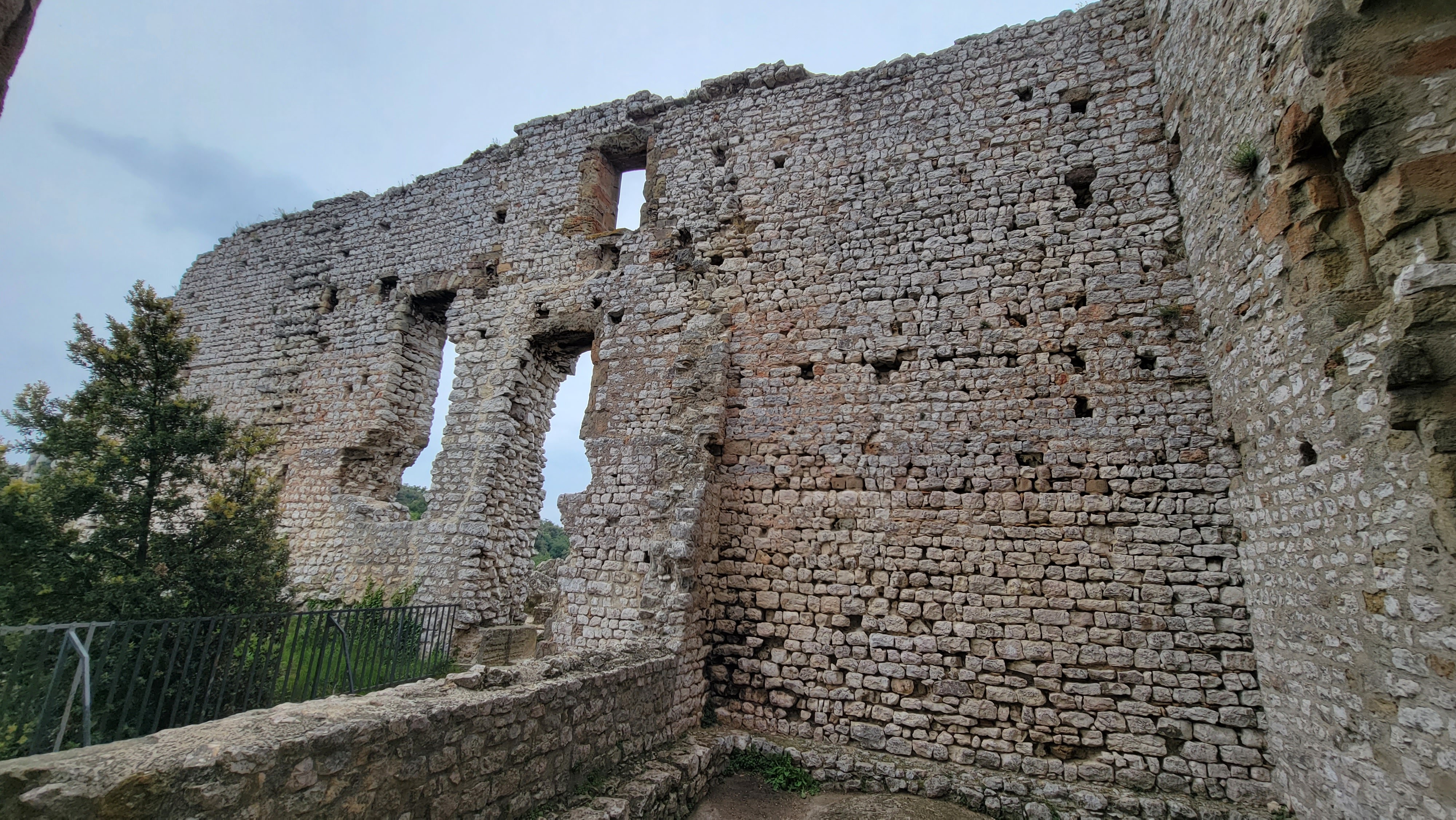
You all know Clive well. Would you ever, in a million years, have thought that he would happily spend three hours looking at shoes? Well today he did. It’s true. But more about that in a bit. First, I want to tell you about the ruins of a medieval castle we visited this morning, called the Chateau de Crussol. It was built at the top of the mountain of Crussol, overlooking the beautiful Rhone valley and river. Josh and Matt, you would adore this place – AND the wifi coverage is excellent!

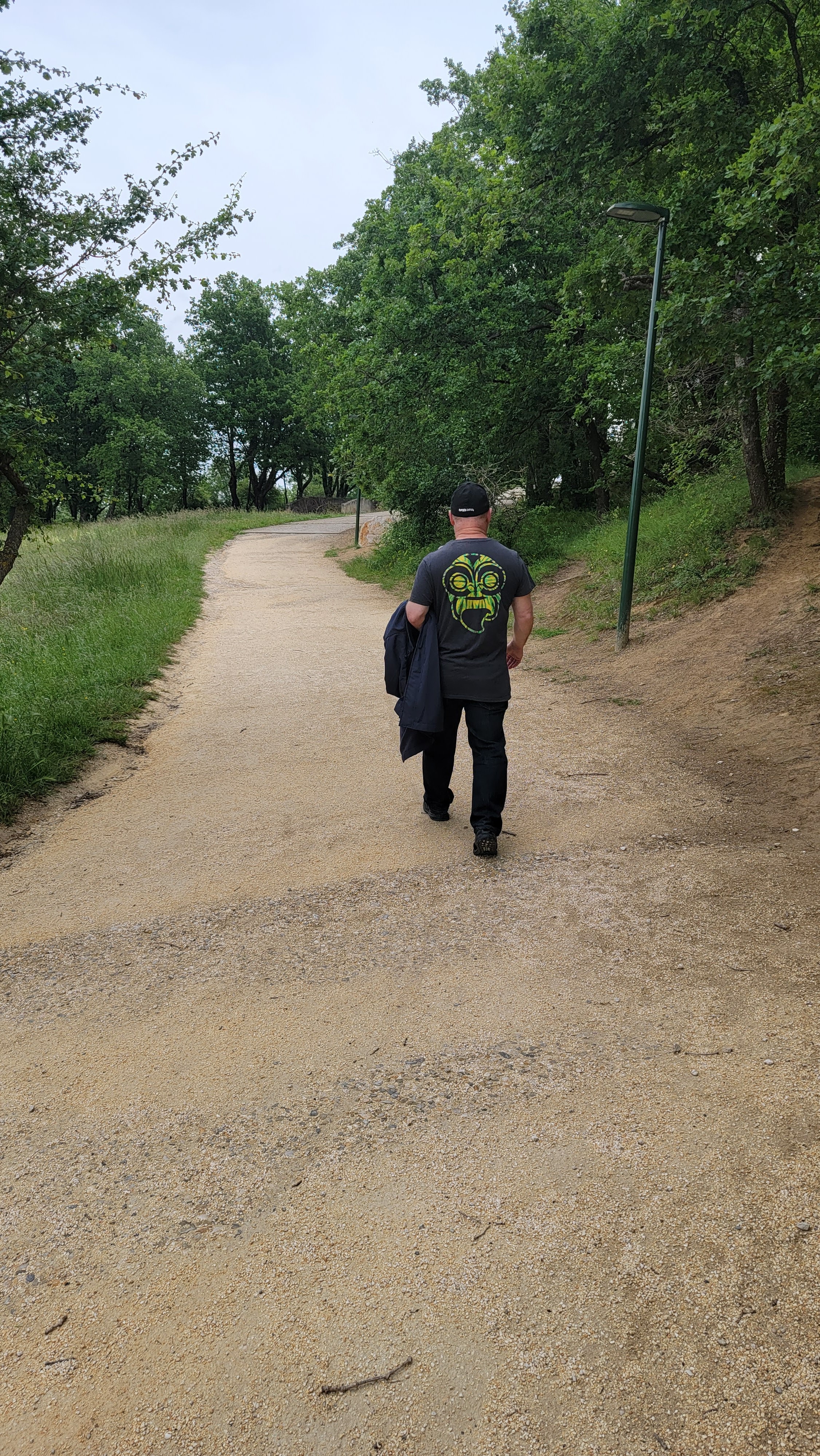
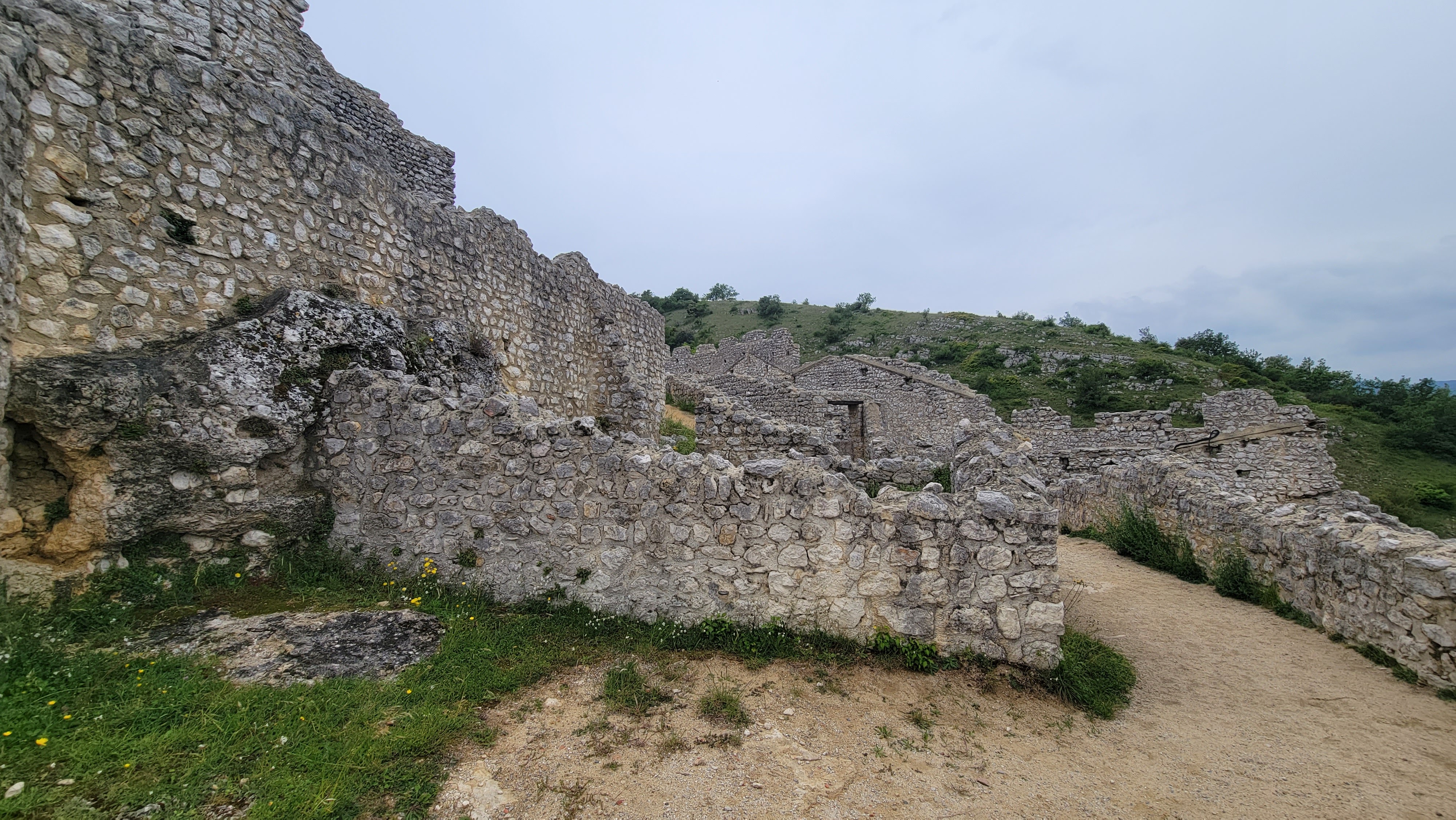
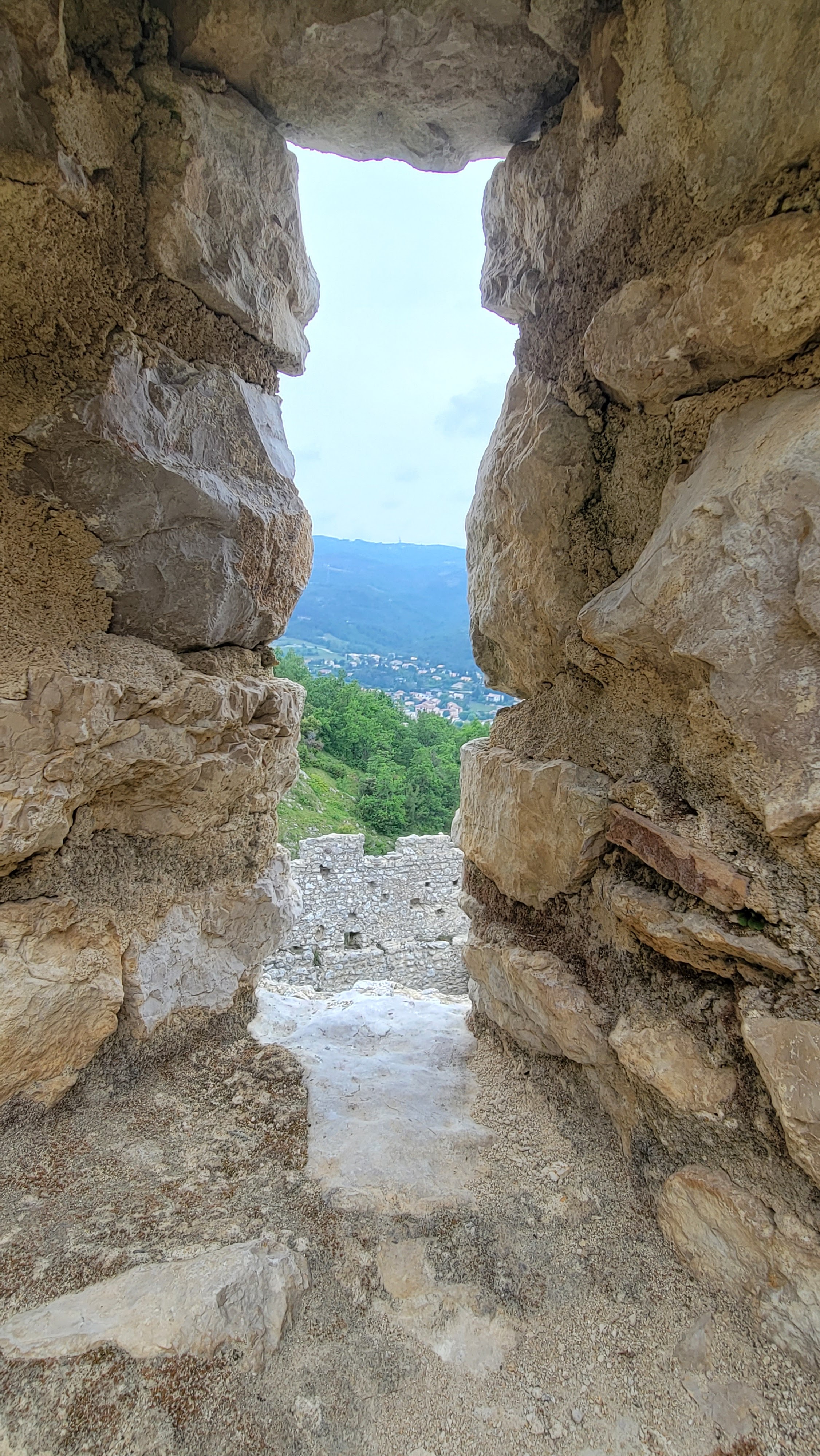
The mountain has been occupied since Roman times, with fortified buildings appearing on the site in the fifth century. A wooden castle was built there in the tenth century but was destroyed by fire and replaced by a stone castle in the twelfth century. The ruins of this castle are what we explored today. Used to control the transportation along the Rhone river, this castle would have been an absolute hive of activity in its time. From a distance, it seems simply a couple of wall faces. But in fact the area of ruins is vast. We walked up what would have been street after street, through room after room, past grain silos, stables, armouries, fortified walls with arrow slits and turrets. We were both working up quite a sweat by this time – the first time we have felt really warm since arriving in France. But the trek to the top was totally worth the effort. We reached the chapel and even stood in the chambers of La Seigneuriale – basically the big wig of the area. The view from the top is amazing. Totally worth a five star rating! It was a strange feeling being there, imagining the busy goings-on of the time. Those people must have been well fit, that’s for sure.





And now on to shoes. Roman is a town twenty kilometres north of Valence, and is home to Musee de la Chaussure, or the Shoe Museum. We chose to leave this visit until the afternoon, as on Sundays the Musee doesn’t open until shoe-thirty (giggle), I mean 2:30pm.
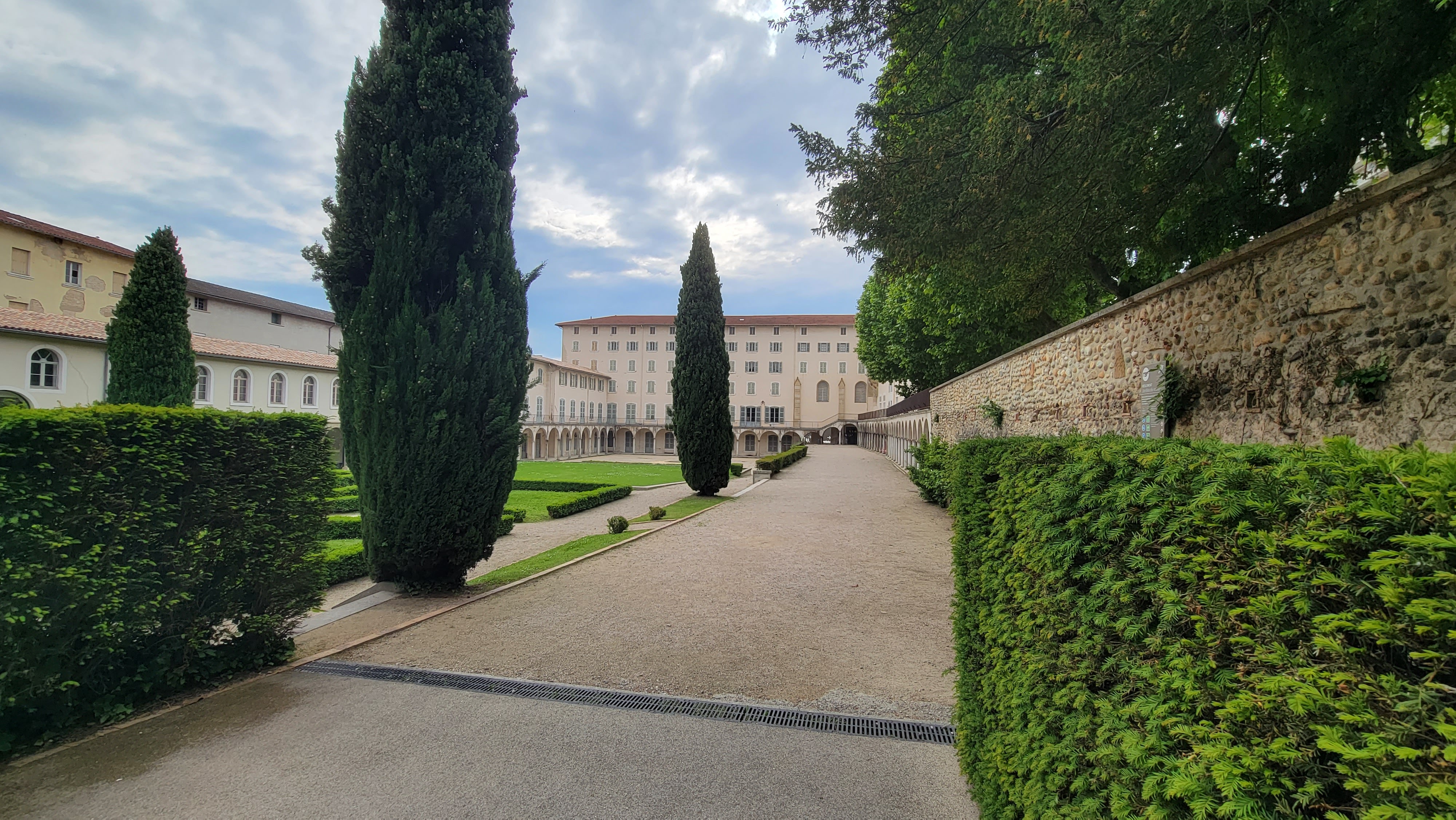
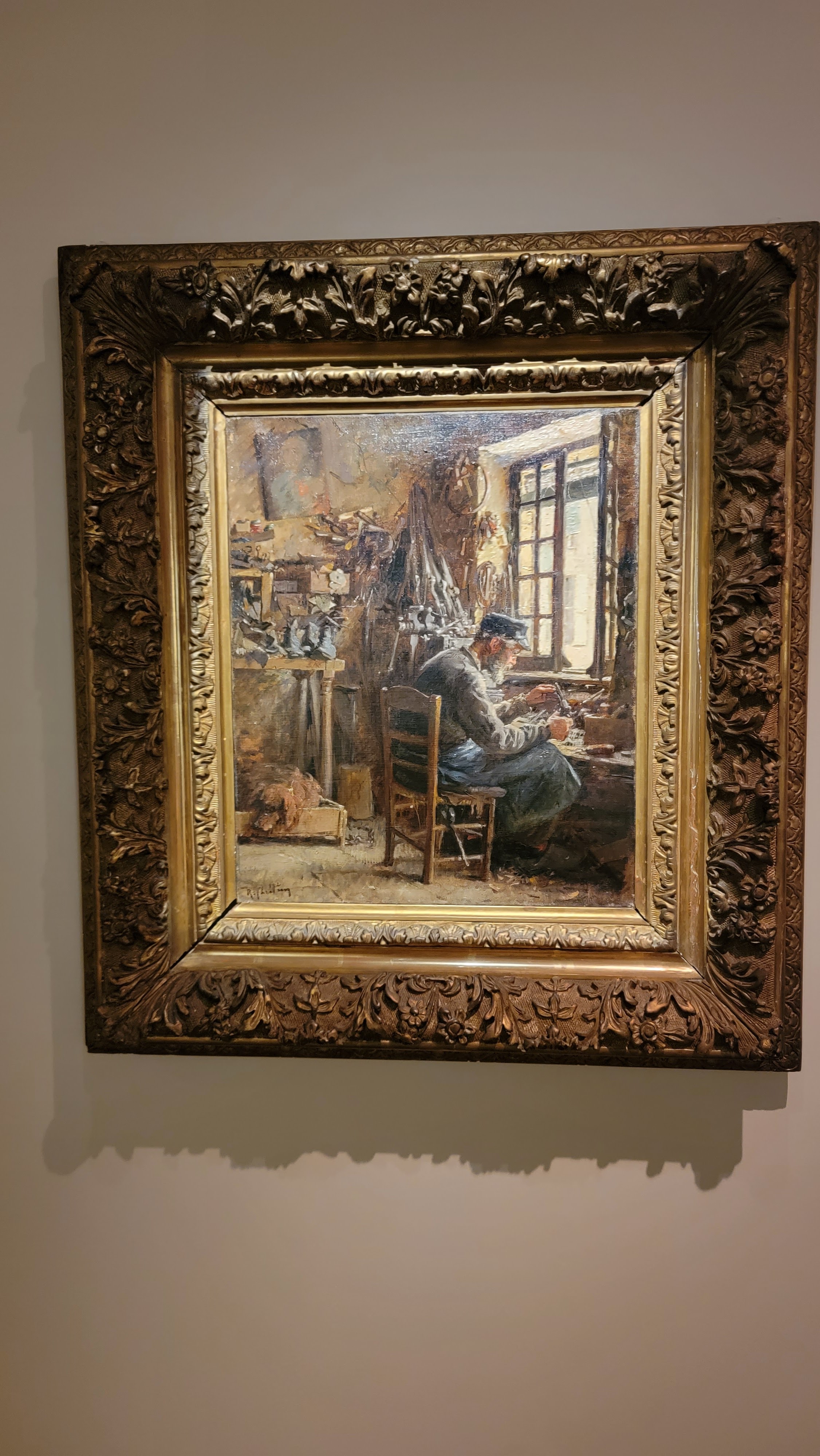
I’m not sure what we were expecting, well shoes obviously. But the history contained within this museum is quite something. We paid the extra two and a half euros each for the audio guide (yep, we like to splash out every now and then), and I’m really glad we did as most of the information on the displays is in french only. The building itself was built in the sixteenth century and was used as a nunnery until the french revolution, when all church property was confiscated by the state. After the revolution, Napoleon Bonaparte allowed the nuns to use the building as a school for girls. Eventually, in order to protect the building from demolition it was kept as a musuem – for the history of shoes. Good job I say. It’s a really fascinating place to visit. We learnt so much, even stuff we would rather not have learnt – but you’ll have to pay the extra euros to find that out for yourselves. This blog is family-friendly! Did you know that the average french person goes through six pairs of shoes a year? Oh la la!
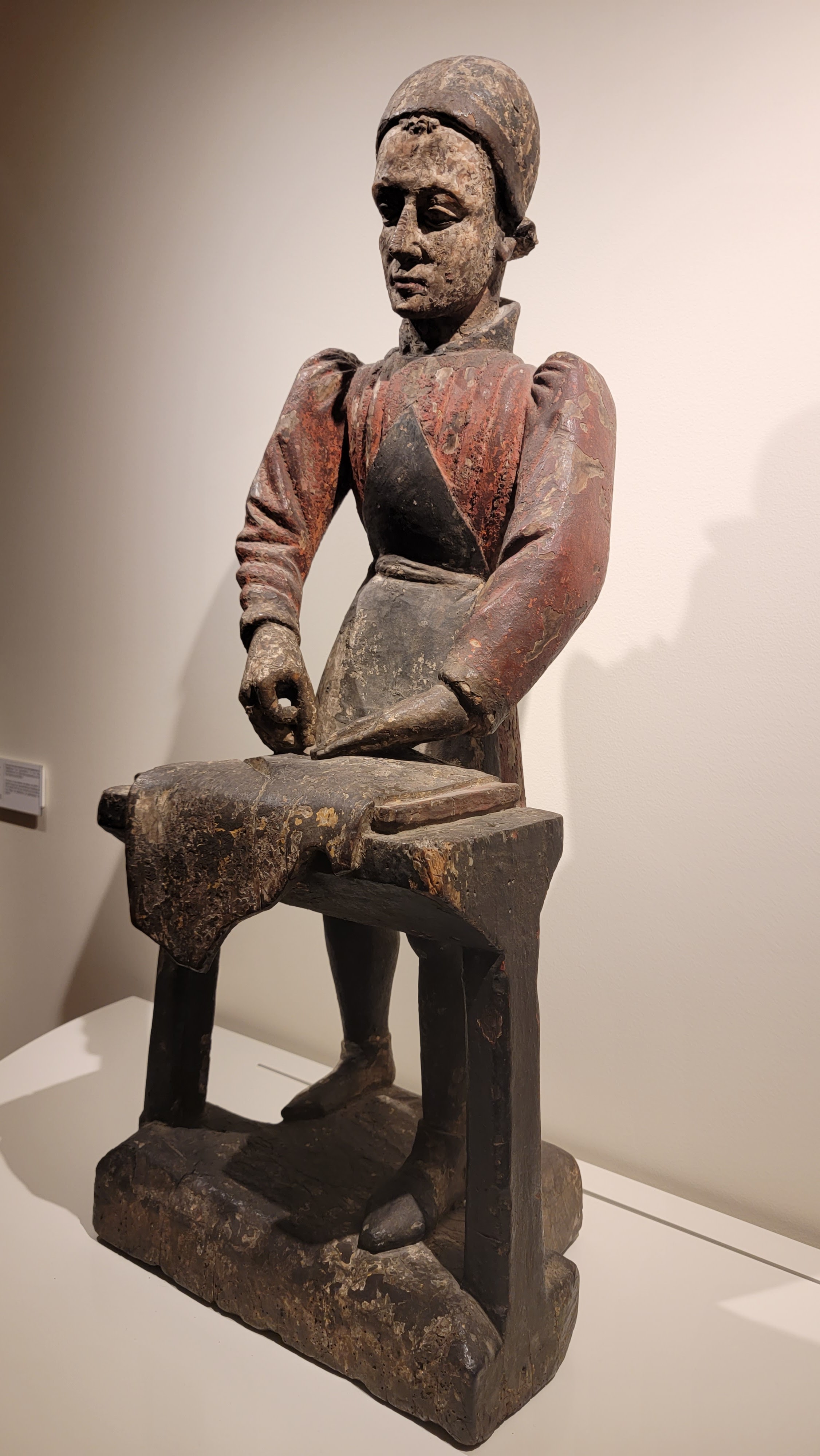

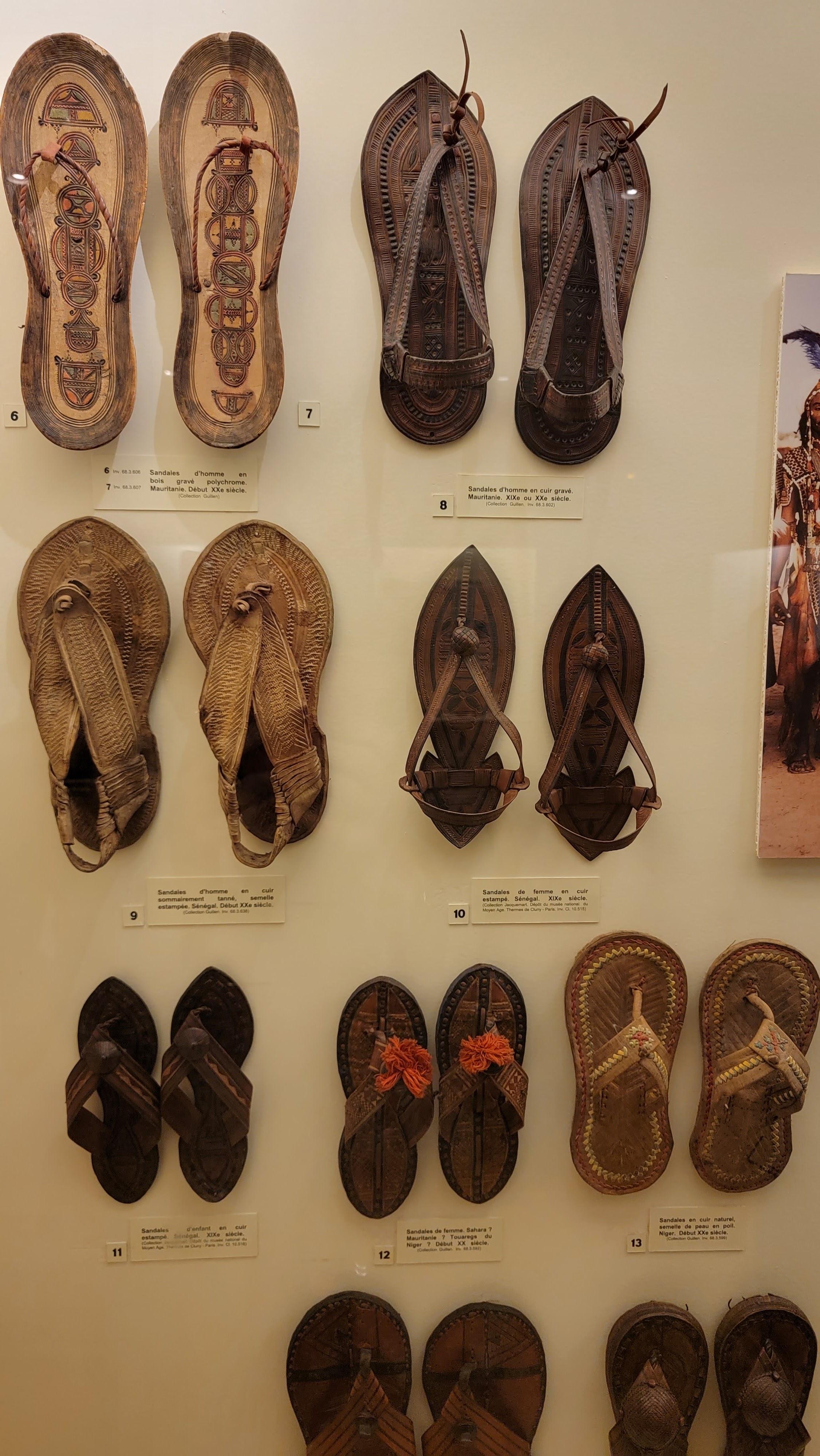
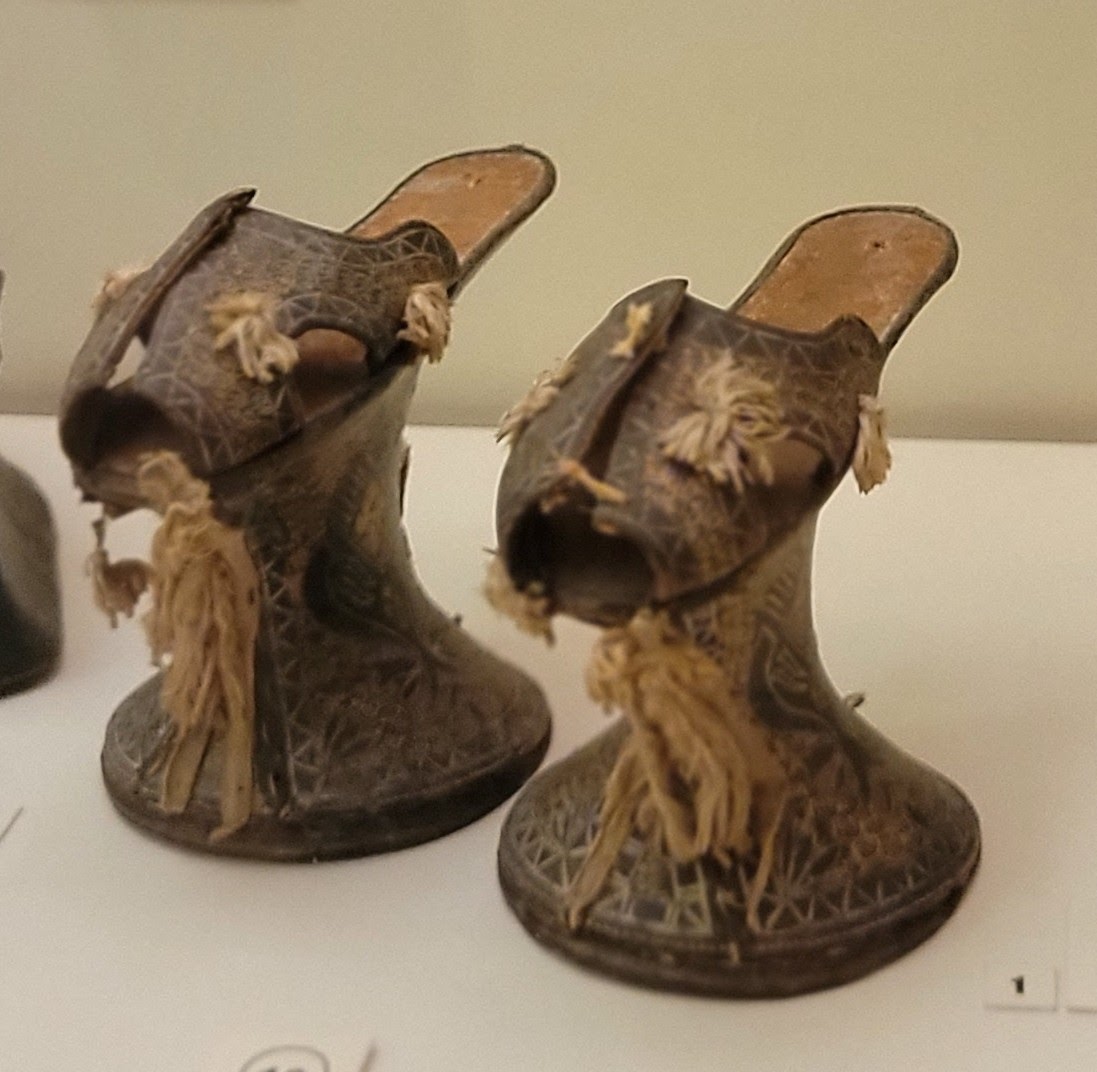
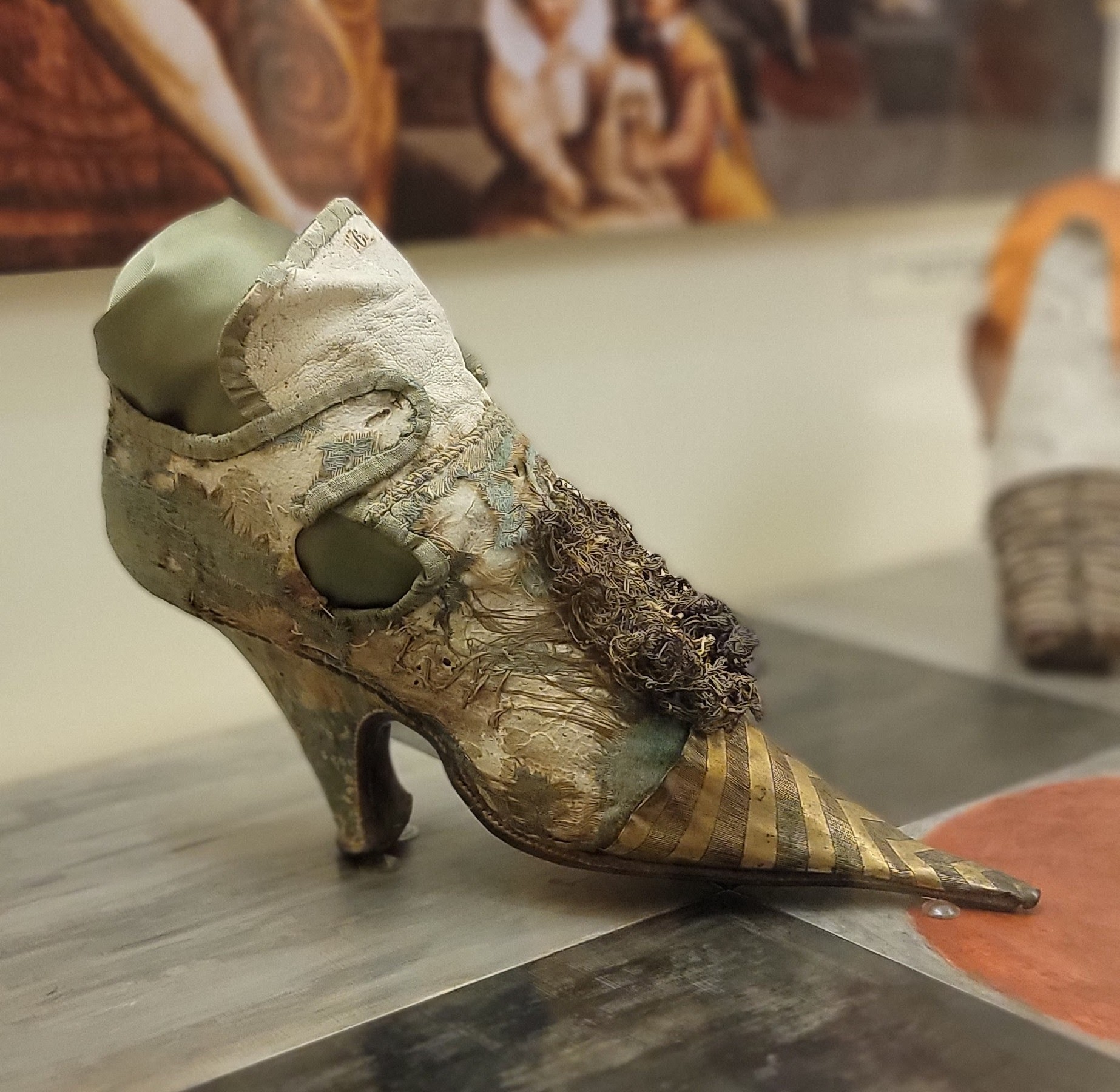
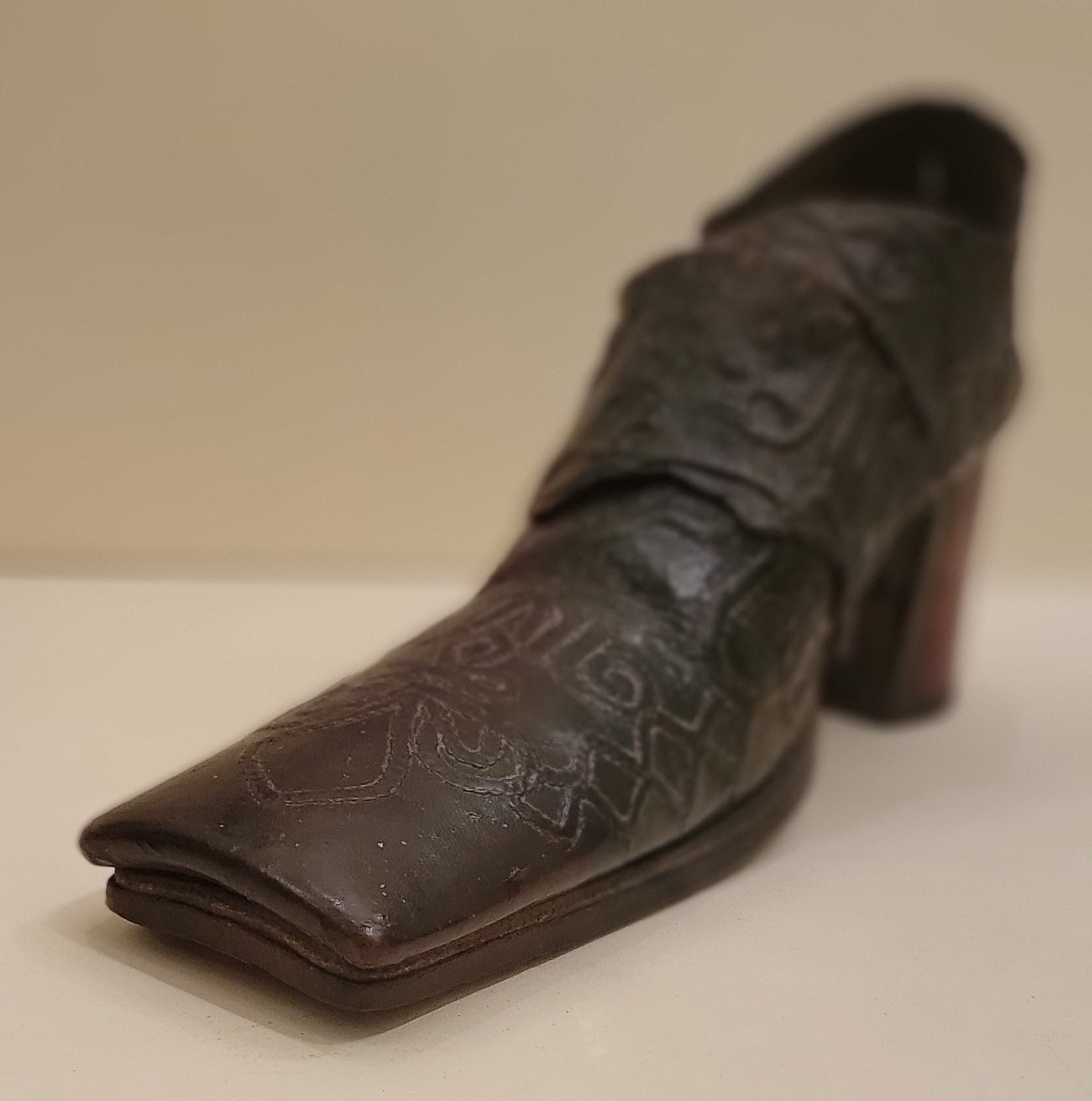
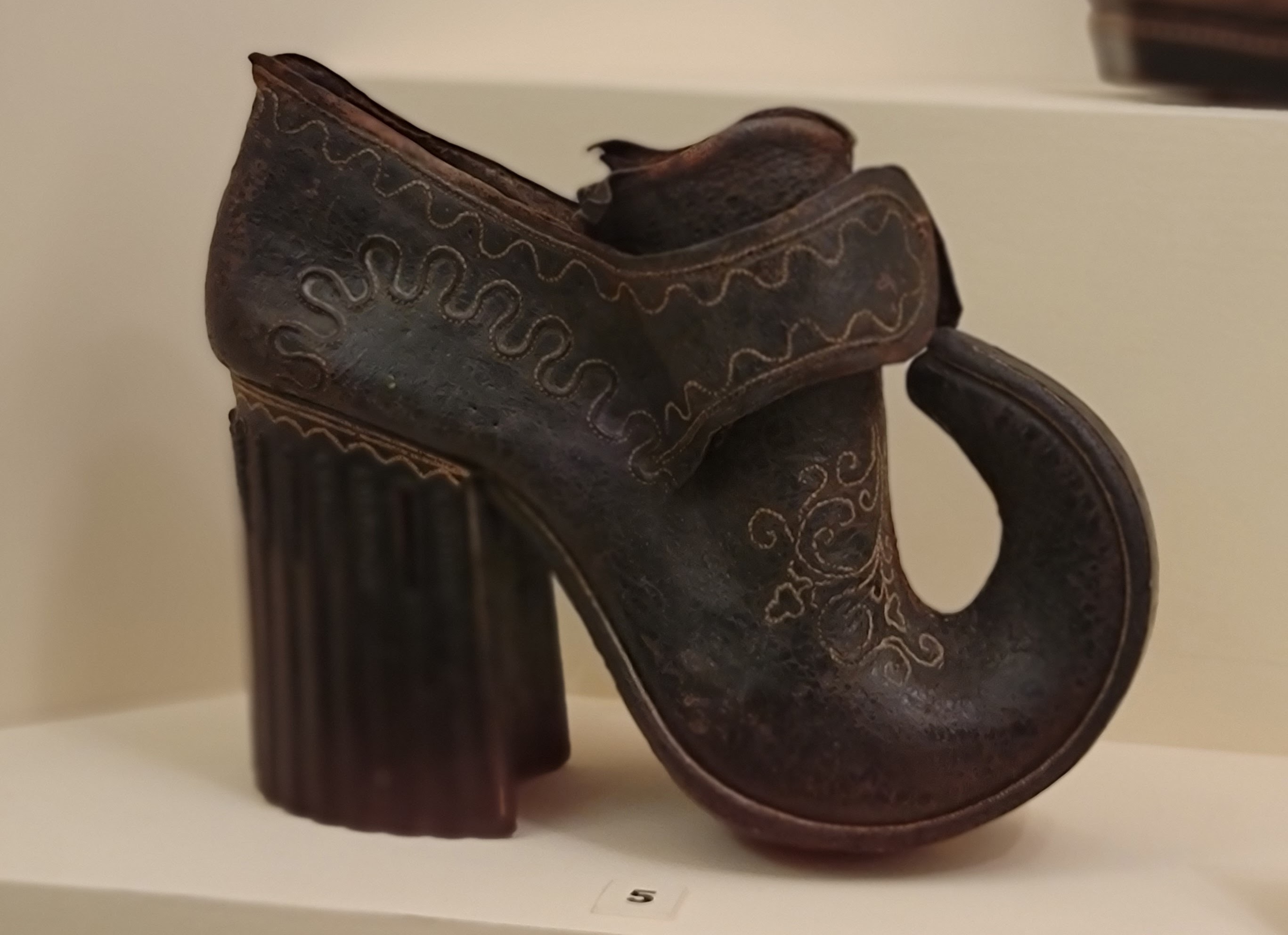
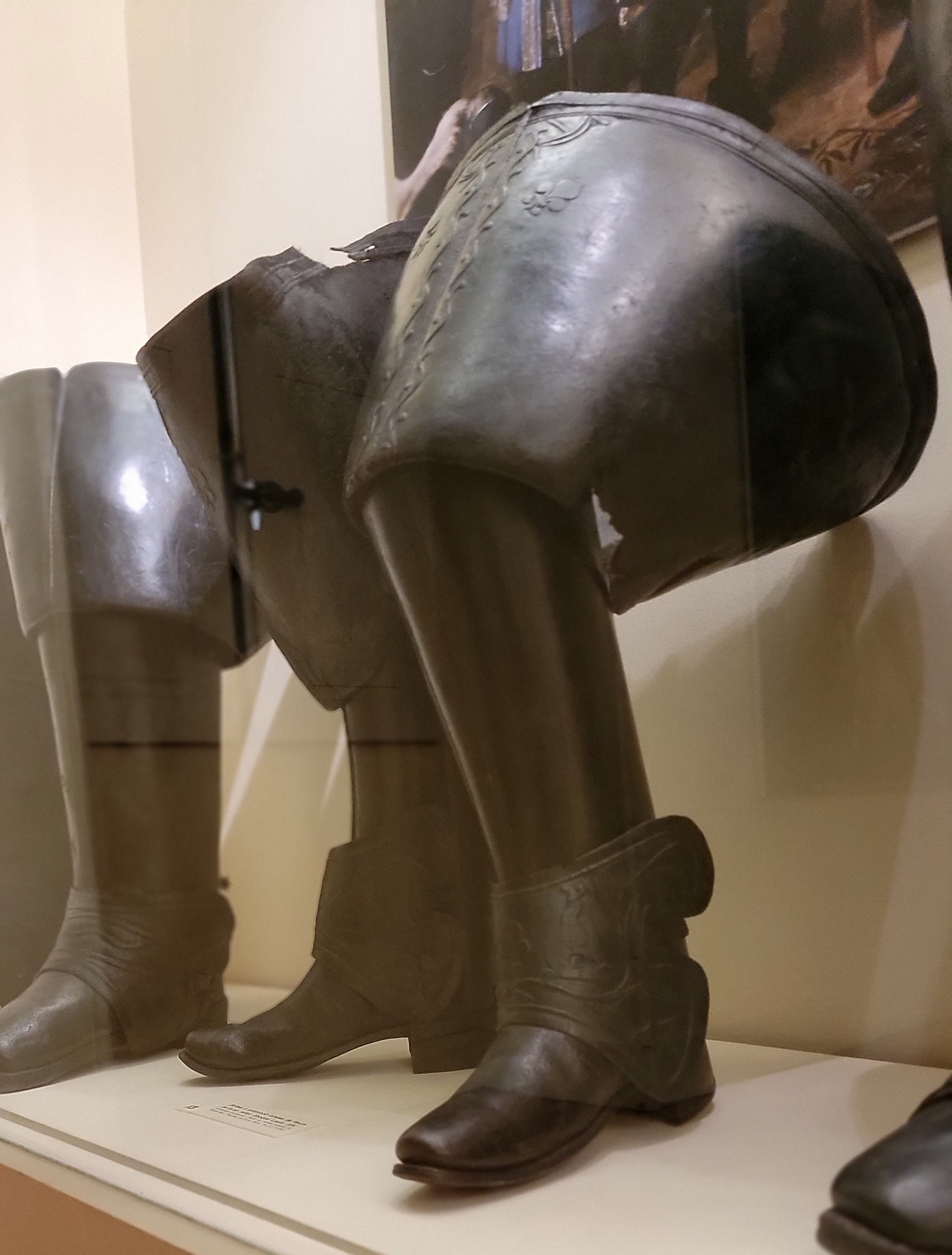
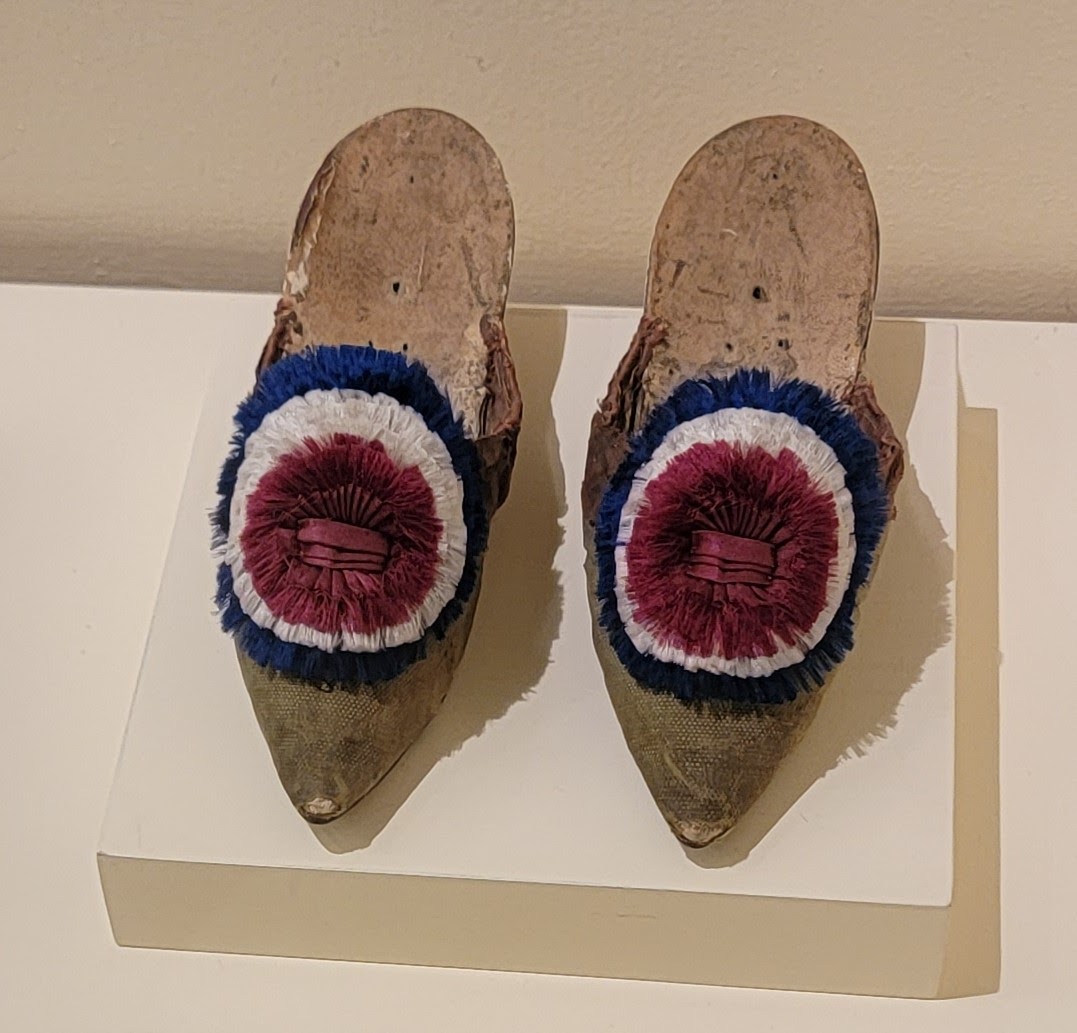
During the french revolution, people were advised to do away with shoes displaying ornate decorations that would associate them with aristocracy. Decorations such as the rosettes below were a safer bet, particularly if you wanted to keep your head attached. (Kate, check our those riding boots. Only problem was that if it rained, they tended to fill with water!)
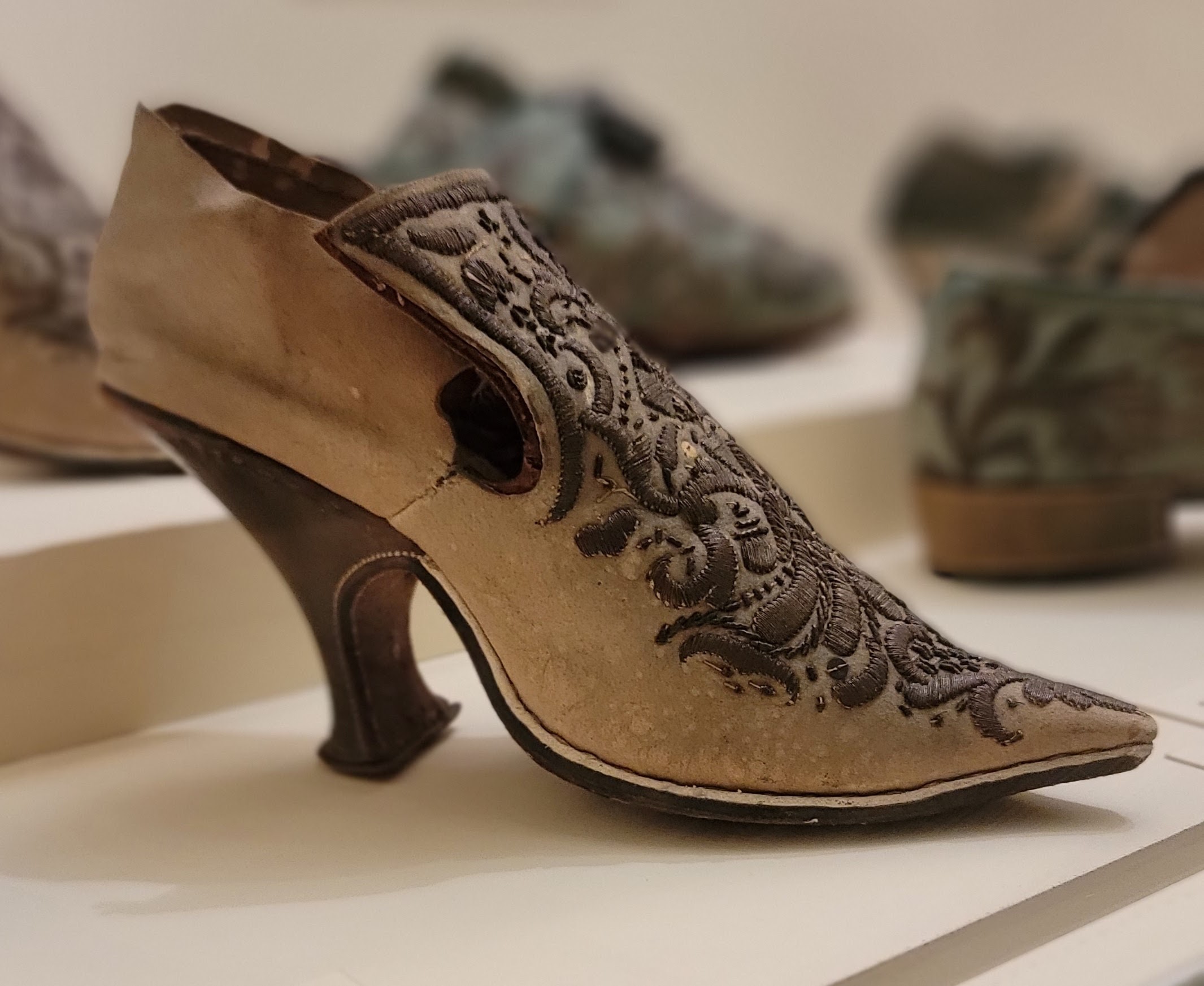
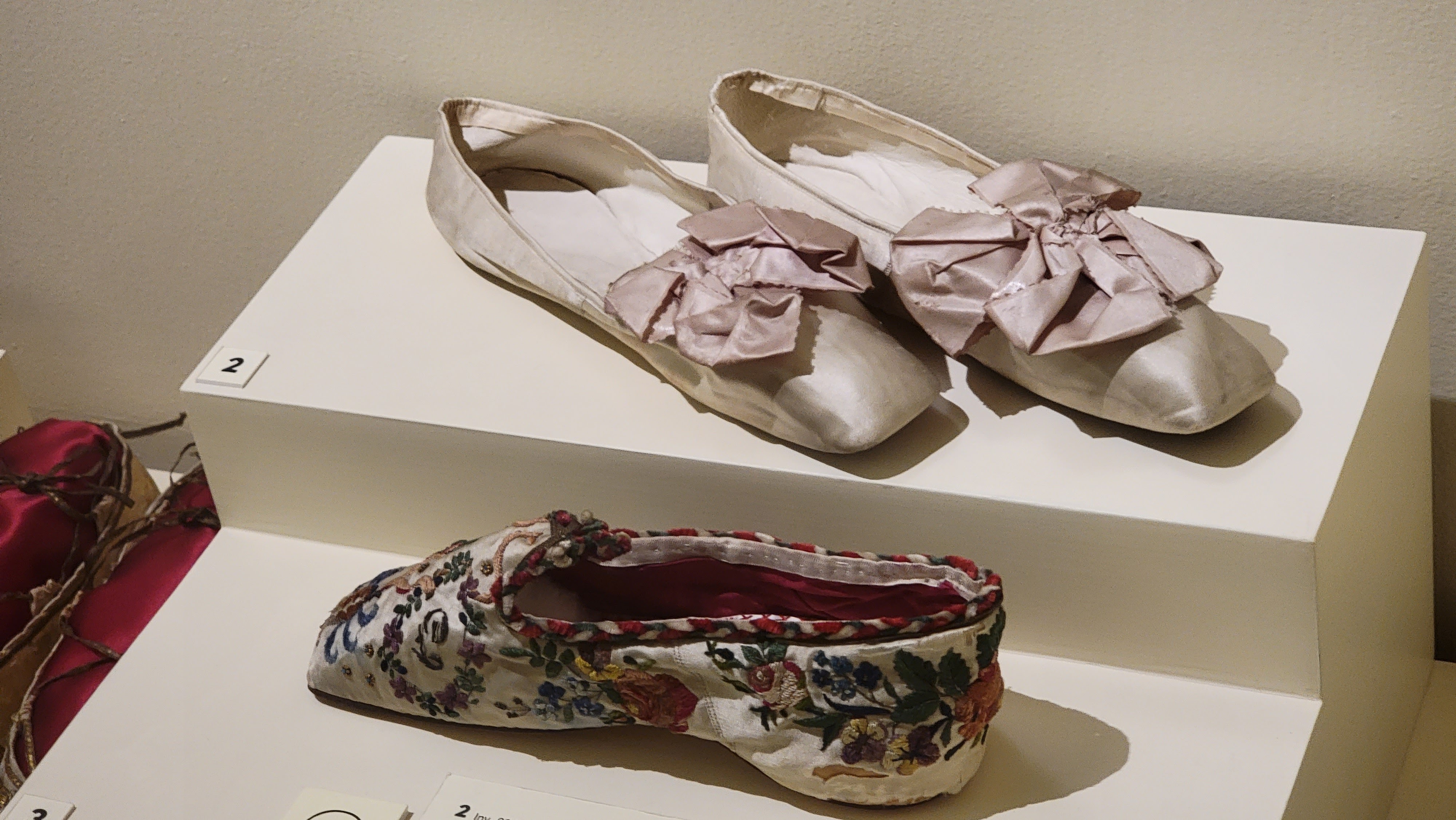
And then heels were out and ballet flats were in… And then heels were back.

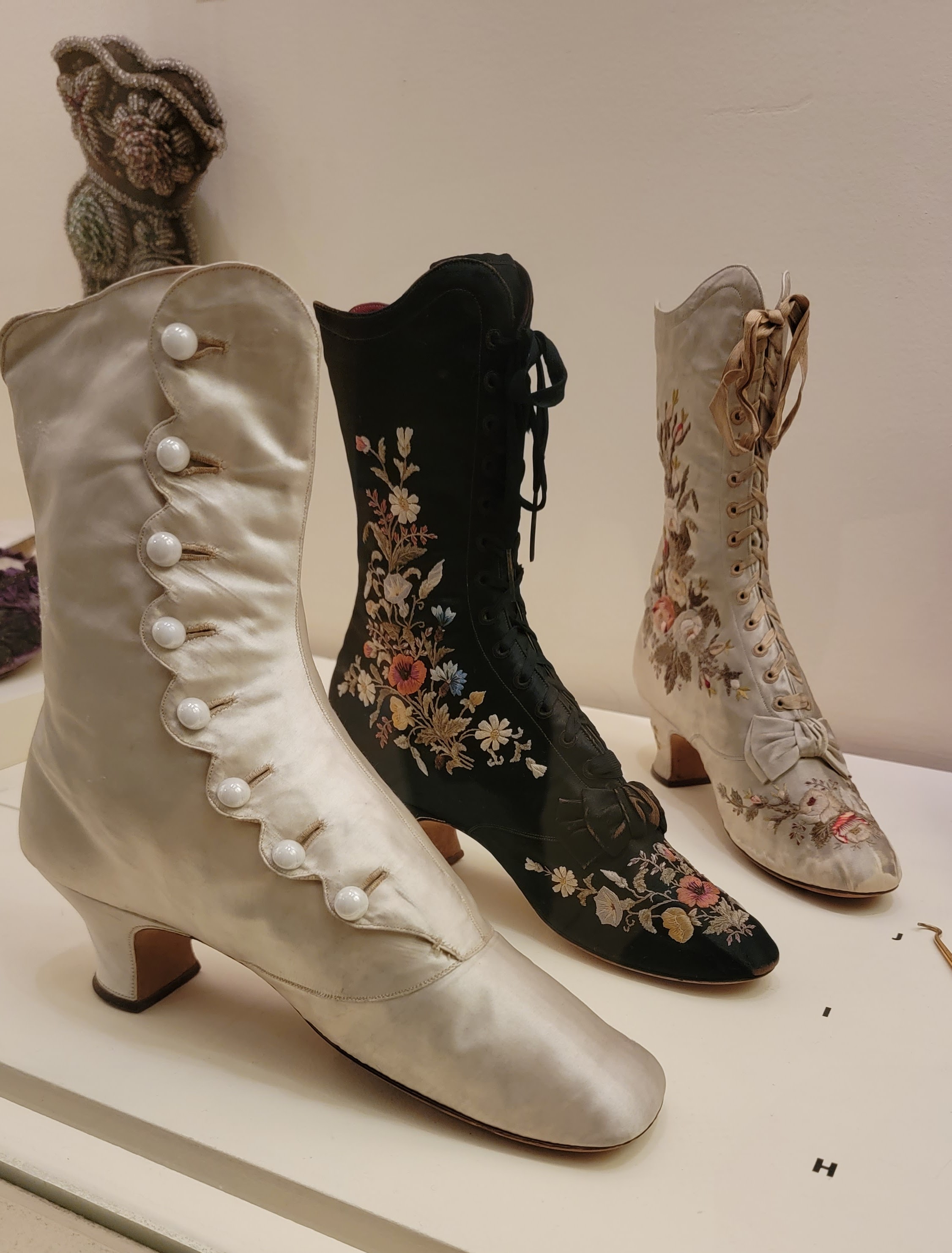
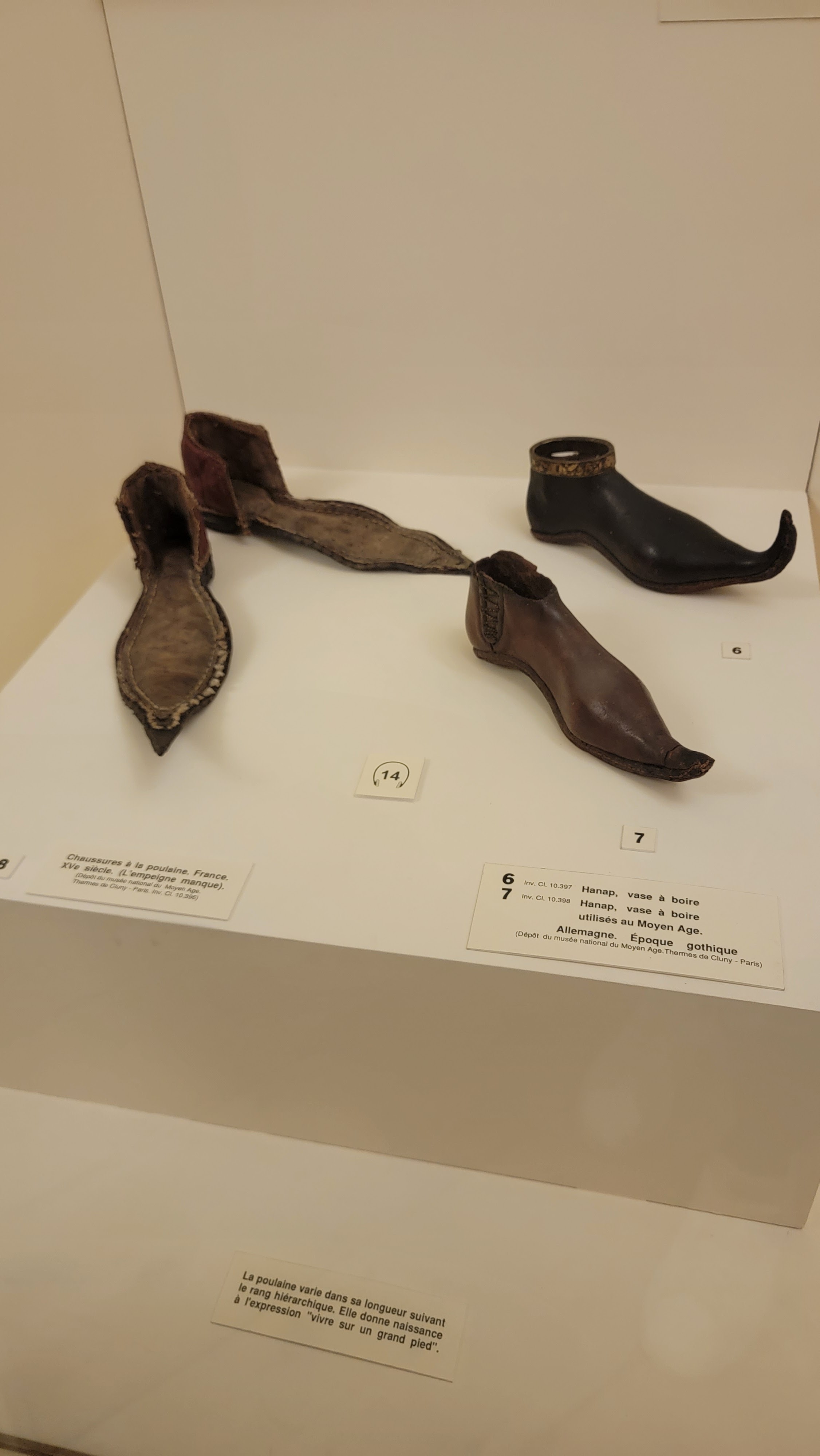
And then flats again, same same, but just a bit different. There were rules at this stage, about the length of your shoe. If you were just a pleb, you were only allowed very short shoes. However, if you were up there among the best of them, you could have that pointy bit at the front so long that you would have to wind it up and tie it to your knees to get around town. Awesome.
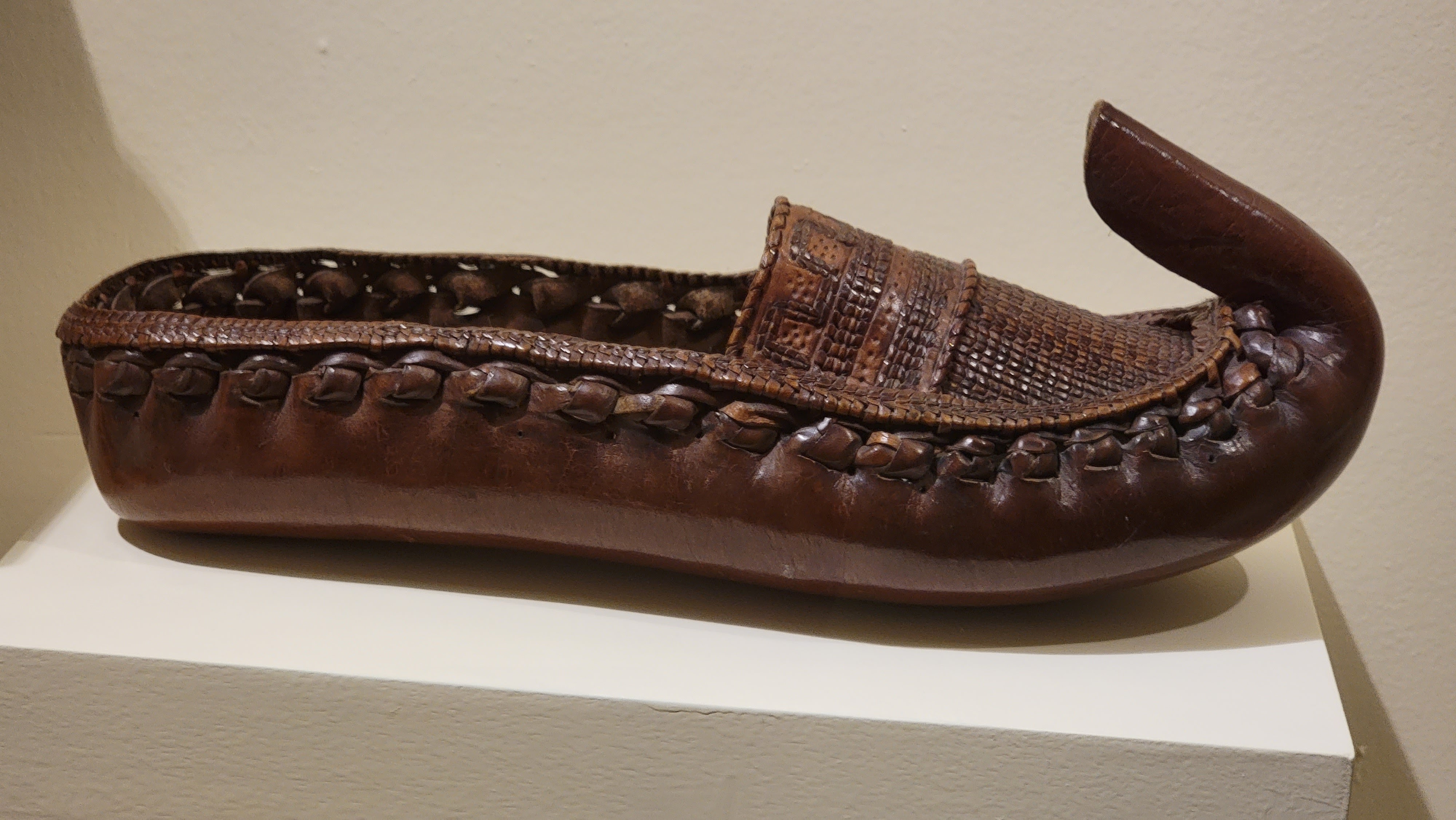
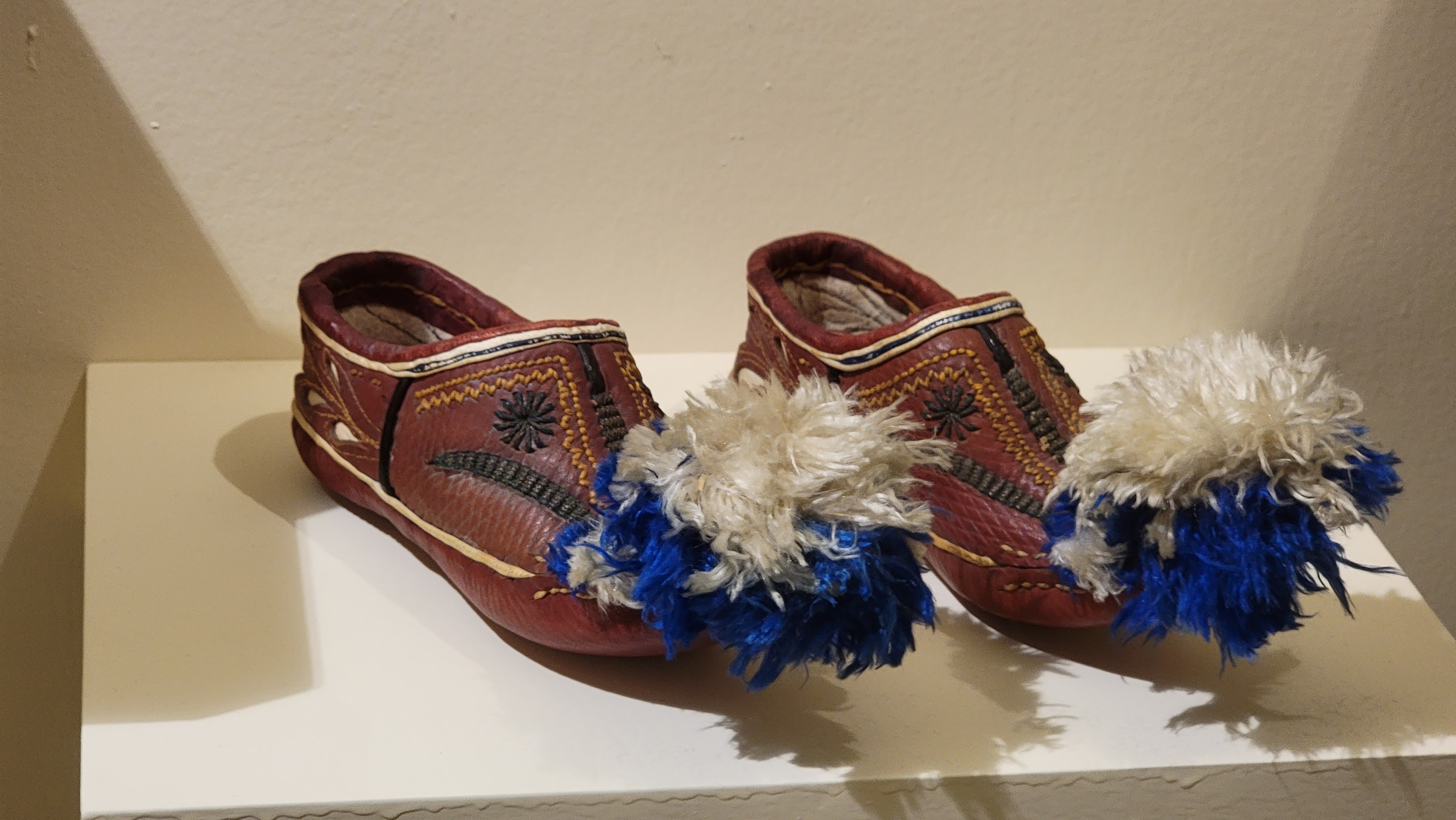
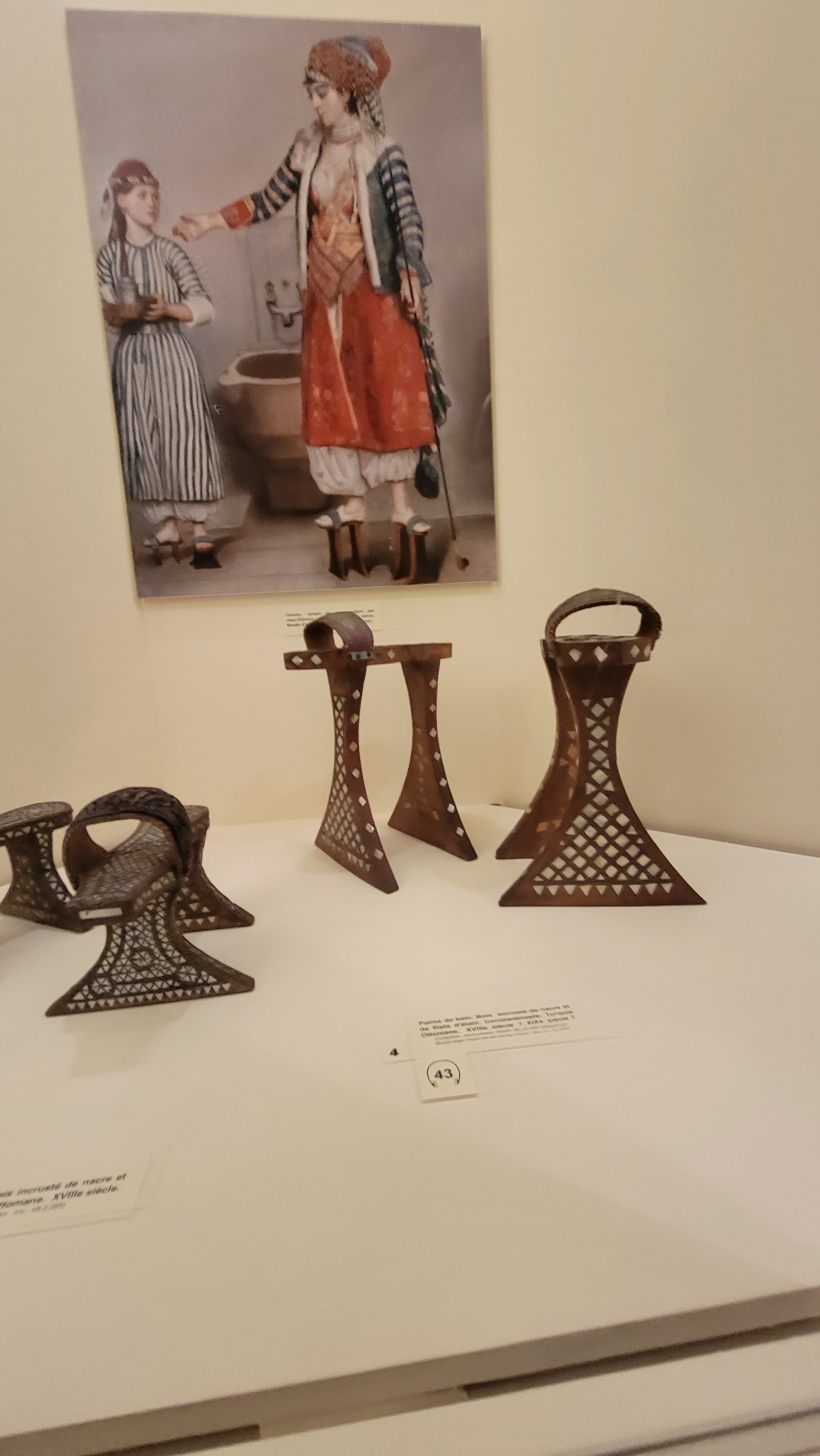
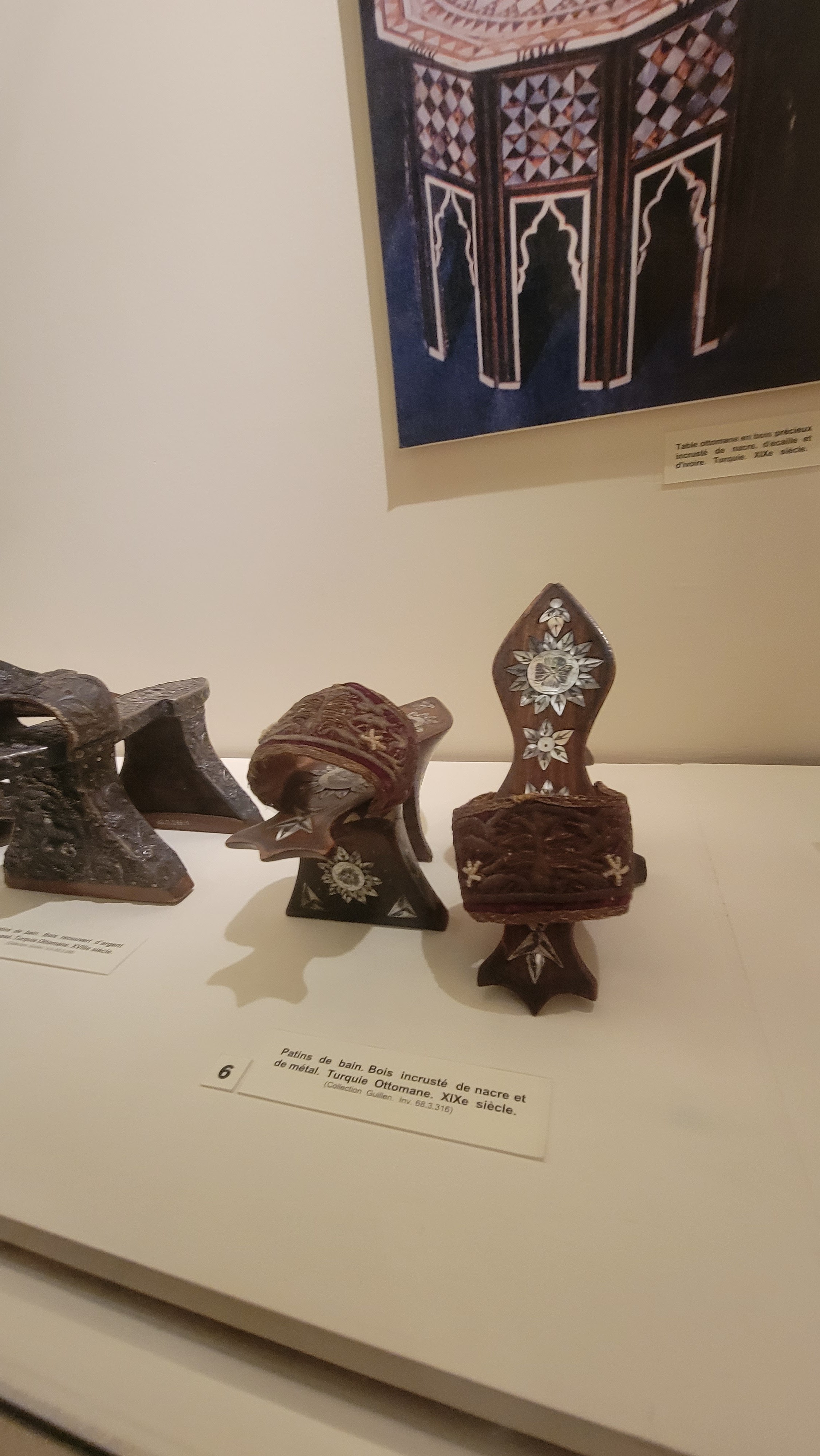
Shoes for wearing in the bath houses – or in Auckland at the moment perhaps?
And then there was the Chinese practice of binding girls’ feet. Let’s not go into that too much because it’s pretty awful. And despite a few earlier attempts to outlaw it, the practice was only properly abolished in the early 1940’s. Strange, the different ideas of beauty. I’m truly sorry for those who had to endure it.
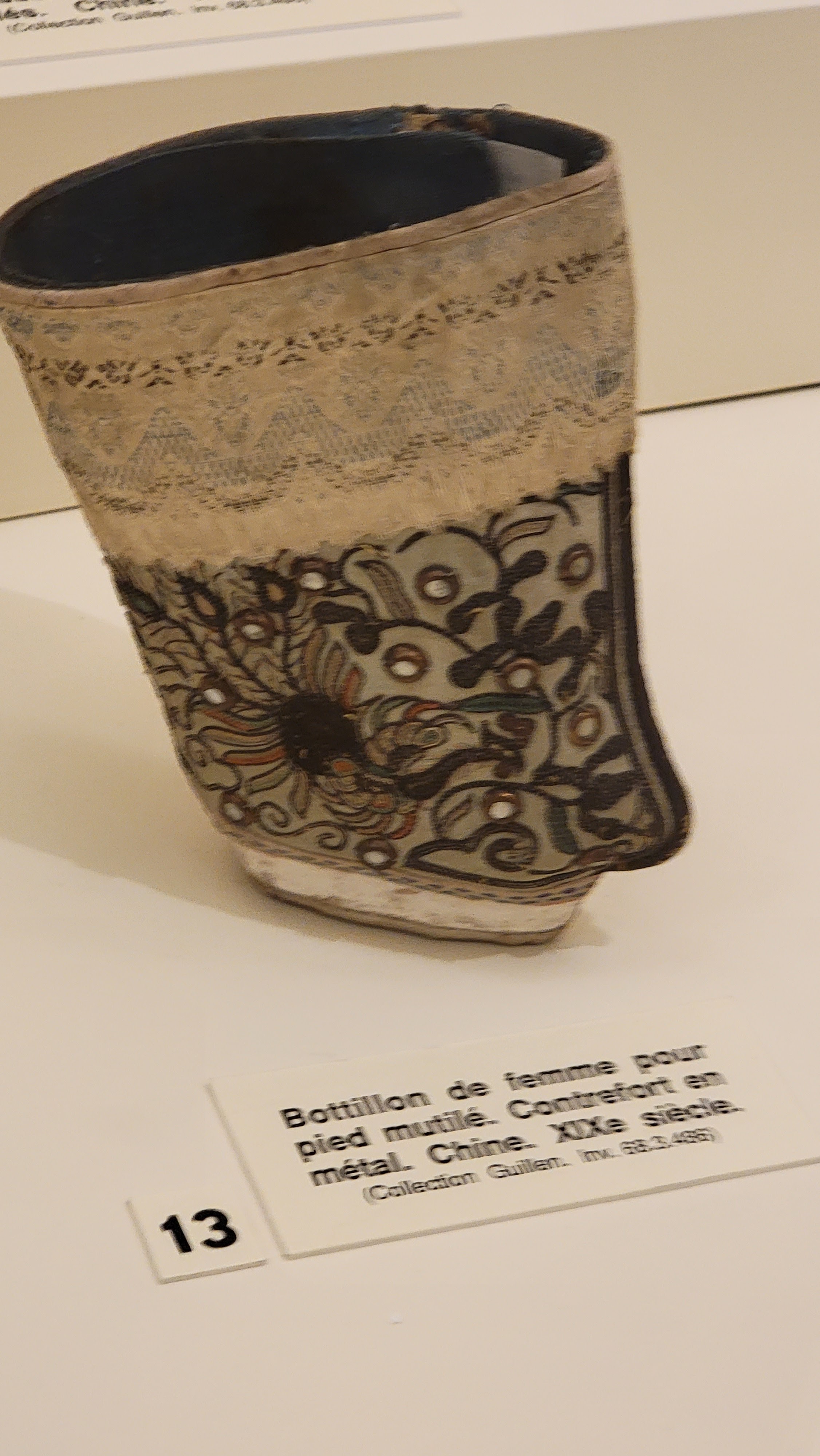
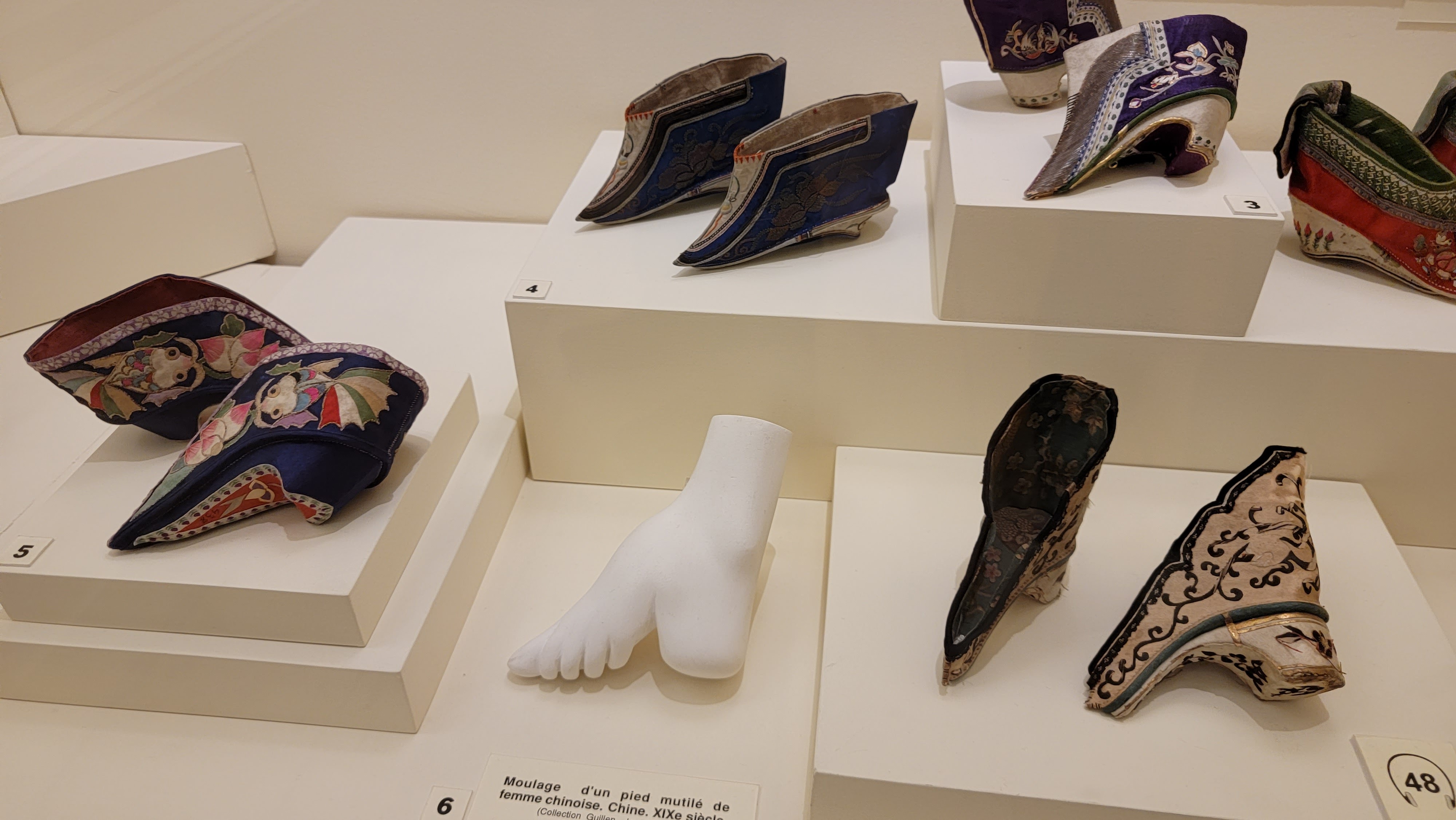
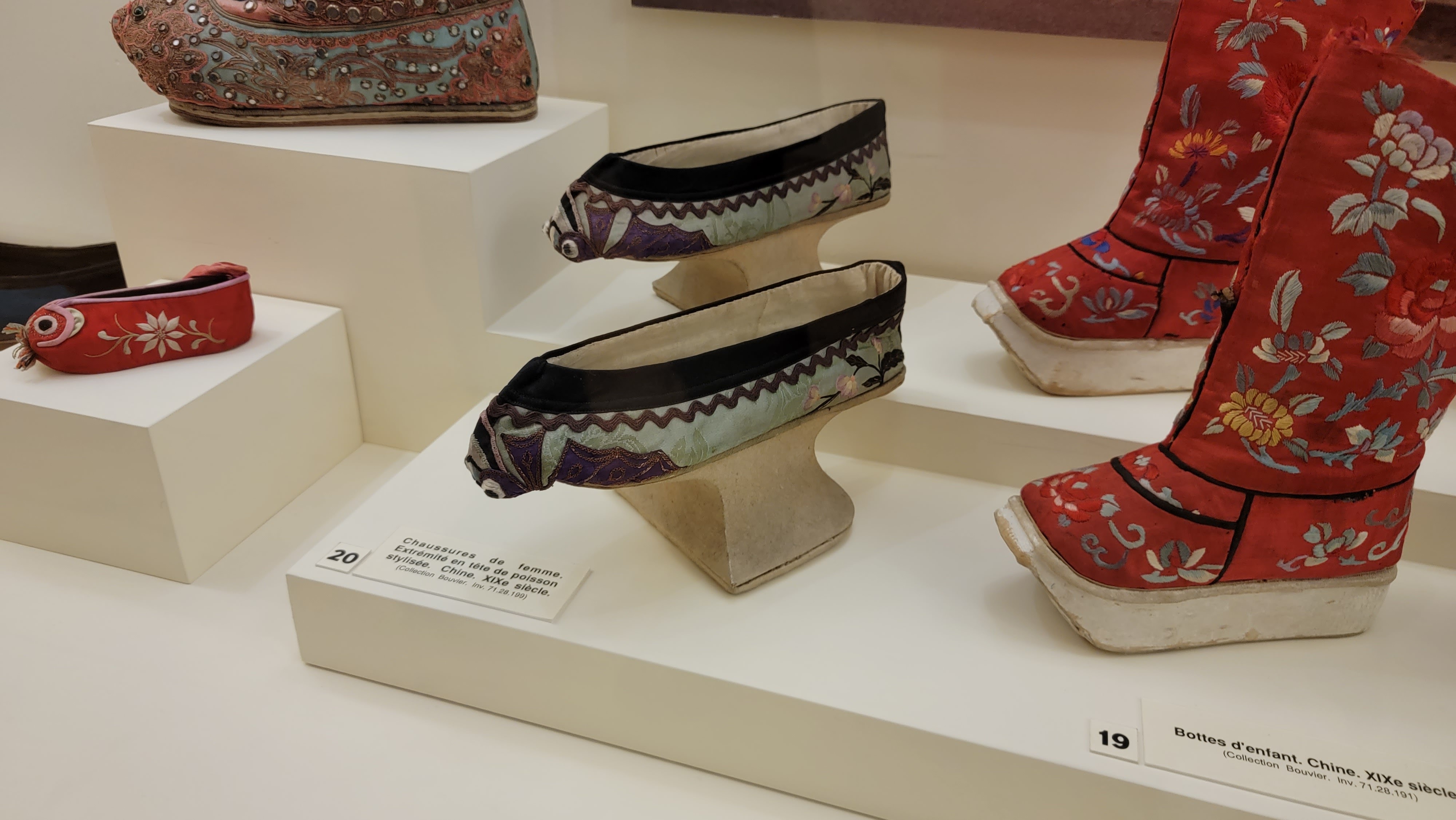
Moving on to slightly more comfortable things… (Clive wants the pink thigh-highs for Christmas).
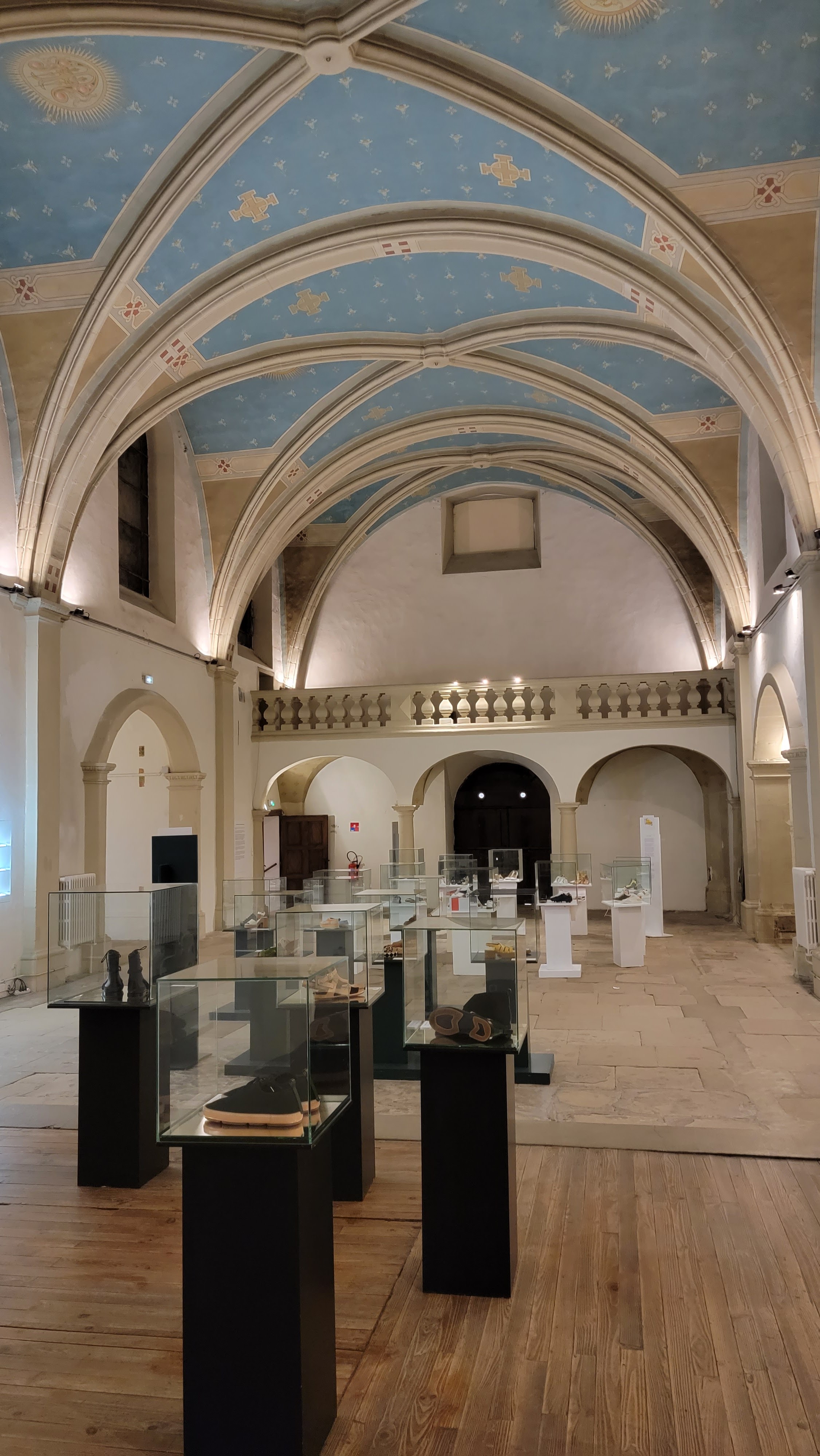
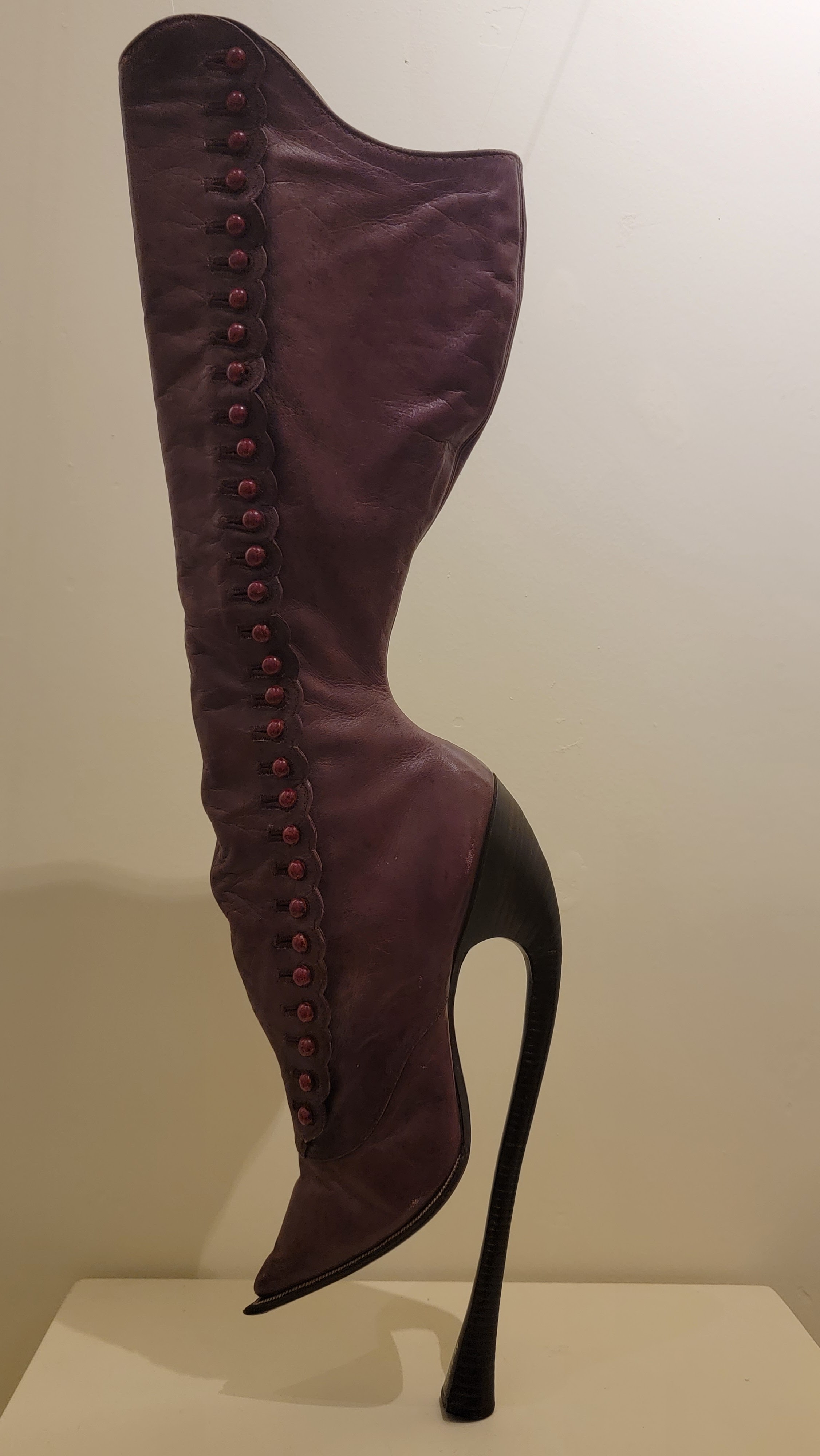

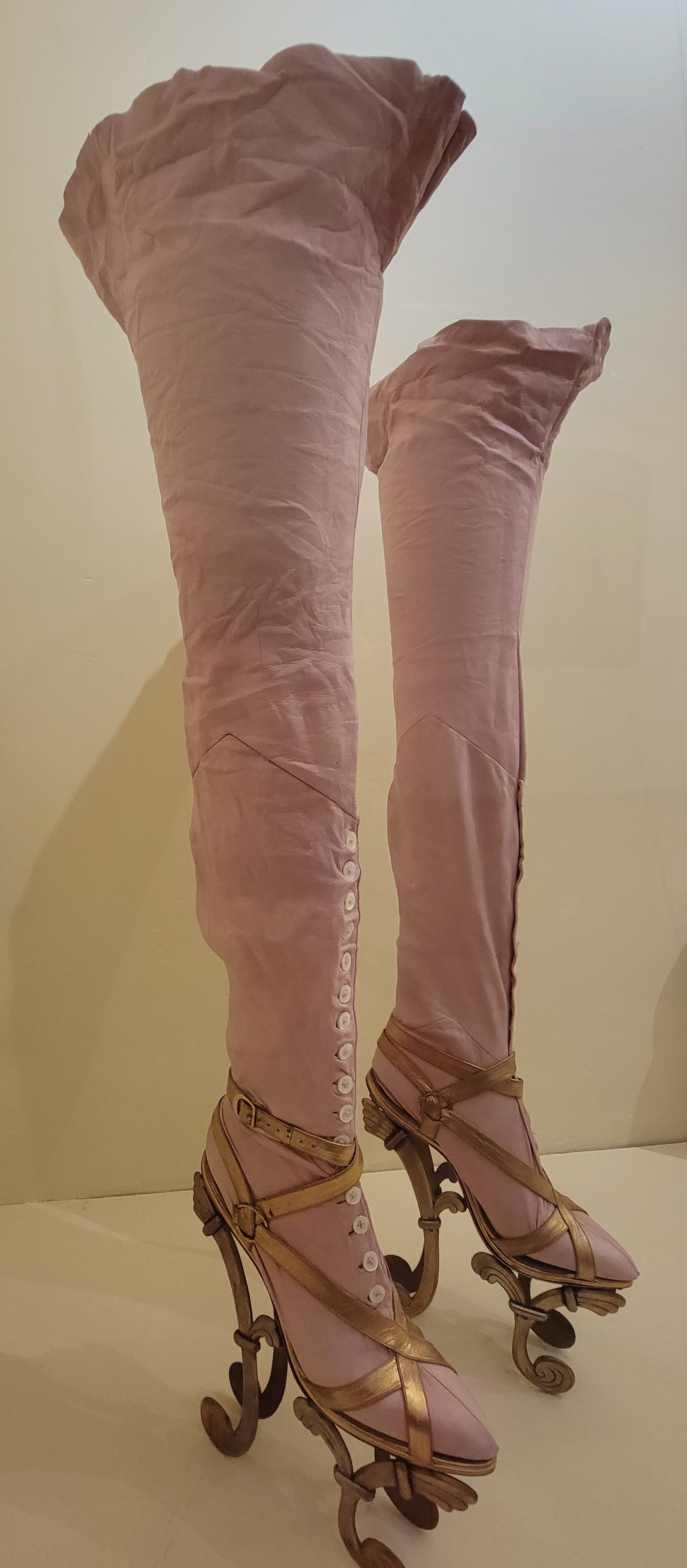

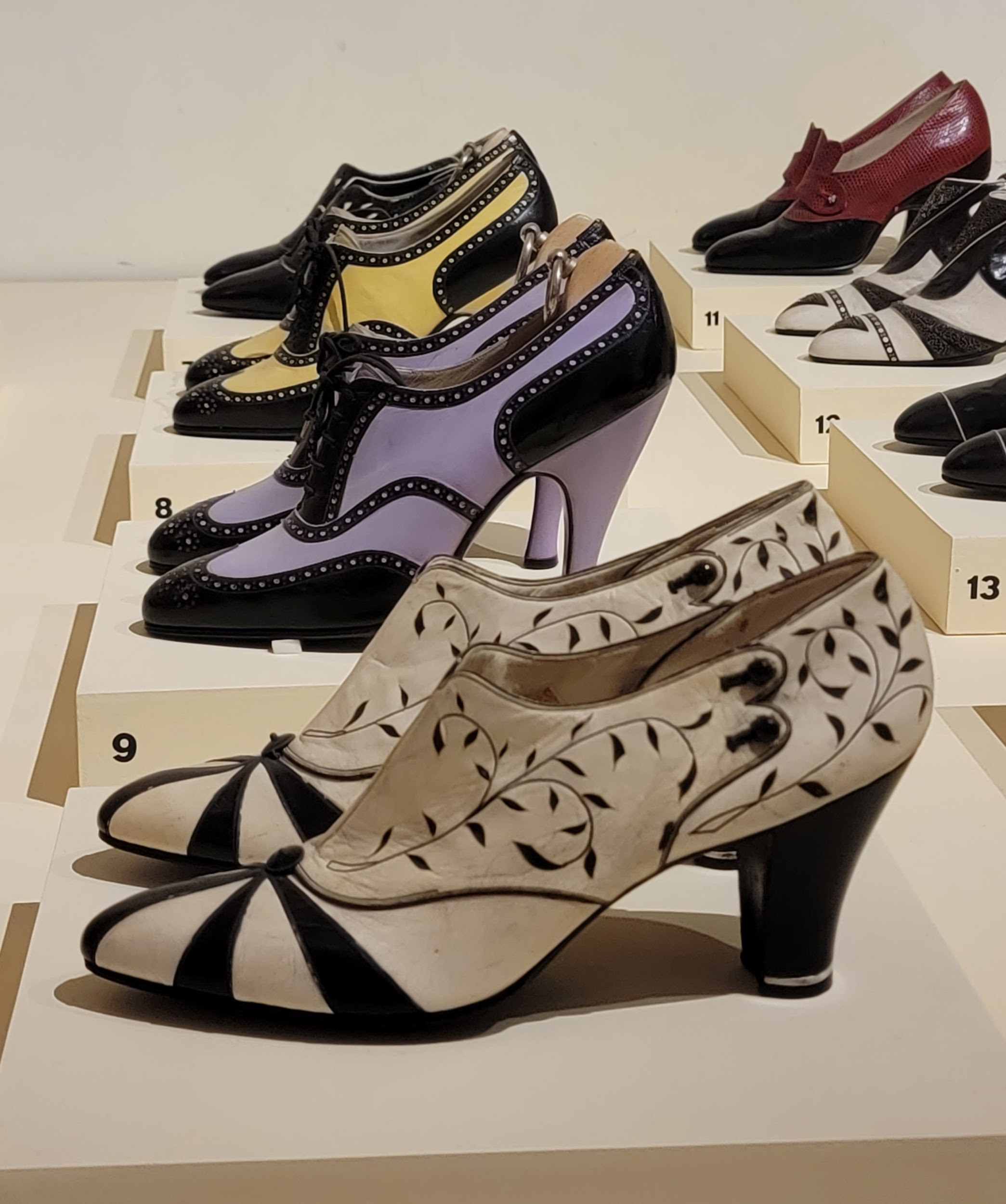
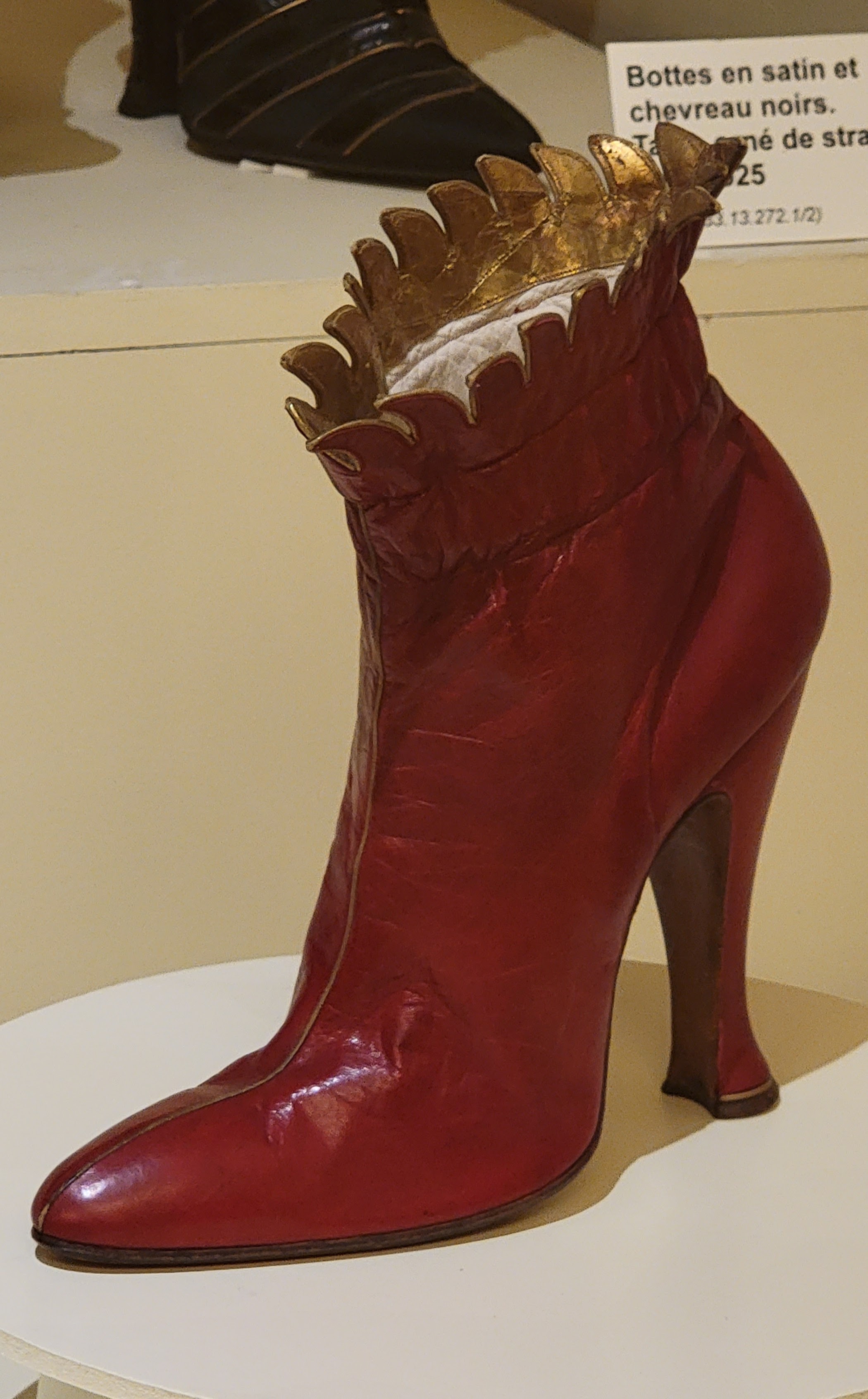
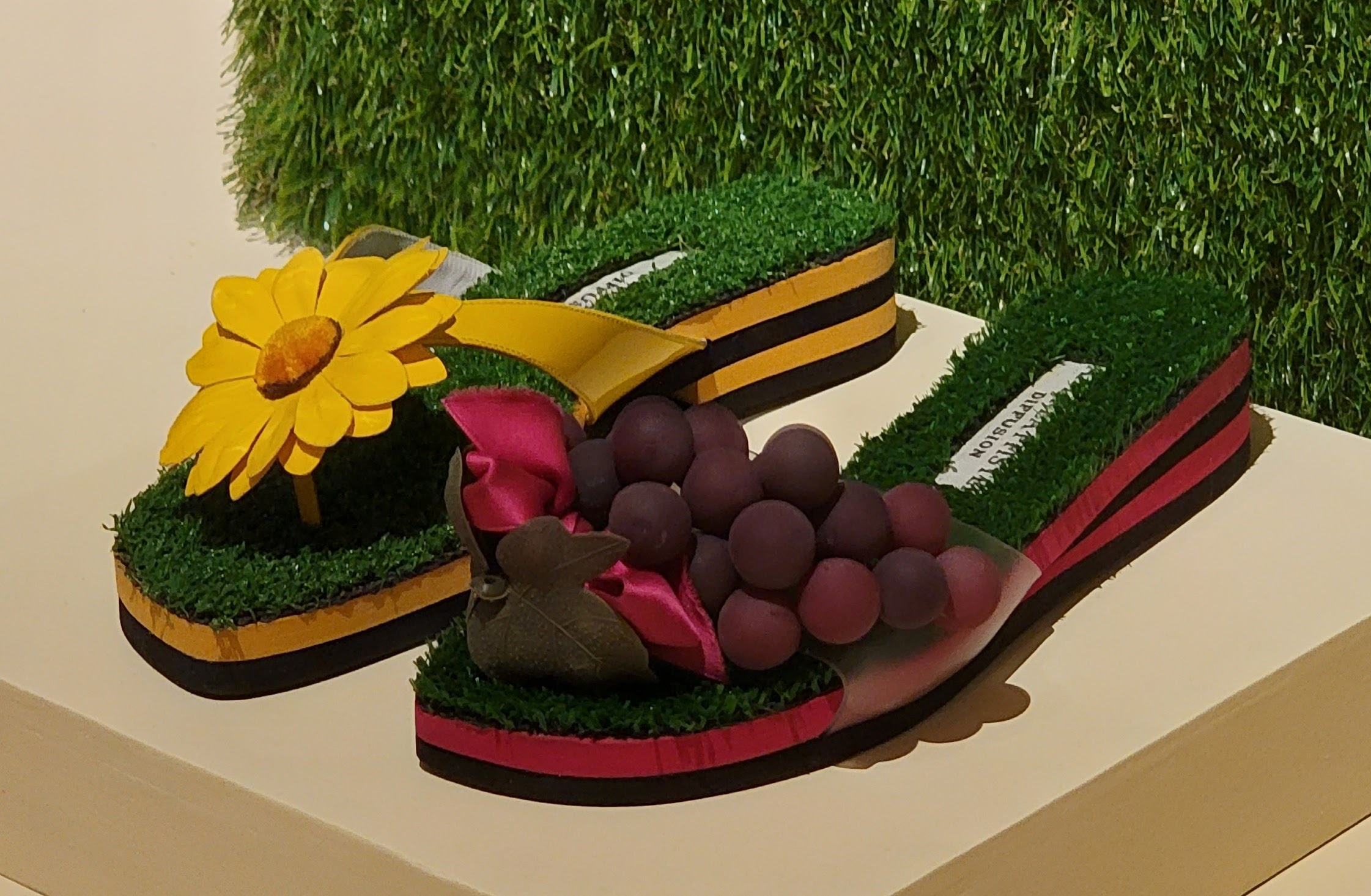
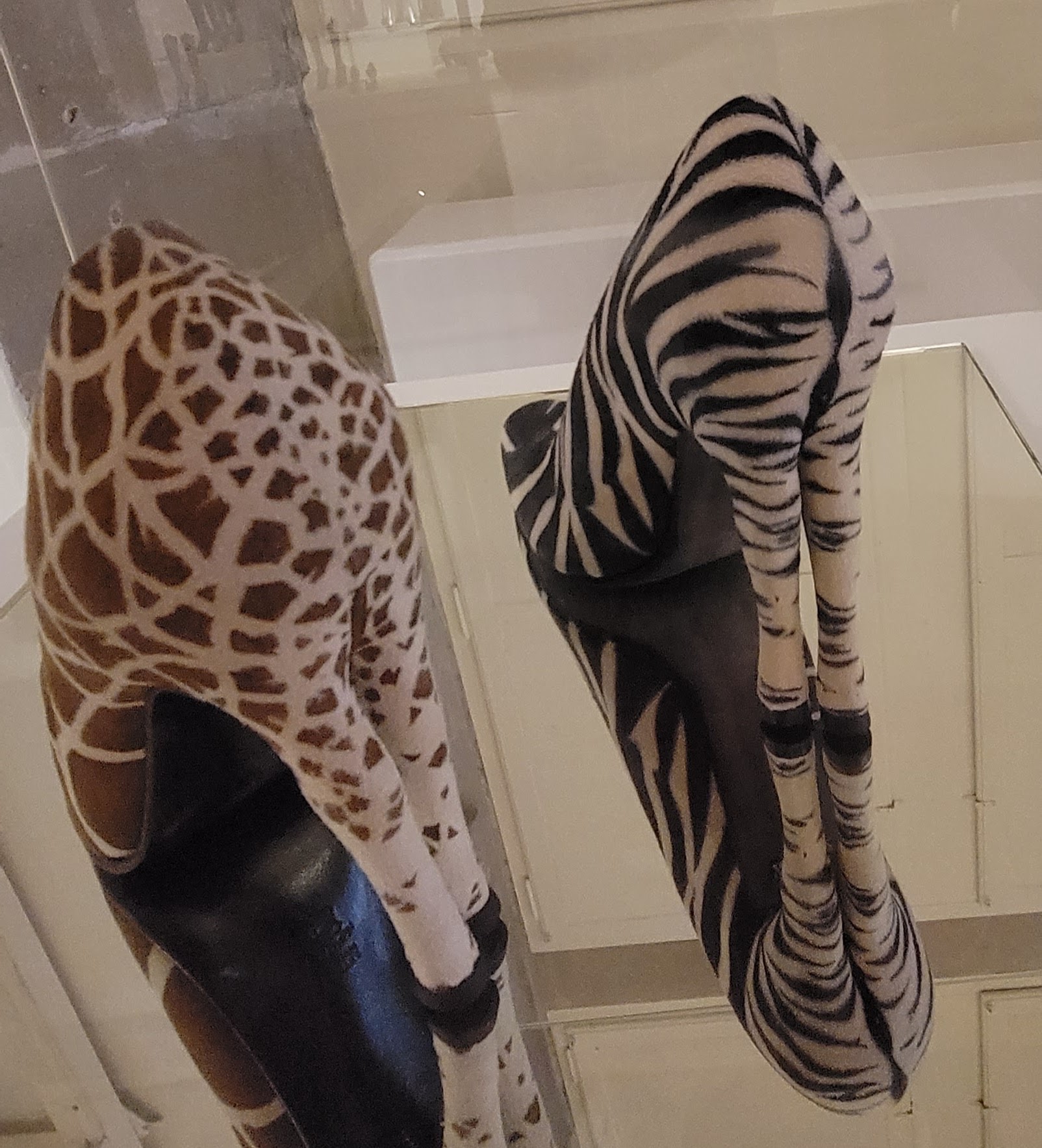
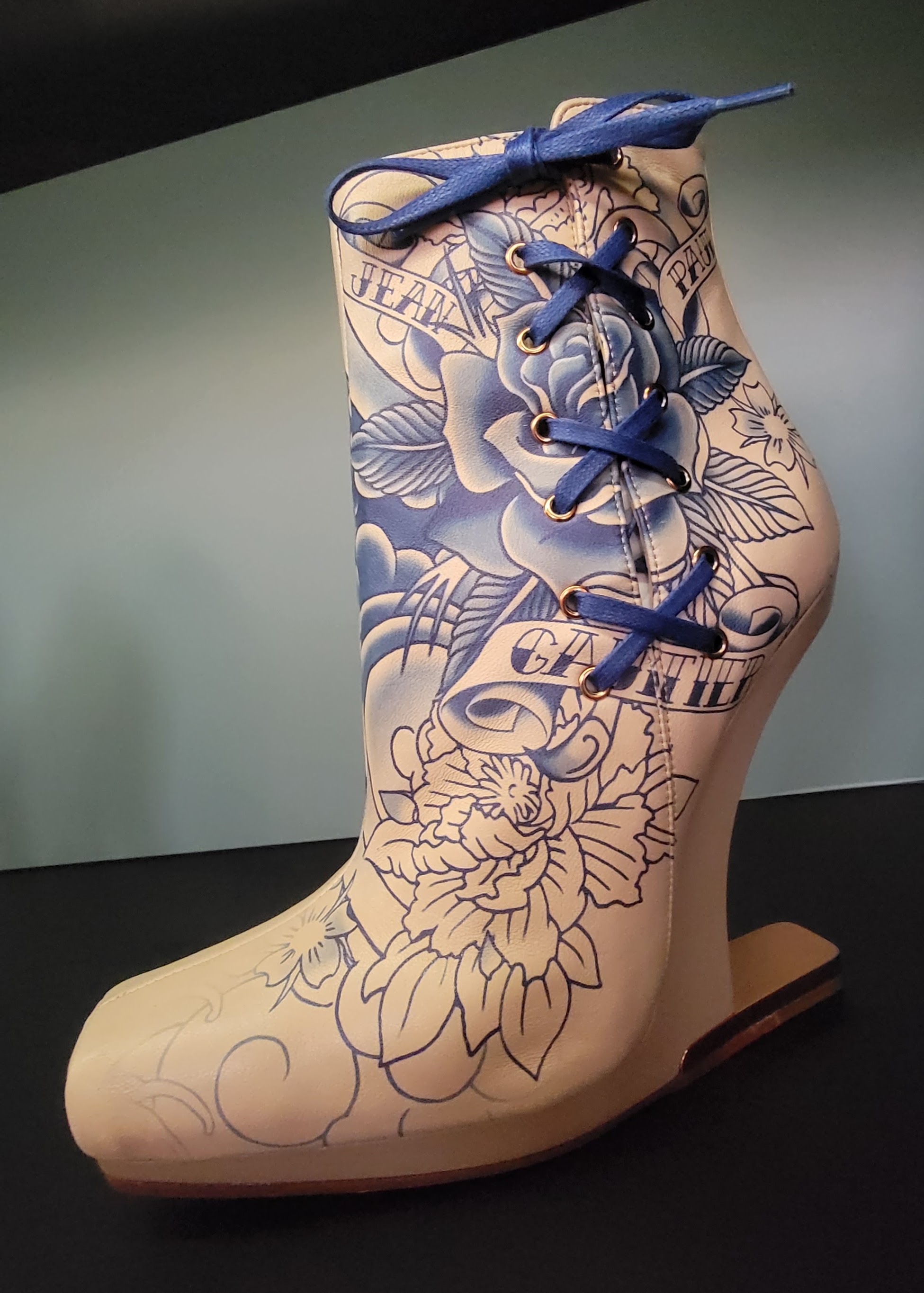
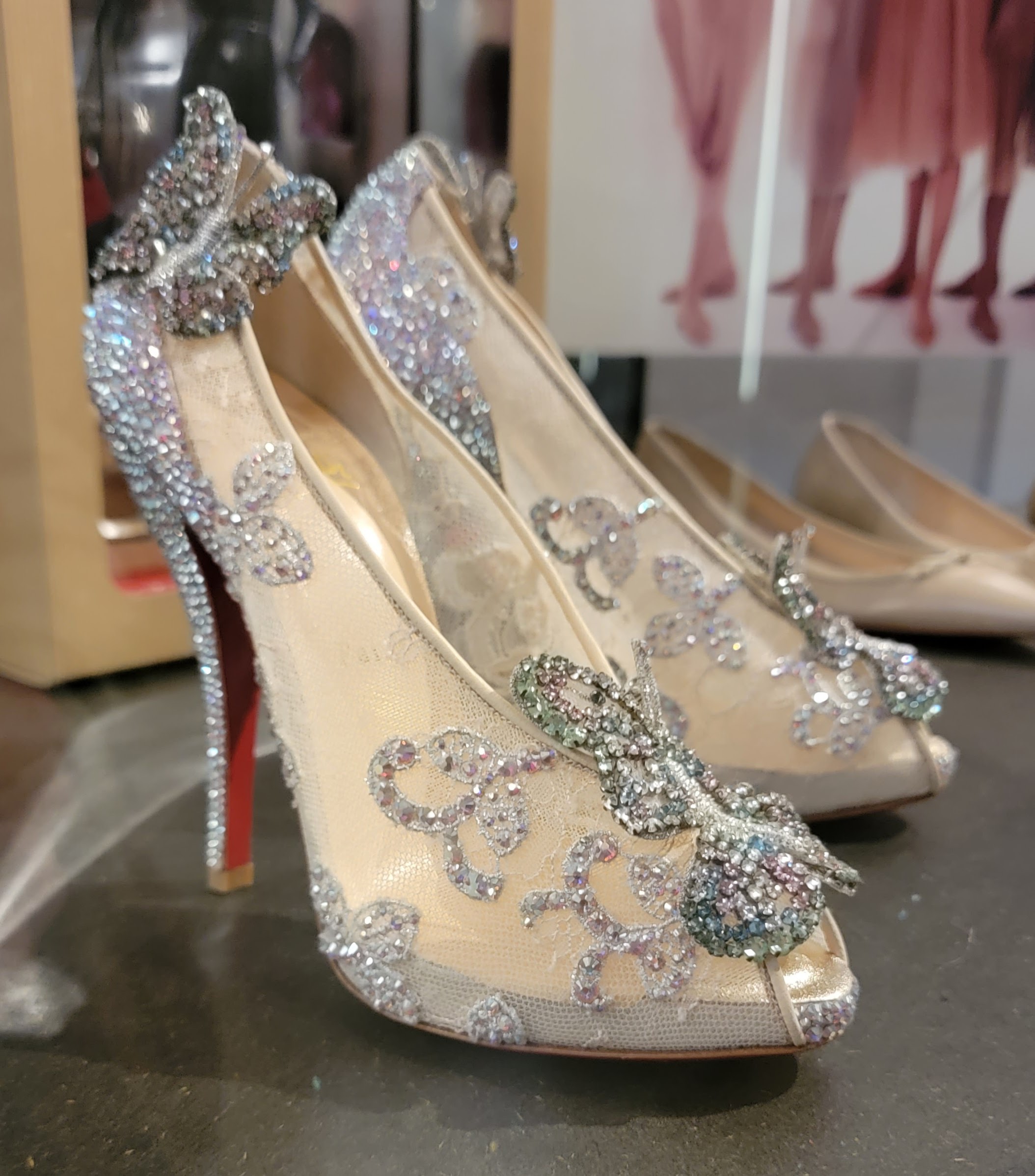
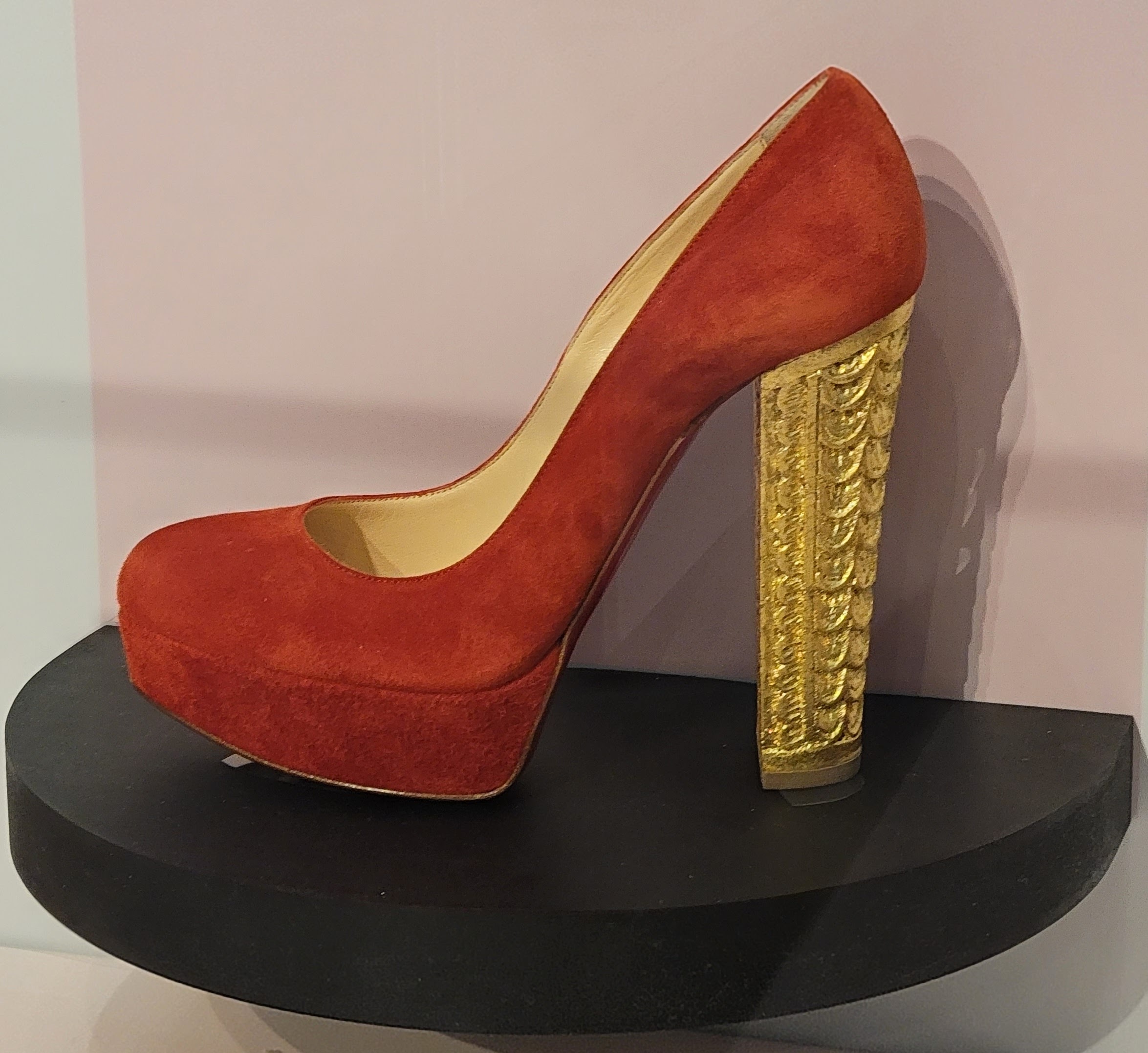
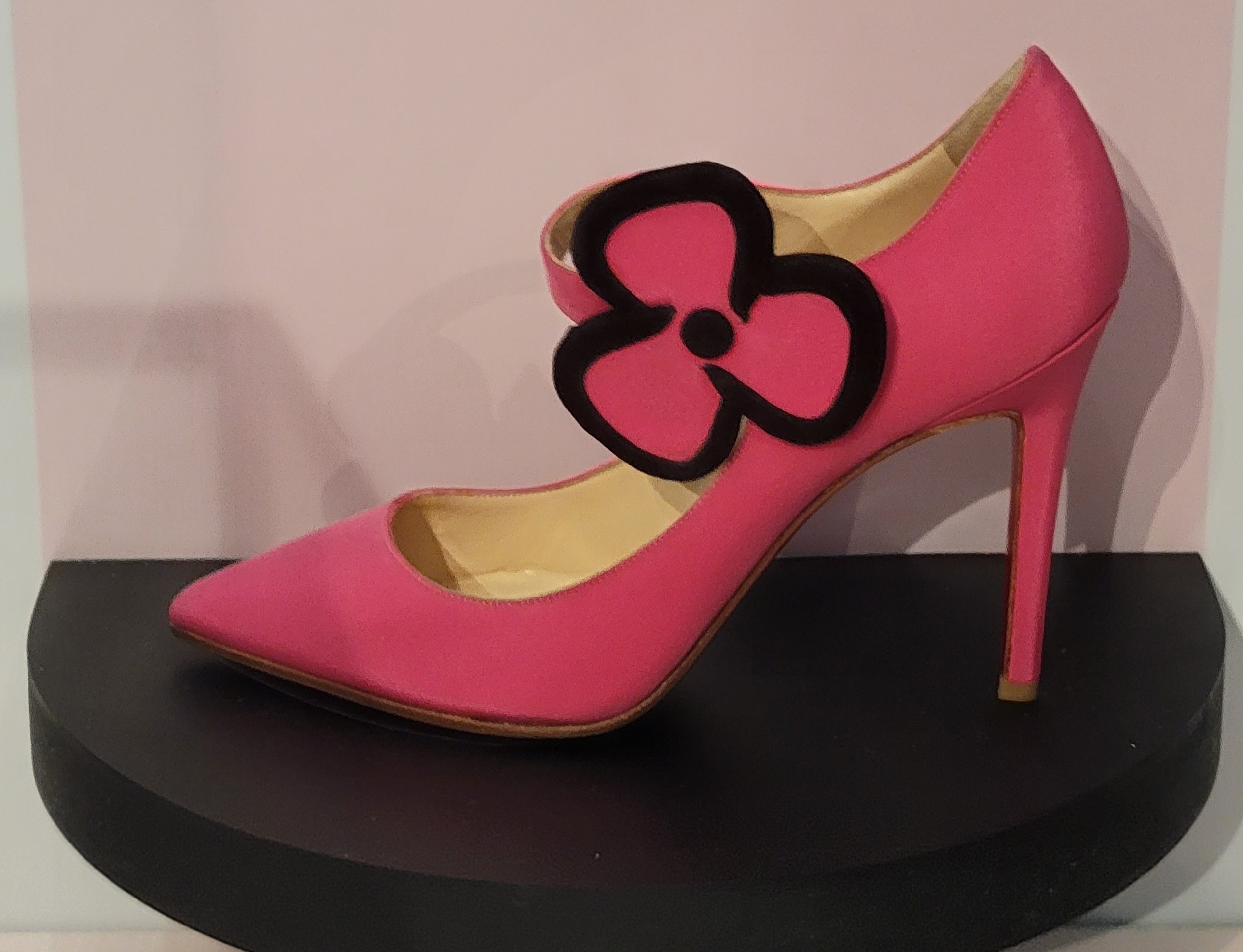
And now we’re talking. Groovy baby.

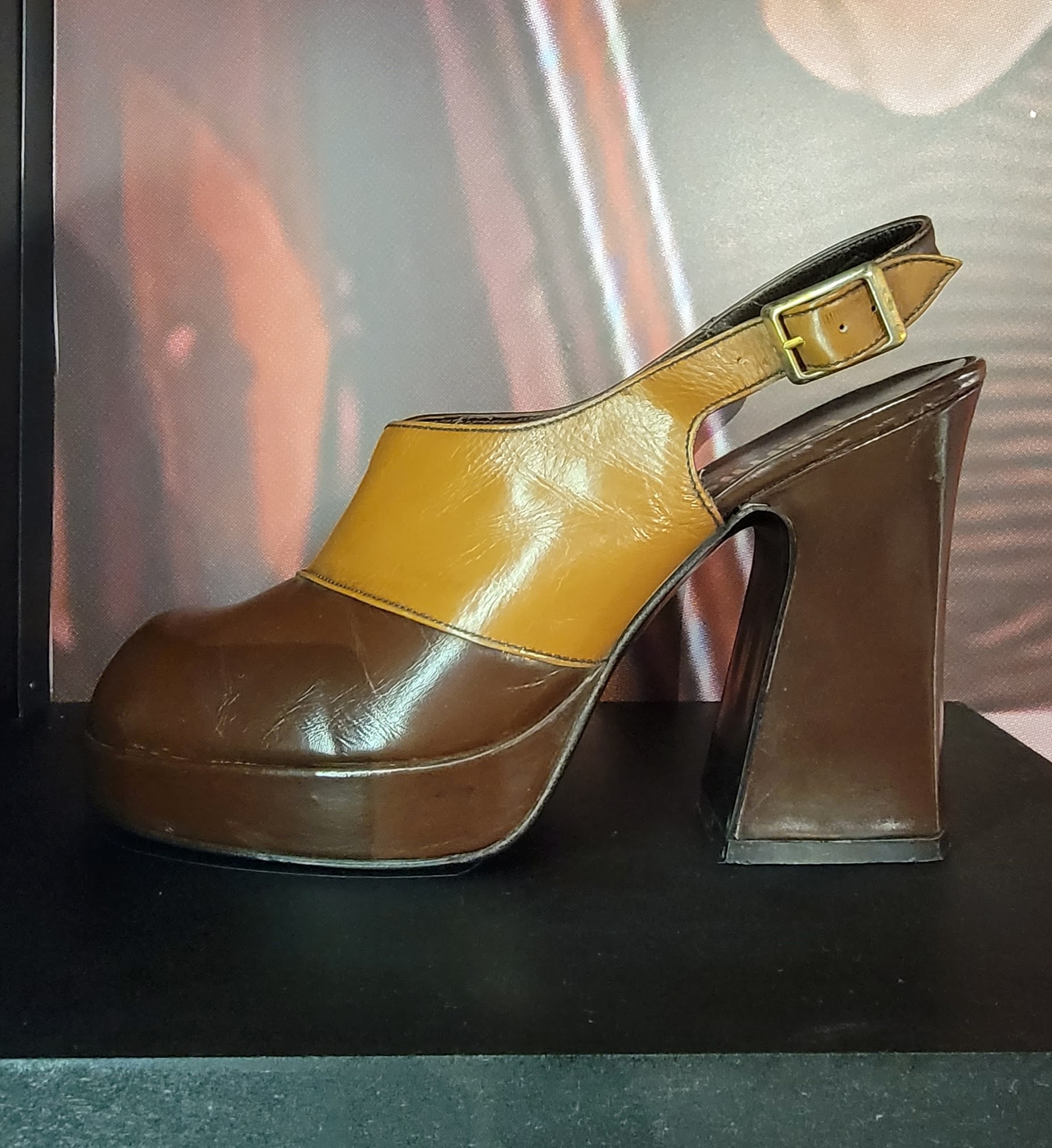
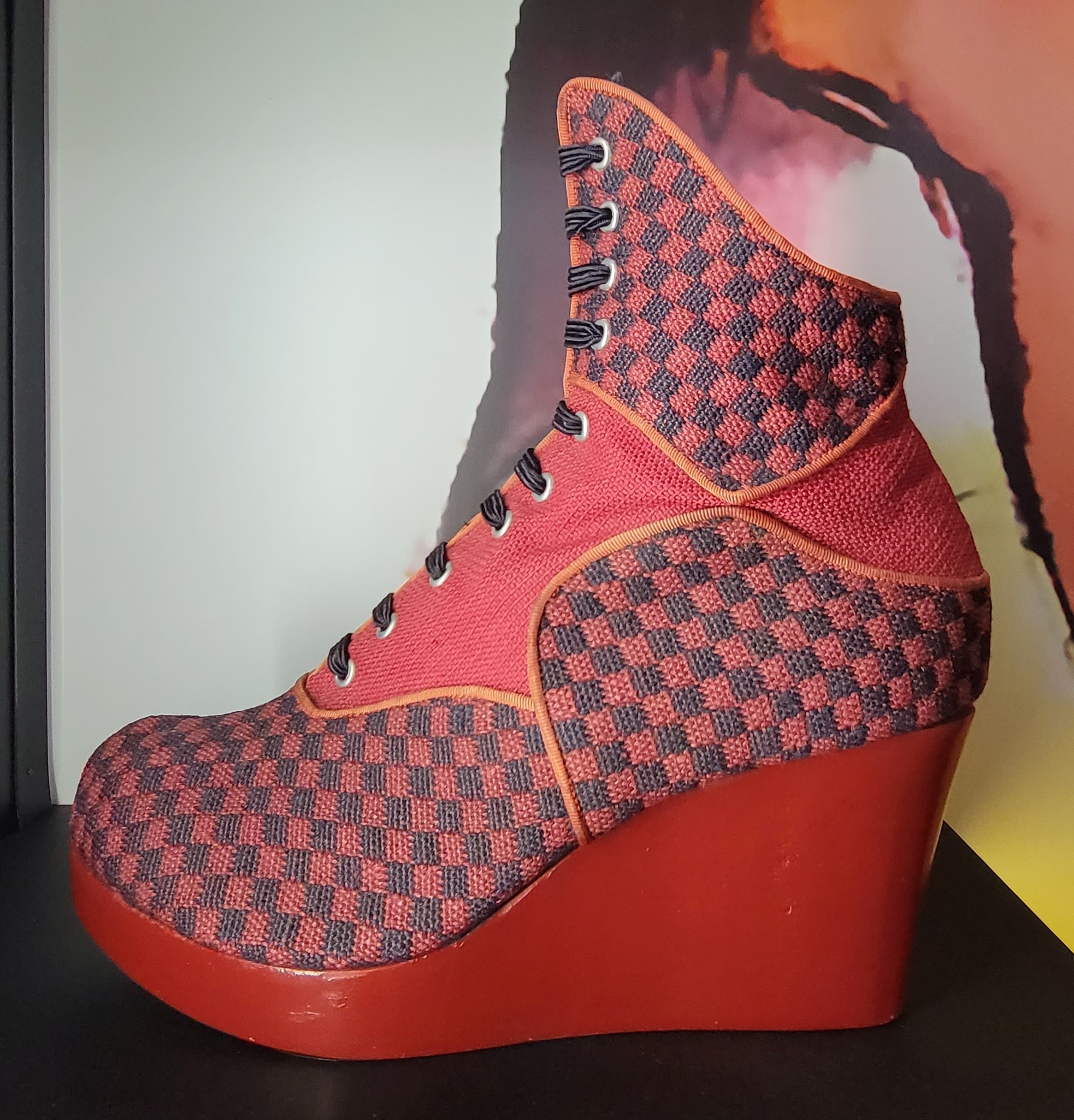
Did you know that Stan Smith, as in “the Adidas Stan Smith” is actually this guy below? He was an American tennis player during the 1960s until early ’80s. Apparently he was a great guy and so, in 1978, Adidas named their sneakers after him. And I always thought it was Stan Smith the singer. Well I never, as Nana S used to say.
And then we walked, in our faithful Adidas shoes, back to the car.
Too many shoes? Excuse me – is that even a thing?!


 Over To France
Leave a reply to Renie Downes Cancel reply